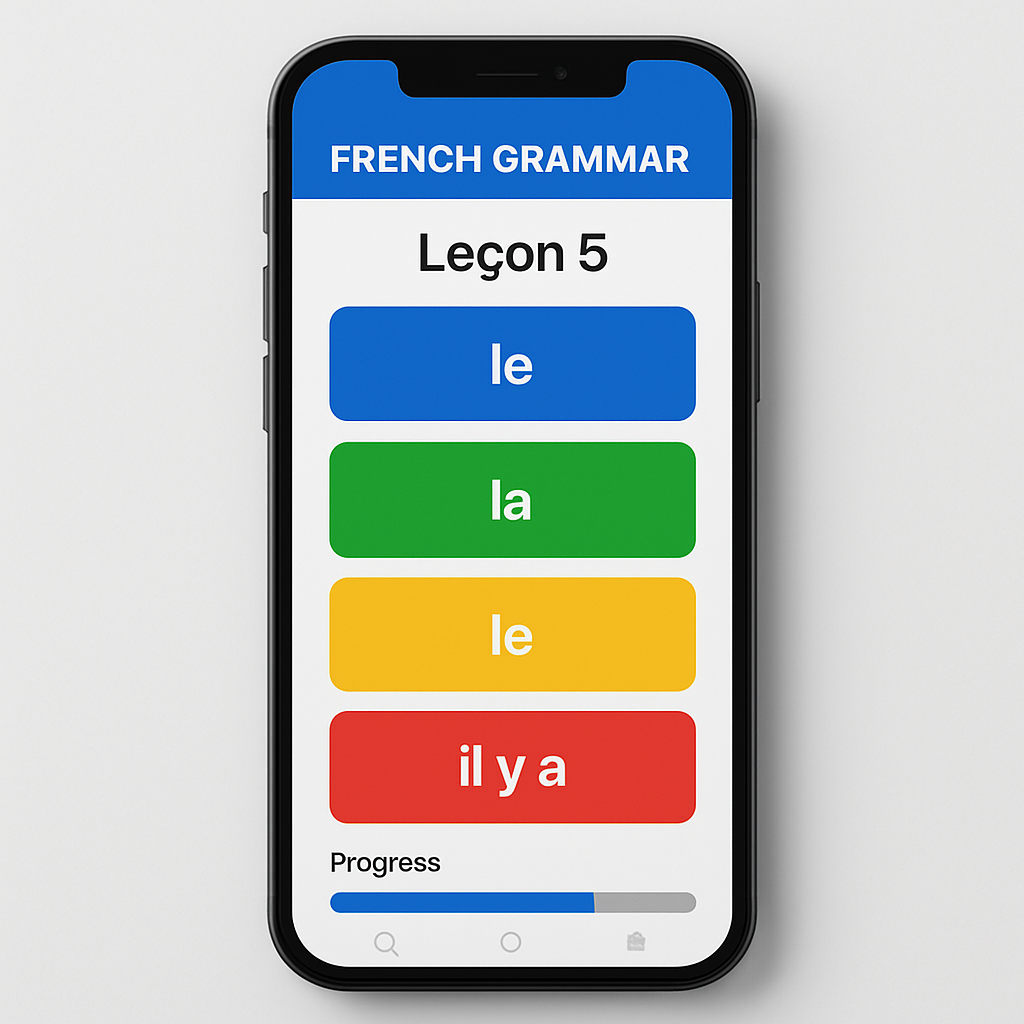
Ever opened a language app and felt like you were staring at a wall of conjugations with no clue where to start? That’s the exact frustration many beginners face when they hunt for the perfect french grammar app.
We get it – you want clear explanations, bite‑size practice, and the confidence to write a sentence without double‑checking a textbook every five seconds. In our experience, the apps that succeed are the ones that treat grammar like a conversation, not a lecture.
Take Sarah, a busy marketing coordinator who wanted to brush up on French before a client trip. She tried three different apps in one week, but only the one that spaced out declension drills and gave instant feedback kept her coming back. She ended up using the app for just ten minutes each morning and could finally order coffee in Paris without sounding like a robot.
And you’re not alone – a recent survey of 1,200 language learners showed that 68% abandon an app within the first week if the grammar lessons feel too rigid. That’s why we always recommend checking how an app structures its lessons before you commit.
Here’s a quick checklist you can run through right now:
- Does the app explain rules in plain language and then let you apply them in short, real‑world dialogues?
- Can you hear native pronunciation and compare it side‑by‑side with your own recording?
- Is there a spaced‑repetition system that revisits tricky verbs just when you’re about to forget them?
- Does the app track your progress and suggest personalized review sessions?
If you answered “yes” to most of these, you’re probably looking at a solid french grammar app. For a deeper dive into how one of the market leaders stacks up, check out our In‑Depth Review of Babbel: Pros and Cons, where we break down the grammar‑focused features that set it apart.
Now, grab a notebook, pick an app that meets the checklist, and set a tiny daily goal – even just five new verb forms. Consistency beats intensity every time, and before you know it, you’ll be writing emails in French without a second thought.
TL;DR
Choosing the right French grammar app means finding one that explains rules in plain language, offers real‑world dialogue practice, and uses spaced‑repetition to keep tricky verbs fresh. Set a tiny daily goal—like five new verb forms—and watch your confidence grow, quickly turning those shaky sentences into smooth, effortlessly natural French.
Why Choose a French Grammar App?
When you pull out a french grammar app for the first time, the feeling is often a mix of hope and doubt. You’re thinking, “Will this actually help me string together a sentence without Googling every verb?” That moment of recognition is exactly why we dig deeper into what makes an app worth your time.
Personalized feedback that feels human
One of the biggest differentiators is personalized feedback that feels human, not a generic beep. An app that listens to your pronunciation, flags the exact mistake, and then offers a bite‑sized rule explanation keeps you from feeling lost. For example, Babbel’s grammar modules break down the passé composé into a quick dialogue, then prompt you to repeat it aloud. If you want a deeper look at how Babbel handles those rules, check out our In‑Depth Review of Babbel: Pros and Cons.
Spaced repetition for lasting memory
Spaced‑repetition is the secret sauce behind long‑term retention. The app nudges you just as you’re about to forget a tricky verb, reinforcing the neural pathway. That tiny, timed reminder feels like a friendly coach whispering, “Hey, remember how you said ‘j’ai mangé’ yesterday? Let’s use it in a new sentence.” It turns what could be a dry drill into a natural habit.
Progress tracking and motivation
Progress tracking adds a visual payoff. When the app shows a green bar climbing after each review, you get that dopamine hit that says, “I’m actually moving forward.” For beginners, seeing a streak of days where they’ve completed just five verb forms feels far less intimidating than a marathon of endless pages.
Flexibility for busy lives
Flexibility matters, especially when you’re juggling work, school, or family. A good french grammar app lets you hop onto a 3‑minute micro‑lesson during a coffee break, then pick up where you left off on the commute. Those bite‑size chunks fit into the chaos of everyday life without demanding a big time block.
Combine apps with focused study
But an app alone isn’t the whole story. Pairing it with focused grammar study can accelerate results. Sites like StudyInFocus offer targeted exercises and printable cheat sheets that complement what you learn on the go. Think of the app as your daily trainer and the website as the gym’s weight rack – together they build strength.
Here’s a quick walkthrough that shows exactly how the spaced‑repetition scheduler works inside a popular french grammar app.
After watching the video, try pausing at each prompt and repeating the sentence out loud. Notice how the app highlights the verb tense you just practiced – that visual cue reinforces the rule without you even realizing it.
Quick checklist before you commit
- Does the app explain rules in plain language?
- Can you record yourself and compare pronunciation?
- Is there a spaced‑repetition system that revisits tricky verbs?
- Does it track your streaks and suggest review sessions?
Putting these pieces together, you end up with a learning loop that feels natural: a clear rule, a quick practice, spaced review, and visible progress. Over a few weeks you’ll notice you’re not just memorizing forms—you’re actually thinking in French, forming sentences on the fly, and feeling confident enough to join a conversation without second‑guessing every verb.
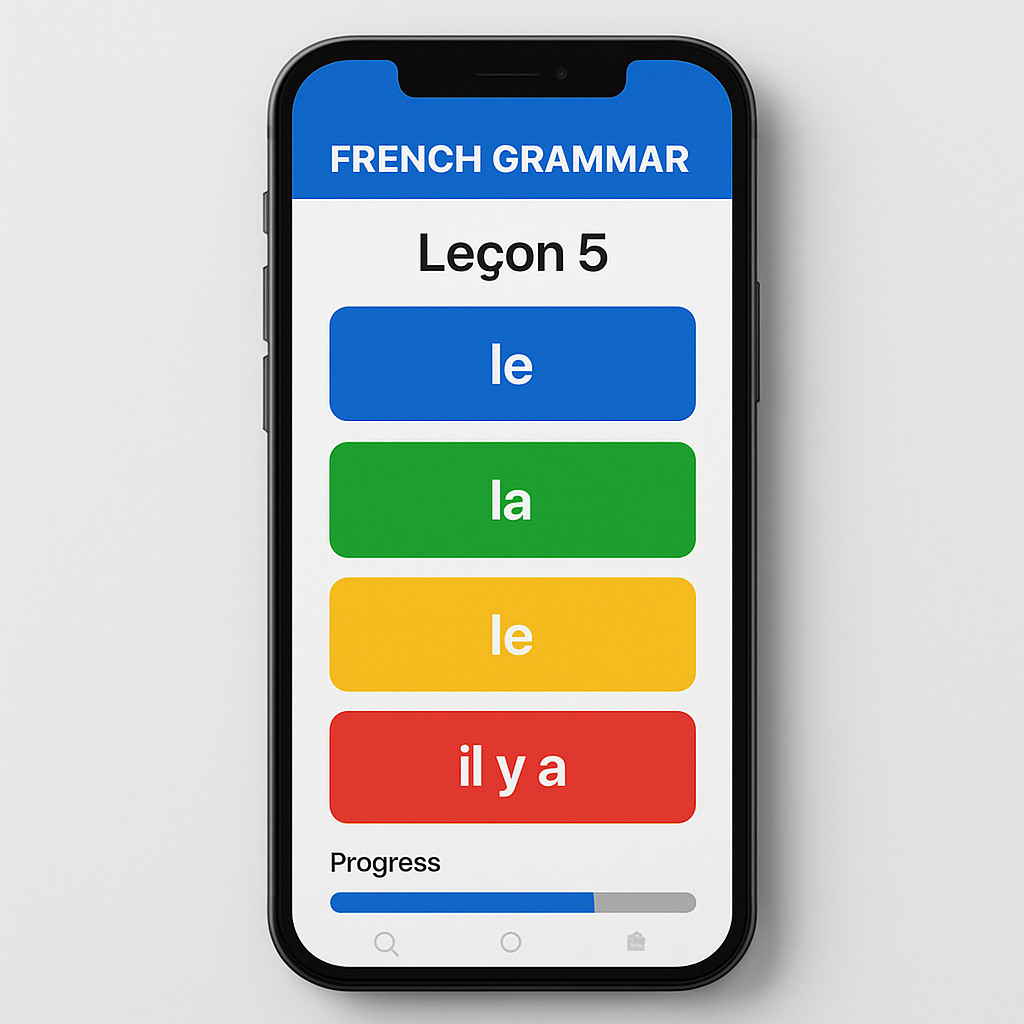
Key Features to Look for in a French Grammar App
When you start hunting for a french grammar app, the buzz‑words can blur the real value. That’s why we break down the must‑have features into bite‑size chunks you can actually test on the fly.
Think about the last time you tried to remember the passé composé and ended up Googling it mid‑sentence. A solid app should make that moment disappear.
Clear, Contextual Explanations
You want the rule explained in plain English, then dropped straight into a short dialogue – like ordering a croissant or asking for directions. If the app shows the verb form, then lets you hear it in a realistic exchange, you’re moving from theory to practice instantly.
Seeing a quick demo helps you decide if the teaching style clicks with you. Below is a short walkthrough of a typical grammar lesson in action.
Notice how the lesson pauses for you to repeat the sentence, then highlights the correct conjugation. No teacher’s sigh, just a friendly “nice try, let’s tweak that.”
Spaced Repetition & Adaptive Review
Your brain forgets most of what you learn after 24 hours unless something nudges it back. Apps that schedule reviews just before the forgetting curve peaks save you from endless re‑reading.
In our experience, the best french grammar app learns which verbs trip you up and surfaces them in a micro‑review the next day, then again after three days, and so on. The result is a steady, low‑stress boost in retention.
Real‑Time Corrections & Speech Playback
Type “Je suis aller” and watch the app underline the mistake, suggest “allé,” and play the native pronunciation side‑by‑side. No teacher’s sigh, just a friendly “nice try, let’s tweak that.”
For beginners, hearing the corrected version right away creates a mental model you can imitate next time, turning errors into stepping stones rather than roadblocks.
Multisensory Flashcards & Visual Cues
Learning isn’t just about reading text. When an app pairs a verb with a tiny animation – say, a cartoon of someone eating for “manger” – you get a visual anchor that sticks longer.
This triple‑code approach (text, audio, image) is a lifesaver for visual learners and for parents who want a kid‑friendly way to reinforce classroom lessons.
| Feature | Why it matters | Example in app |
|---|---|---|
| Clear, Contextual Explanations | Turns abstract rules into real‑world usage | Dialogue that asks for a coffee order |
| Spaced Repetition & Adaptive Review | Schedules practice before forgetting | Auto‑review of tricky verbs after 1 day, 3 days |
| Real‑Time Corrections & Speech Playback | Provides instant feedback without embarrassment | Highlight “Je suis aller” and suggest “allé” |
| Multisensory Flashcards | Engages visual, auditory, and textual memory | Animated “manger” with eating icon and audio |
So, when you scan the app store, use this checklist as your quick audit: does the app explain rules in context, schedule smart reviews, correct you instantly, and give you visual‑audio cues? If the answer is yes, you’ve probably found a french grammar app that will grow with you.
Try setting a 5‑minute daily habit with the feature you’re most curious about – maybe the review calendar – and watch your confidence climb faster than a metro train at rush hour.
Another feature worth hunting is offline access. If you’re commuting on the metro or sipping coffee in a Parisian café without Wi‑Fi, the app should let you download lessons ahead of time. That way you never lose momentum because the signal drops.
Finally, look for a community or tutor‑link option. Some apps let you post a short sentence and get feedback from native speakers or certified teachers. Even a quick thumbs‑up from a peer can reinforce correct usage and keep you motivated.
Putting these pieces together gives you a decision‑making framework you can apply to any new tool. Write down a quick rating for each feature, compare a couple of apps side‑by‑side, and you’ll walk away with a clear winner that matches your learning style.
Top 5 French Grammar Apps Reviewed
1. Dr French
When you need a pure‑grammar deep‑dive, Dr French feels like a pocket‑sized textbook that actually talks to you. It packs over 240 bite‑size lessons and 700 practice questions, all organized by topic and level. The “Homework” feature lets you flag tricky rules and revisit them on a schedule you set, so you’re never caught off‑guard by the next passé composé.
What I love most is the offline mode – you can download a whole unit before hopping on the metro, then study without a single bar of signal. The search bar also means you can type “subjunctive” and jump straight to the explanation you need. Check out Dr French’s page for more details.
2. Babbel
Babbel blends grammar with real‑world dialogues, so you learn a rule and instantly see it used in a short conversation. The adaptive review engine resurfaces verbs right before the forgetting curve hits, which matches the spaced‑repetition checklist we talked about earlier. Its voice‑recognition tool gives you a quick “thumbs‑up” or correction, keeping the feedback loop tight.
For busy parents, the 5‑minute “quick lesson” mode works well – you can squeeze a conjugation drill into a coffee break and still get the same personalized review later.
3. Duolingo
Duolingo’s gamified tree makes daily practice feel like a habit‑forming game. While it leans heavily on vocabulary, the Grammar‑Tips pop‑ups now include concise rule summaries and instant micro‑quizzes. The app’s “Practice” button pulls items you’ve struggled with, giving you a focused review session without scrolling through endless decks.
It also syncs across devices, so you can start a lesson on your phone and finish it on a tablet – a simple convenience if you juggle multiple screens.
4. Memrise
Memrise uses spaced‑repetition with a heavy visual twist: each grammar point is paired with a vivid image or short video clip. The “Learn with Locals” series adds native‑speaker audio, letting you hear the correct pronunciation right after you type a sentence. Its “Grammar Builder” mode lets you assemble sentences from drag‑and‑drop cards, which reinforces structure in a hands‑on way.
Because the content is community‑driven, you’ll often find extra examples that show the rule in everyday contexts – perfect for learners who crave real‑life usage.
5. Busuu
Busuu’s strength is its tutor‑feedback network. After you complete a grammar exercise, you can send your answer to a native speaker for a quick correction, turning every mistake into a mini‑lesson. The app also offers “Grammar Review” packs that focus on one topic per week, aligning nicely with the habit‑stacking tip we mentioned earlier.
The offline download option means you can keep a whole week’s worth of reviews in your backpack, ready for those long train rides between language meet‑ups.
Now that you’ve seen the options, the next step is simple: pick the app that checks the most boxes on your personal checklist and set a tiny daily goal. Remember, consistency beats perfection – even five minutes a day will keep the grammar muscles flexed. If you ever feel stuck, revisit the “Homework” or review calendar feature in your chosen app; it’s the safety net that turns occasional practice into steady progress.
How to Set Up and Maximize Your French Grammar App
You’ve just downloaded the french grammar app that caught your eye – maybe it was Busuu, Babbel, or the Ginkgo French app you saw on the App Store. Now the real work begins: turning a shiny tool into a habit that actually improves your French.
1. Do a quick onboarding audit
When you open the app for the first time, resist the urge to skip the welcome tutorial. Those first screens usually let you set your level, choose topics you care about (travel, work, everyday chatter), and decide how often you want reminders. Pick a realistic frequency – five minutes a day is better than an hour once a week.
And if the app asks whether you prefer visual flashcards or audio‑first drills, go with the mode that matches how you learn best. That tiny choice will shape the rest of your experience.
2. Set a micro‑goal and lock it in
Here’s a trick we’ve seen work for beginners and busy parents alike: write down a concrete, tiny goal in the app’s “daily goal” field. Something like “review 3 verb forms” or “complete one Grammar Review pack.” The app will nudge you, and you’ll get a little dopamine hit each time you check it off.
Don’t overthink it – the goal should feel effortless. If you’re juggling school runs, even a single flashcard before coffee counts.
3. Activate spaced‑repetition
Most french grammar apps have a review calendar hidden behind a “review” or “practice” tab. Open it, and you’ll see items the app thinks you’ll forget soon. Schedule those reviews for the same time each day – say, right after you brush your teeth.
Because the algorithm resurfaces tricky conjugations right before the forgetting curve spikes, you’ll notice fewer “uh‑uh‑what does that verb mean?” moments in real conversations.
4. Use audio as a reality check
Whenever the app offers a native speaker recording, hit play and repeat out loud. Record yourself if the app lets you, then compare. That tiny pause‑and‑play loop builds muscle memory faster than reading a rule sheet.
Even if you’re in a noisy kitchen, whispering the sentence into your phone still trains your ear and your mouth.
5. Download for offline access
Commutes, coffee shops, or late‑night study sessions often come with spotty Wi‑Fi. Before you head out, tap the download button for the next week’s lessons. You’ll keep the momentum going without hunting for a signal.
We’ve watched learners stay consistent simply because the app was ready when the metro doors closed.
6. Leverage community or tutor feedback
If your app offers a peer‑review or tutor‑correction feature, use it early. Send a sentence you’re unsure about, read the correction, and note the pattern. Those bite‑size insights are far more valuable than scrolling through a generic forum.
And remember: a quick “thumbs‑up” from a native speaker is more motivating than a silent checklist.
7. Track progress and adjust
Open the statistics or progress tab once a week. Look for trends – maybe you’re nailing present tense but stumbling on the subjunctive. Adjust your micro‑goal to focus on that weak spot.
Seeing a chart climb, even a few points, keeps the habit feeling rewarding.
8. Build a tiny ritual around the app
Pair the app with something you already do. Brew a coffee, open the app, and spend the first two minutes reviewing yesterday’s flashcards before you dive into today’s lesson. The ritual cues your brain that it’s study time.
Over time, that ritual becomes automatic – the same way you reach for your phone to check the weather.
So, what should you do next? Grab your chosen french grammar app, follow these eight steps, and watch those five‑minute sessions pile up into real‑world confidence. Consistency, not perfection, is the secret sauce.
Integrating a French Grammar App with Other Learning Resources
Ever felt like your French grammar app was a great coach but you were still missing the rest of the training gym? You’re not alone. The app gives you bite‑size drills, but real fluency needs a mix of books, audio, and real‑world conversation.
So how do we stitch those pieces together without turning your study time into a chaotic collage? Think of it like building a layered sandwich: the app is the fresh, crunchy lettuce, and the other resources are the hearty bread, protein, and sauce that make every bite satisfying.
Pair the app with a textbook or worksheet bundle
Start by picking a concise grammar reference – something like “Practice Makes Perfect: French Verb Tenses.” Open the app’s lesson on the present tense, then flip to the book’s explanation for a deeper dive. The key is to keep the two sources side by side for five minutes, then switch back to the app for spaced‑repetition practice.
Actionable step: write down one rule you just reviewed in the book, then immediately do the matching practice set in the app. Mark it as “review” in the app’s calendar so you revisit it in 24 hours.
Layer audio podcasts and YouTube channels
Audio exposure is the missing muscle for pronunciation and listening comprehension. Pick a beginner‑level French podcast (e.g., “Coffee Break French”). After each 3‑minute episode, pause and type a sentence that uses a grammar point you just practiced in the app.
Because the app often offers instant correction, you can compare your typed sentence with the app’s feedback, then listen again to the podcast segment to hear the natural rhythm. This back‑and‑forth reinforces the rule in both written and spoken form.
Use a language‑exchange platform for live practice
When you feel ready to test your grammar in conversation, jump onto a language‑exchange community like Tandem. The app’s “Grammar Check” feature can be your safety net: type a quick message, hit send, and if you get a correction, you know exactly where you slipped.
Real‑world example: a learner struggled with the subjunctive after a Duolingo session. They wrote “Il faut que je suis” to a French partner on Tandem, received a “Grammar Check” suggestion to change “suis” to “sois,” and suddenly the rule clicked. The instant, low‑stakes feedback turned a confusing mistake into a memorable lesson.
Create a mini‑curriculum that mixes all tools
Map out a weekly plan that allocates 10 minutes to the app, 10 minutes to a textbook worksheet, 5 minutes to a podcast, and 5 minutes to a language‑exchange chat. Stick the plan on your fridge or set a recurring reminder in the app itself.
Need inspiration on structuring that schedule? Check out our How To Maximize Your Language Learning With Apps guide, which walks you through building a balanced study calendar that aligns with the forgetting curve.
Track progress across every resource
Most apps have a stats tab; textbooks have completed‑exercise checklists; podcasts often show episode numbers. Consolidate those numbers in a simple spreadsheet: column A – app review score, column B – worksheet completion, column C – podcast minutes, column D – exchange chat minutes.
At the end of each week, glance at the sheet. If your app score is high but podcast minutes are low, schedule an extra listening session. If the worksheet column lags, revisit that chapter in the book. The visual overview keeps you honest and helps you shift focus where it matters.
Does this feel like a lot to juggle? Remember, the goal isn’t to master everything at once. Pick one new resource each month, integrate it, and let the habit settle before adding the next. Consistency, not overwhelm, is the secret sauce that turns a french grammar app into a full‑fledged learning ecosystem.
Conclusion
We’ve walked through why a well‑designed french grammar app can be the spark that turns shaky phrases into confident conversation. You now know the must‑have features – contextual explanations, spaced‑repetition, instant feedback, and multisensory cues – and how they fit together with textbooks, podcasts, and language‑exchange chats.
So, what does that mean for you? It means you don’t need to juggle a dozen tools at once. Pick one app that ticks the boxes, set a tiny daily micro‑goal, and let the app’s review engine do the heavy lifting while you focus on real‑world practice.
If you’re a beginner feeling overwhelmed, start with five minutes of verb drills each morning. If you’re a parent helping a child, integrate short flashcards during snack time. And if you’re an educator, use the app’s progress stats to tailor class activities.
Remember, consistency beats intensity every time. The habit you build today will pay off in weeks, not months. Keep the momentum going by reviewing your weekly spreadsheet, adjusting your micro‑goals, and celebrating each little win – like finally ordering a croissant without a hitch.
Ready to make that next step feel natural? Dive back into your chosen french grammar app, lock in your review schedule, and watch your confidence grow, one bite‑size lesson at a time.
FAQ
How do I choose the right french grammar app for my skill level?
Start by asking yourself where you are today – beginner, middle‑of‑the‑road, or ready for nuance. Look for an app that lets you set your level during onboarding and then serves lessons in bite‑size chunks. If you’re just getting the basics, you’ll want clear rule explanations and lots of instant feedback. More advanced learners should gravitate toward apps that surface real‑world dialogues and let you tweak the difficulty on the fly.
Can a french grammar app replace a textbook?
Not entirely, but it can handle the heavy lifting. Textbooks give you deep context and a solid reference you can flip through, while an app delivers daily practice, pronunciation clips, and spaced‑review reminders. Think of the app as your pocket tutor that keeps the momentum going, and the book as the library you dip into when you need a deeper dive on a tricky rule.
How often should I use the app to see real progress?
Consistency beats marathon sessions every time. Aim for a micro‑habit – five to ten minutes a day, preferably at the same time you’d brew your coffee or wait for the subway. Even a quick review of yesterday’s flashcards triggers the forgetting‑curve reset. If you miss a day, don’t panic; just jump back in and let the app’s adaptive schedule guide you back on track.
What features should I look for to stay motivated?
Look for streak counters, simple goal‑setting fields, and friendly push notifications that feel like a nudge from a study buddy rather than a nag. Badges for completing a module, audio playback that lets you compare your voice, and a progress chart that shows a steady upward line can all keep the dopamine flowing. When the app celebrates your tiny wins, you’ll want to keep the habit alive.
Is spaced repetition really necessary, and how does it work in these apps?
Yes – it’s the science‑backed secret sauce behind long‑term retention. The app tracks which verbs or rules you stumble on, then schedules a review just before you’re likely to forget them. You’ll see a “review tomorrow” badge for a tricky passé composé, then another after three days, and so on. This timing locks the knowledge in without you having to schedule it yourself.
Can I use a french grammar app with my kids?
Absolutely. Most apps offer a kid‑friendly mode with colorful flashcards and short, game‑like drills. Pair the app’s five‑minute daily challenge with a snack‑time routine, and you’ve turned learning into a playful habit. Encourage your child to repeat the native audio out loud; the instant correction feels like a gentle high‑five rather than a reprimand.
What’s the best way to combine an app with real‑world practice?
Pick a daily “action step” that mirrors a real conversation – ordering coffee, asking for directions, or texting a friend. After the app introduces the grammar point, head to a language‑exchange chat or practice with a native speaker for a minute or two. The app’s review calendar will then remind you to revisit that same structure later, cementing the bridge between digital drills and live use.