

Over half of American language learners say they struggle to stay motivated after the first month. Whether you are hoping to travel, connect with new friends, or boost your career, learning a second language opens exciting possibilities. Setting clear goals and building habits that work can dramatically improve your results. This step-by-step guide brings together proven strategies to help you take control of your language journey and see real progress from day one.
Table of Contents
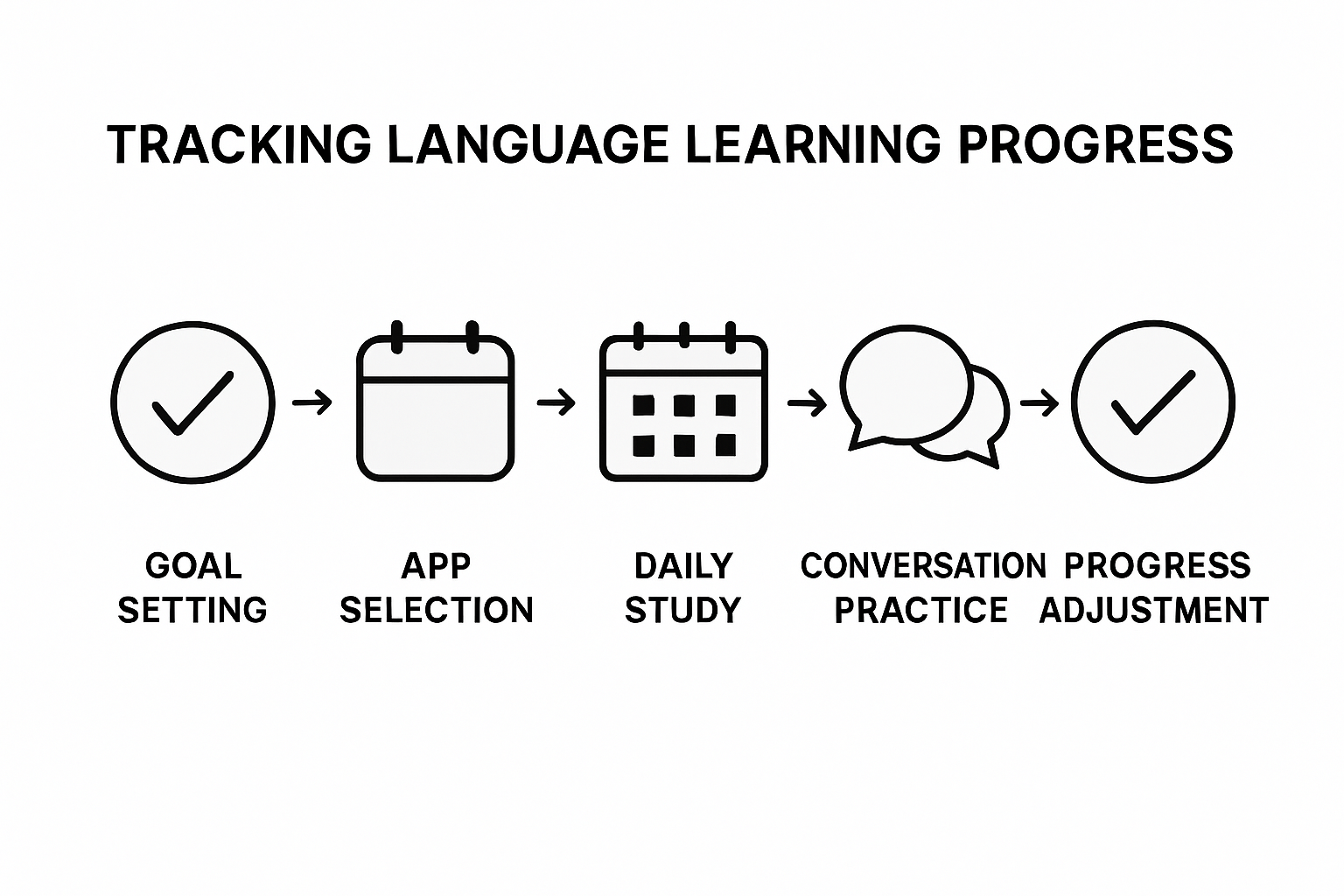
- Step 1: Set Clear Language Learning Goals
- Step 2: Choose Effective Apps and Tools
- Step 3: Create and Follow a Consistent Study Plan
- Step 4: Engage in Real-Life Communication Practice
- Step 5: Track Progress and Adjust Techniques
Quick Summary
| Key Insight | Explanation |
|---|---|
| 1. Set Specific Language Goals | Define clear, measurable objectives to guide your learning. Aim for specific achievements, like having a conversation by a certain date. |
| 2. Choose Suitable Learning Apps | Select apps that align with your goals and learning style. Test multiple platforms before committing to find one that suits you best. |
| 3. Establish a Consistent Study Plan | Consistency is key. Incorporate shorter, daily study sessions into your routine for better retention and progress. |
| 4. Engage in Real Communication | Practice language skills in real-life settings. Join conversation groups or use exchange platforms to gain practical experience. |
| 5. Monitor Progress and Adjust | Regularly track your development and adjust strategies as needed. Use benchmarks to identify strengths and areas for improvement. |
Step 1: Set Clear Language Learning Goals
Setting clear language learning goals is your roadmap to successful language acquisition. Without specific targets, your learning journey can feel like wandering through an unfamiliar city without a map.
Start by getting precise about what you want to achieve. Instead of a vague goal like “learn Spanish,” define something concrete such as “have a 15-minute conversation with a native speaker by September” or “read a Spanish novel without using a dictionary by next year.” Research shows that goal specificity plays a critical role in educational success, especially when developing language skills.
Break down your big goals into smaller, manageable milestones. If your ultimate aim is fluency, create quarterly checkpoints. For instance, in the first three months, focus on mastering 500 essential vocabulary words. In the next quarter, concentrate on conversational grammar structures. By using a systematic approach to language learning goals, you transform an overwhelming challenge into an achievable progression.
Pro Tip: Write down your goals and place them somewhere visible. Seeing your targets daily keeps you motivated and accountable. Your language learning journey starts with clarity, commitment, and strategic planning.
Step 2: Choose Effective Apps and Tools
Selecting the right language learning apps and tools can dramatically accelerate your language acquisition journey. Think of these digital companions as your personal language learning coaches available 24/7.
Student and teacher attitudes toward mobile language learning apps reveal that not all applications are created equal. Start by identifying your specific learning goals and preferred learning style. Some apps excel at vocabulary building, while others focus on conversational skills or grammar fundamentals. Research indicates that matching the app to your personal learning objectives is crucial for effective language development.
When evaluating language learning tools, consider factors like interactive features, user interface, progress tracking, and real world application. Comparative studies of mobile assisted language learning apps demonstrate significant variations in how different platforms support vocabulary acquisition. Look for apps that offer diverse learning methods such as gamification, speech recognition, and personalized feedback.
Pro Tip: Most language learning apps offer free trials. Take advantage of these to test multiple platforms before committing. Your ideal language learning tool should feel engaging, intuitive, and aligned with your personal learning pace and style. Remember, the best app is the one you will consistently use.
Step 3: Create and Follow a Consistent Study Plan
A consistent study plan transforms language learning from a sporadic hobby into a structured journey of continuous improvement. Your success depends not just on what you learn, but how consistently you engage with the language.

Open Learning Analytics research highlights the critical importance of systematic approaches to learning. Design a study plan that fits seamlessly into your daily routine. Aim for shorter, more frequent sessions rather than marathon studying. For example, commit to 30 minutes every day instead of two hours once a week. This approach helps build muscle memory and prevents overwhelming burnout.
Leveraging technology can dramatically enhance your study consistency. AI powered spaced repetition systems can track your progress and optimize learning intervals. Choose a time of day when you are most alert and least likely to be interrupted. Some learners prefer early morning sessions, while others find evening studying more productive. The key is finding a rhythm that feels natural and sustainable for your lifestyle.
Pro Tip: Use a physical calendar or digital tracking app to mark your daily language learning progress. Seeing a streak of consecutive study days can be incredibly motivating and help you maintain momentum. Remember, consistency trumps intensity every time.
Step 4: Engage in Real-Life Communication Practice
Taking your language skills from theoretical knowledge to practical application requires stepping out of your comfort zone and engaging in authentic communication experiences. Real-world practice transforms academic learning into genuine linguistic fluency.
Technology offers innovative ways to simulate real-life communication scenarios, including interactive applications that provide immersive language experiences. Look for opportunities to practice beyond traditional classroom settings. This might mean joining language exchange websites, participating in conversation groups, or finding native speakers willing to chat online. Virtual meetups, language tandems, and international social media platforms can connect you with speakers who want to practice mutual language skills.
Augmented reality language learning technologies are expanding the possibilities for contextual communication practice. Seek out environments where you can naturally apply your language skills such as international cafes, cultural centers, or community events with multilingual participants. Challenge yourself to navigate real conversations even when you feel uncertain. Start with simple interactions like ordering food, asking for directions, or discussing basic topics. Remember that every conversation is a learning opportunity regardless of how perfectly you communicate.
Pro Tip: Embrace mistakes as valuable learning experiences. Native speakers appreciate genuine efforts to communicate, and most will be patient and supportive of language learners trying to improve their skills.
Step 5: Track Progress and Adjust Techniques
Language learning is not a linear journey but an adaptive process that requires continuous self assessment and strategic adjustments. Your ability to monitor your progress and modify your approach can dramatically accelerate your language acquisition.
Open Learning Analytics research reveals the critical importance of systematic progress tracking. Establish clear benchmarks and measurable milestones to evaluate your language skills. This might include vocabulary tests, conversation fluency assessments, or standardized language proficiency exams. Create a personal dashboard where you can visually track your improvements across different language skills like reading, writing, listening, and speaking.
AI powered learning technologies now offer sophisticated methods to analyze your learning patterns and suggest personalized improvements. Regularly review your learning data to identify strengths and areas needing more attention. If you consistently struggle with verb conjugations, for example, allocate more study time to that specific skill. Be willing to experiment with different learning techniques and resources when your current methods are not delivering the desired results.
Pro Tip: Conduct a monthly self review. Reflect on what learning strategies worked well, what challenges you encountered, and how you can adjust your approach. Flexibility and self awareness are your greatest allies in mastering a new language.
Accelerate Your Language Learning Journey With Expert Guidance and Proven Tools
Mastering a new language can feel overwhelming when trying to set clear goals or maintain consistent practice. The article “Top Language Learning Tips 2025” highlights challenges like finding the right apps that fit your learning style and tracking progress effectively. If you want to turn these challenges into success, having trusted advice and thorough app reviews makes all the difference.
Discover detailed insights and personalized recommendations on Languavibe.com, your ultimate resource for navigating the complex world of language learning tools. Whether you want to optimize your study plan, select effective apps backed by science, or engage in real communication practice, Languavibe helps you make informed decisions today. Don’t wait to transform your learning experience. Visit our site now and start mastering any language faster with confidence.
Frequently Asked Questions
What are effective language learning goals I can set?
Setting effective language learning goals involves defining specific, measurable targets. For example, you might aim to have a conversation with a native speaker for 15 minutes by a certain date or read a novel without using a dictionary within a year. Write these goals down and review them regularly to keep yourself motivated.
How can I choose the right language learning apps or tools?
To choose the right language learning apps, reflect on your personal learning style and specific goals. Assess features such as interactive content, user interface, and progress tracking. Test various apps via free trials to determine which one you find most engaging and suitable for your needs.
What should a consistent language study plan look like?
A consistent language study plan should prioritize short daily sessions over infrequent, longer ones. For instance, commit to studying for 30 minutes each day, rather than trying to cram two hours once a week. Track your study days using a calendar, which can help maintain your motivation and ensure a steady learning rhythm.
How can I practice my language skills in real-life situations?
Engaging in real-life situations to practice your language skills can include joining conversation groups or using language exchange websites. Look for opportunities in your community or online to connect with native speakers. Start with simple interactions, like ordering food or asking for directions, to build your confidence.
What is the best way to track my language learning progress?
The best way to track your language learning progress is to establish clear benchmarks and create a personal dashboard. Include assessments like vocabulary tests or fluency checks to evaluate your growth over time. Conduct a monthly self-review to identify strengths and weaknesses, and adjust your methods accordingly.
How do I adapt my learning techniques if I’m not progressing?
If you’re not progressing, be willing to experiment with different learning techniques and resources. Analyze your progress data to spot areas that need attention, such as verb conjugation or vocabulary retention. Adjust your study focus and allocate more time to challenging areas to improve your overall language skills.
Recommended
- How To Maximize Your Language Learning With Apps – My Language Learning Apps Site
- How To Choose The Right Language App For Your Child – My Language Learning Apps Site
- Best Language Learning Apps for Beginners (Free & Paid)
- In-Depth Review of Babbel: Pros and Cons
Article generated by BabyLoveGrowth

