
You can study a language without a beginner course by turning a small collection of reliable examples into repeatable listening, recall, and speaking practice. When language learning resources are scarce, your strongest starting point is a small, trustworthy collection you can reuse.
The difficulty is deciding what to learn next when dictionaries, recordings, and grammar notes don’t fit together. Start by giving each available source a clear job, then build lessons around things you want to understand or say.
Key Takeaways
- Give each resource a separate purpose, such as pronunciation, meaning, grammar, or review.
- Learn useful phrases from documented examples, and keep uncertain forms out of your main review deck.
- Reuse short recordings for listening and speaking, then test yourself with changed questions or unfamiliar material.
- Ask speakers focused questions when possible, while keeping a study routine that also works independently.
Find Language Learning Resources Beyond Courses
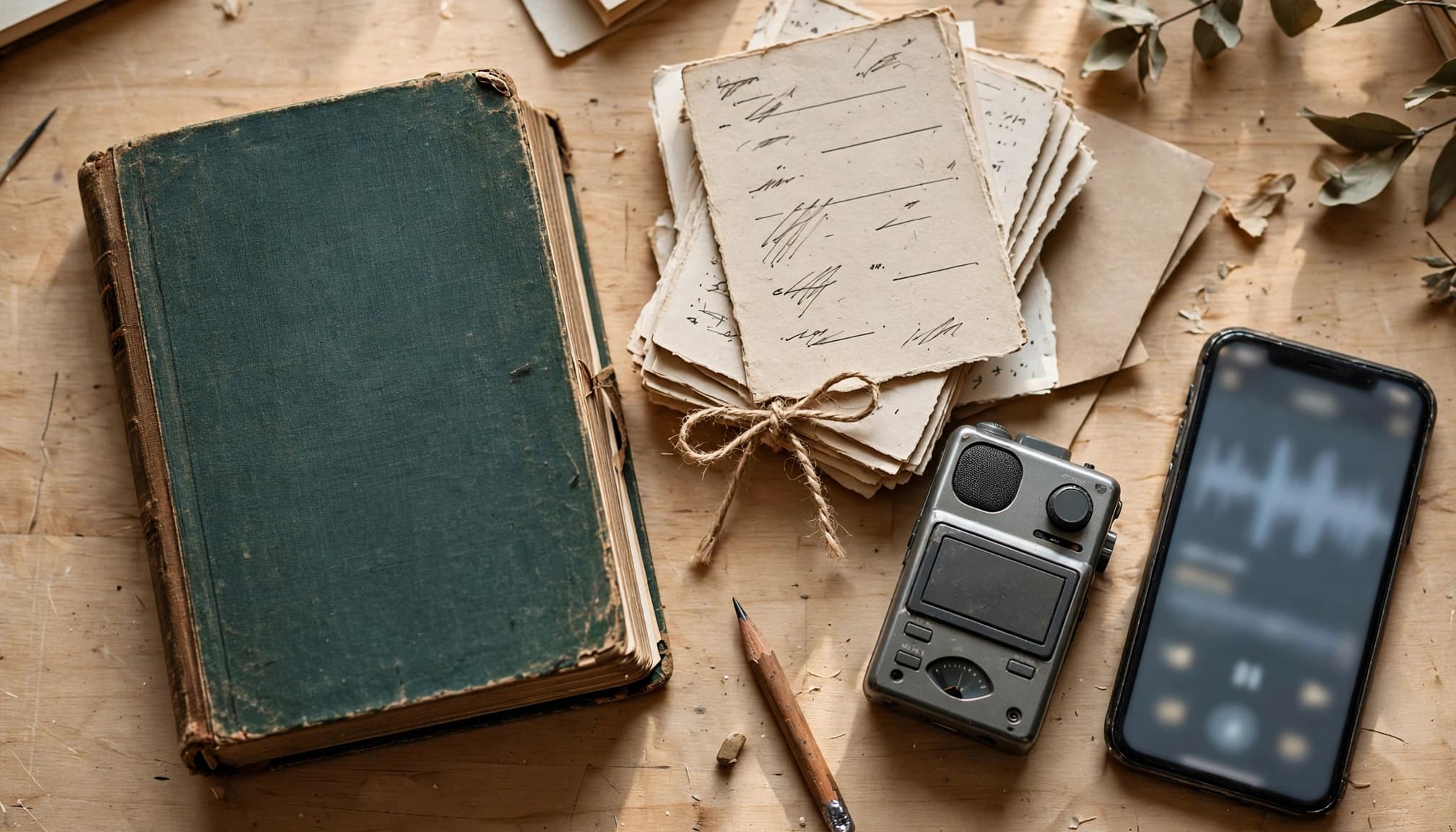
Search community and documentation collections
Search using the language’s own name, alternative spellings, and regional names. Add terms such as “dictionary,” “audio,” “conversation,” or “grammar.” If you understand a regional majority language, search in that language too.
Community organizations, libraries, universities, and local broadcasters may hold material that app searches miss. However, documentation collections usually organize material for preservation or research, rather than beginner lessons.
The Wikitongues language archive includes videos, dictionaries, and other materials across more than 700 languages. The Living Tongues Institute also supports Living Dictionaries. Neither guarantees coverage of your target variety, but both broaden your search beyond commercial courses.
Give each source one job
A dictionary can explain meanings without teaching natural conversation. Meanwhile, an interview provides real speech but may offer no explanation.
Choose the best available source for each task. Use recordings for sound, examples for sentence patterns, and reference works for questions that block understanding.
Our guide to choosing complementary language tools follows this principle: focused practice, review, and independent use need different kinds of support. Your setup might be a dictionary, several recordings, and paper cards.
Choose One Language Variety and One Immediate Goal
Before combining materials, note which dialect, region, writing system, and time period each source covers. Two apparently conflicting forms may belong to different varieties.
Start with the variety closest to the people or community you hope to communicate with. If your materials cover several varieties, keep their examples labeled rather than blending them into one vocabulary list.
Next, choose a task small enough to practice this week. Introducing yourself, understanding greetings, or asking for repetition gives your study a direction.
Collect the phrases needed for that task before studying unrelated vocabulary. Also learn ways to request help, such as asking what something means or requesting a slower repetition.
A short task provides a useful stopping point. You can move forward when you understand likely replies and respond without reading every line.
Keep longer-term interests visible, but don’t let an ambitious goal dictate your daily workload. Reading family letters and chatting with relatives may eventually require different vocabulary and registers.
Turn Short Examples Into Beginner Lessons
Work closely with a manageable recording
Choose a short passage with a known topic. Around 20 to 40 seconds can provide plenty of beginner work, although a single clear exchange is enough.
Listen once without reading. Then use a trustworthy transcript or translation, if available, to establish the meaning.
Replay one phrase at a time. Notice rhythm, repeated sounds, and where the speaker groups words together. Record yourself repeating a useful line, then compare your version with the model.
If no transcript exists, work only with sections whose meaning you can establish. Repeatedly hearing an unexplained passage won’t reliably teach you its meaning.
Our Kinyarwanda listening-to-speaking routine connects these skills by reusing understood audio for spoken responses.
Study grammar through attested patterns
Keep a few complete sentences that demonstrate a useful structure. Alongside each sentence, record its meaning and source.
Compare examples before changing words or endings yourself. A familiar-looking substitution may require changes elsewhere in the sentence.
A reference grammar can help resolve a narrow question, even when it’s too technical to study chapter by chapter. Use its index to investigate the pattern in front of you.
Children’s stories can also supply repeated language. However, they aren’t automatically easy for adult beginners: traditional stories may contain uncommon vocabulary or assume cultural knowledge.
Keep Uncertain Information Out of Your Review Deck
Compare independent sources and speakers
Before memorizing an unfamiliar phrase, compare it with another independent source when possible. Two websites repeating the same dictionary entry count as one source.
Look for agreement in meaning, context, pronunciation, and variety. When speakers disagree, ask where each form is used and whether the situation changes the choice.
Keep unresolved items in a separate list marked “uncertain.” Save the original example and your question so you can revisit them later.
Repeated review strengthens whatever you put into it, including a mistaken translation. Keep unresolved language outside your main practice deck.
When only one source exists, learn cautiously from its documented examples. Avoid treating a guessed pattern as a rule.
Use AI to organize, not authenticate
AI can organize notes, create a review schedule, or turn supplied examples into prompts. However, fluent-looking output doesn’t establish accuracy, especially for poorly represented languages.
Don’t rely on generated translations or pronunciation advice as your only evidence. Compare questionable output with recorded speech, written examples, or human correction whenever available.
For review, Anki or paper cards can hold your own sourced material without requiring a ready-made course. To practice repeated retrieval of vocabulary, attempt the answer before revealing it.
Include context where it matters. A bare translation may hide politeness, grammatical form, or a meaning restricted to one situation.
Ask Speakers for Focused, Respectful Help

A speaker doesn’t have to become your course designer. Bring a short recording, a few sentences, and two questions instead of asking them to explain the whole language.
Ask for natural wording in a clear situation. A speaker may find it easier to demonstrate an ordinary greeting than explain an abstract grammar rule.
With permission, record a corrected phrase at a normal pace. Also establish whether you may keep it privately, share it, or use it only during the session. Respect community restrictions around stories, names, and ceremonial material.
If you’re paying for help, agree on the session’s purpose beforehand. For informal exchanges, offer fair time in return and accept that someone may decline.
Once you’ve rehearsed an exchange, ask your partner to change the question’s wording or order. Repeating a memorized response tests something different from understanding an unexpected reply.
If no speaker is available, continue with reliable recordings and self-recording. Keep questions for later rather than inventing answers to maintain momentum.
Build a Routine That Doesn’t Depend on New Materials
A useful routine keeps working even when you haven’t found another lesson. The same short passage can support several days of practice if each session asks you to do something different.
This 25-minute session separates understanding, review, and independent production.
| Time | Activity | Purpose |
|---|---|---|
| 5 minutes | Recall previously learned phrases before revealing them. | Strengthen access without prompts. |
| 10 minutes | Study a short recording or text. | Understand a small amount of new language. |
| 5 minutes | Compare a self-recording with the model. | Notice one sound or rhythm difference. |
| 5 minutes | Respond aloud without reading. | Use familiar language independently. |
When structured lessons exist, our Scottish Gaelic study routine combines course work with reading, listening, and spoken recall. Without a course, a sourced passage can anchor that same sequence.
Once a week, test yourself outside the familiar format. Try another short recording on the same topic, or answer a question without seeing the model.
Record what stopped you: unfamiliar vocabulary, difficulty recognizing sounds, or trouble forming a reply. Then adjust the next week’s practice to address that problem.
If review begins to crowd out listening and speaking, reduce new cards. A growing collection of saved words isn’t useful when you rarely retrieve them.
Frequently Asked Questions
Can I learn without a textbook or regular tutor?
You can build vocabulary, listening skills, and basic spoken routines from reliable examples. However, scarce feedback makes some mistakes harder to identify.
Keep your claims about progress tied to tasks you can perform. Understanding a greeting and answering a follow-up question is clearer evidence than finishing a self-made vocabulary list.
If your goal is reading, devote more time to supported texts. For conversation, protect listening and spoken response practice even when live interaction is infrequent.
What if nearly all available material is too difficult?
Extract a smaller unit instead of forcing yourself through the whole source. A clearly understood greeting or repeated sentence can become a useful lesson.
Prioritize passages with contextual support, such as a visible action, an accompanying translation, or repeated wording. Leave opaque sections for later.
If nothing has a dependable meaning, focus on finding a dictionary, translation, or knowledgeable speaker before building vocabulary from guesses. Meanwhile, organize the sources you have and record which questions each one leaves unanswered.
Build Depth Before Collecting More
Few beginner resources don’t prevent steady study, but they make source quality and careful reuse especially important. A small collection of understood examples can support listening, recall, and practical speech.
Choose one task, gather the clearest available language for it, and keep uncertainties separate. Progress becomes visible when you can understand and use that language beyond the original example.
Ready to Take Your Language Learning Further?
Your favorite language-learning app is a great place to start. Rocket Languages can help you go further with interactive audio lessons, pronunciation practice, real-world conversations, and structured learning.
Explore Rocket Languages →Affiliate disclosure: We may earn a commission if you purchase through this link, at no additional cost to you.