
Most American language learners give up before reaching real fluency, yet building a steady review system flips those odds. With busy schedules and endless materials to choose from, it is easy to lose momentum. This guide highlights proven steps to create a review routine that fits your life, keeps motivation high, and helps you finally see measurable progress on your language journey.
Table of Contents
Quick Summary
| Key Insight | Explanation |
|---|---|
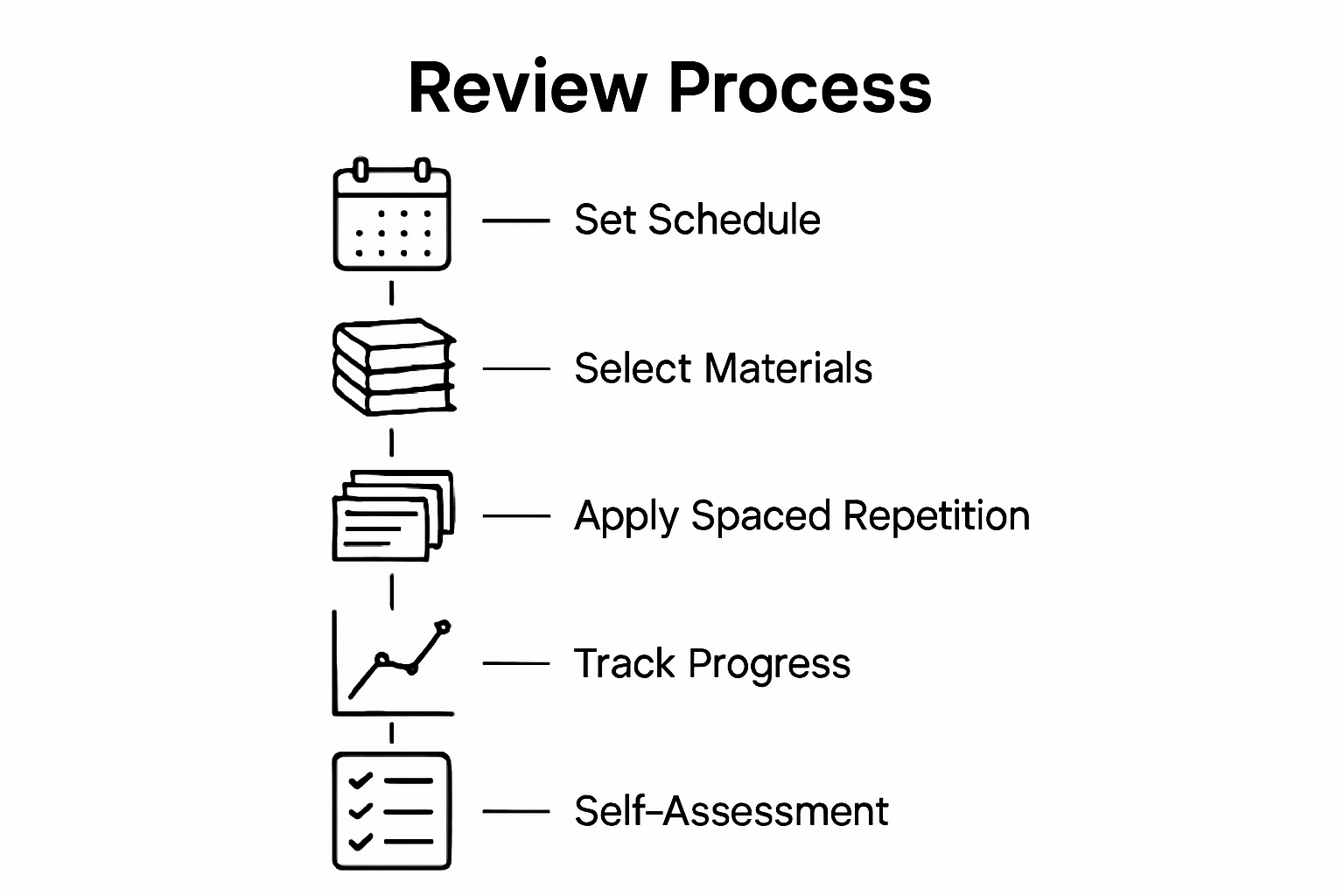
| 1. Create a consistent review schedule | Design a schedule that fits your daily routine and allows for 20-45 minutes of focused review to foster consistent progress. |
| 2. Choose diverse learning materials | Experiment with different resources like apps, flashcards, and books to stay engaged and motivated in your language learning journey. |
| 3. Utilize spaced repetition techniques | Organize materials based on confidence levels, reviewing challenging topics more frequently to enhance memory retention. |
| 4. Track and monitor your progress | Use measurable goals and regular self-assessments to understand your progress and celebrate achievements effectively. |
| 5. Engage in self-assessment | Regularly evaluate your skills through quizzes, mock conversations, and recordings to identify strengths and areas for improvement. |
Step 1: Set Up Your Review Schedule
Creating a strategic language learning review schedule transforms random practice into consistent progress. Your goal is to design a personalized system that makes reviewing feel natural and sustainable.
Start by understanding your current availability and learning style. The British Council recommends breaking down larger objectives into smaller, manageable tasks that integrate seamlessly into your daily routine. This means identifying specific time slots where you can realistically commit 20 to 45 minutes of focused language review.
Map out your week using a digital calendar or physical planner. Alternate between different language skills like reading, listening, vocabulary, and grammar to prevent monotony. Humanities LibreTexts suggests distributing vocabulary study throughout the week to avoid feeling overwhelmed. Pro tip: Choose consistent time blocks when your energy and focus are naturally high.
Remember that flexibility is key. Your review schedule should support your learning journey, not become another source of stress. If a planned session doesnt happen, simply reschedule without guilt. The most important aspect is maintaining momentum and staying committed to your language learning goals.
Step 2: Select Effective Review Materials
Selecting the right language learning materials can make the difference between a frustrating experience and an engaging journey of discovery. Your goal is to find resources that not only match your learning style but also keep you motivated and excited about improving your language skills.

East Los Angeles College’s Language Lab emphasizes the importance of choosing tools that align with individual learning preferences. This means exploring a variety of materials like flashcards, language apps, movies, and books that make learning feel less like work and more like an adventure. Consider your personal learning style as a roadmap to finding the most effective resources.
Spanish NOW EDU recommends tailoring materials to specific learning styles, suggesting that visual learners thrive with videos and flashcards, while auditory learners benefit from podcasts and music. Kinesthetic learners might prefer interactive speaking and writing exercises. The key is diversity mix up your materials to keep your brain engaged and challenged.
Dont be afraid to experiment. Start with a few different resources and pay attention to what sparks your curiosity and helps information stick. Your ideal review materials should feel like tools of discovery, not tedious chores. As you progress, youll naturally refine your collection of learning resources to create a personalized language learning toolkit that works uniquely for you.
Step 3: Apply Spaced Repetition Techniques
Spaced repetition transforms language learning from a hit-or-miss approach into a strategic memory-building process. Your goal is to develop a smart review system that helps you retain information more effectively and efficiently than traditional cramming methods.
Coursera recommends organizing flashcards into study sets based on your confidence levels, which means creating a dynamic review system where less familiar material gets more frequent attention. Think of this as a memory workout where you strategically strengthen weak areas while maintaining your existing language skills. Start by categorizing your learning materials into three groups: challenging, moderately familiar, and well-known.
Anglia Examinations suggests grouping words by theme or context to facilitate easier recall. This approach helps your brain create meaningful connections, making vocabulary retention more intuitive. For instance, instead of random word lists, organize your vocabulary around topics like food, travel, or daily activities. The key is consistent practice that gradually increases intervals between reviews as your confidence grows.
Dont get discouraged if progress seems slow. Spaced repetition is about steady, incremental learning. Your brain needs time to process and store information, so trust the process. As you continue, youll notice your language skills improving almost effortlessly, turning what once felt like a challenging task into an enjoyable journey of linguistic discovery.
Step 4: Monitor and Adjust Your Progress
Tracking your language learning journey transforms random effort into intentional growth. Your goal is to develop a personalized system that helps you understand your progress, celebrate achievements, and make strategic adjustments along the way.
The Rhode Island School of Design’s Center for Arts & Language advises setting measurable goals and conducting regular self assessments. This means creating a tracking method that goes beyond just checking boxes. Start by establishing clear milestones like mastering 50 new vocabulary words per month or holding a five minute conversation. Keep a dedicated learning journal where you record not just what you studied, but how you felt during the process and what specific skills youre improving.
Spanish NOW EDU recommends creating a simple tracking system to monitor study habits, suggesting you log study duration, new words learned, and weekly achievements. Consider using a digital spreadsheet or a dedicated language learning app that allows you to visualize your progress. The key is finding a method that motivates you without feeling like additional homework.
Be kind to yourself during this process. Progress is rarely linear, and some weeks youll learn more than others. The most important aspect is staying consistent and maintaining your curiosity about the language. Your tracking system should feel like a supportive friend cheering you on, not a strict taskmaster judging your every move.
Step 5: Verify Mastery with Self-Assessment
Self-assessment is the secret weapon that transforms passive learning into active language mastery. Your goal is to develop honest and strategic methods for evaluating your true language skills, identifying strengths, and uncovering areas that need more focused attention.
Anglia Examinations recommends using self-assessment tools like targeted quizzes and writing challenges to evaluate language proficiency. This means going beyond traditional tests and creating personalized evaluation methods that truly reflect your learning journey. Consider setting up mock conversations, writing short essays, or recording yourself speaking to get an unfiltered view of your current language capabilities.
Spanish NOW EDU suggests regularly testing yourself using online quizzes, writing prompts, and conversation challenges. One powerful technique is recording yourself speaking and then comparing these recordings over time. This approach provides tangible evidence of your progress and helps you hear improvements in pronunciation, fluency, and confidence that you might otherwise miss.
Remember that self-assessment is not about perfection but about continuous improvement. Approach each evaluation with curiosity and compassion. Celebrate the progress youve made, no matter how small, and view challenges as opportunities for growth rather than indicators of failure. Your language learning journey is unique, and every step forward counts.
Unlock Consistent Language Learning Success with Smart Tools
Mastering the language learning review process can feel overwhelming when juggling schedules, materials, and self-assessments. This article highlights key challenges like creating effective review schedules, applying spaced repetition, and selecting motivating resources. If you want to transform these pain points into accomplishments, having the right tools and expert guidance is essential. At Languavibe.com, we understand your goals—whether it’s building a personalized review system or verifying mastery—and offer insightful articles and detailed app reviews that help you choose solutions tailored to your learning style.
Ready to turn your language learning journey into a confident, structured, and enjoyable experience? Visit Languavibe.com now for trusted advice and app recommendations that support every step of your progress. Explore practical tips on maximizing your study time and discover the best apps that align with spaced repetition and personalized review methods. Start making every review session count today and watch your language skills thrive.
Frequently Asked Questions
How do I create an effective language learning review schedule?
To create an effective schedule, first assess your availability and learning style. Designate specific time slots for focused review, aiming for 20 to 45 minutes, and alternate between skills like reading, listening, vocabulary, and grammar throughout the week.
What materials should I use to enhance my language review sessions?
Choose a variety of engaging materials that match your learning style, such as flashcards, language apps, movies, and books. Experiment with different resources to find what motivates you, ensuring your materials feel like tools of discovery rather than chores.
How can I incorporate spaced repetition into my language learning process?
Incorporate spaced repetition by organizing your study materials based on your confidence level. Create categories for challenging, moderately familiar, and well-known material, and prioritize reviewing less familiar concepts more frequently to reinforce memory retention.
What methods can I use to track my language learning progress?
Track your progress by setting measurable goals and using a dedicated journal or tracking system. Log study duration, vocabulary learned, and achievements to visualize your growth and identify areas needing more focus.
How do I conduct effective self-assessments in my language learning journey?
Conduct self-assessments by using quizzes, writing prompts, or recording yourself speaking to evaluate your language skills. Regularly compare these assessments to observe improvements over time and identify areas requiring further attention.
Recommended
- How To Maximize Your Language Learning With Apps – My Language Learning Apps Site
- How To Choose The Right Language App For Your Child – My Language Learning Apps Site
- Blog – My Language Learning Apps Site
- Best Language Learning Apps for Beginners (Free & Paid)
Article generated by BabyLoveGrowth