Most language apps make you tap fast and talk little. A serious Pimsleur review has to judge the opposite, because Pimsleur still bets on 30-minute audio lessons and spoken recall.
That makes it appealing if you want to speak sooner. It also raises harder questions about grammar, reading, and long-term growth. The details below show where Pimsleur still earns its place, and where disciplined learners will need more.
How Pimsleur works, and what you pay in 2026
Pimsleur is still one of the clearest speaking-first apps in 2026. The core lesson stays simple: a 30-minute audio session that asks you to listen, recall, and answer aloud under time pressure. That pressure matters, because recall is usually the first skill to break in real conversation.
No major public 2026 redesign stands out. Instead, Pimsleur keeps refining the app around the same method. You hear English, respond in the target language, then compare your answer to native audio. It feels plain next to newer AI-heavy apps, yet the method still has a point.
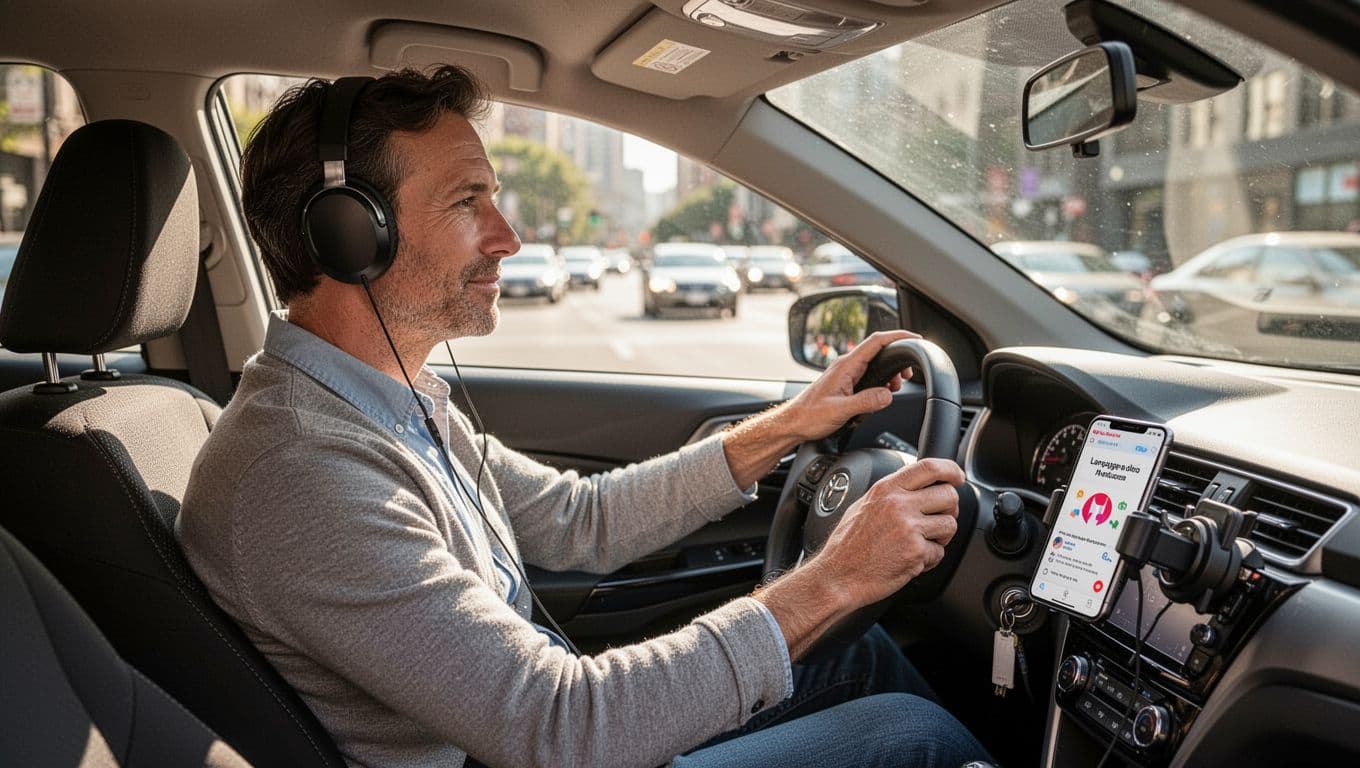
The app works on iOS 11+, Android 7+, and web. It also offers offline lessons, progress tracking, reminders, streaks, and a hands-free mode that fits commuting well. Premium plans add flashcards, quizzes, and AI voice tools in select languages, but those extras are not equally available across the whole catalog.
Language support is broad. Public listings show more than 50 languages for English speakers, plus English courses for speakers of 15 other languages. Depth varies a lot, though. Bigger courses usually have more levels, while smaller ones can stop sooner.
Current public pricing looks like this, though region and app-store billing can shift the exact amount:
| Plan | Approx 2026 price | What you get |
|---|---|---|
| Premium | $19.95 to $20 monthly, about $150 yearly | One language |
| All Access | $20.95 to $21 monthly, about $165 yearly | All languages |
| Single level purchase | $159.99 | Permanent access to one level |
Because the monthly gap is about $1, All Access often gives better value if you may switch languages or compare courses before settling. A 7-day free trial is standard, and trial cancellation appears straightforward. Public summaries are less clear on refunds after billing, so check the current store or in-app terms before paying for a year.
Where Pimsleur still earns its keep
What Pimsleur does well is hard to fake. It makes you answer from memory, with few visual crutches. Many apps let you feel fluent because the right answer sits on the screen. Pimsleur removes that safety net earlier, which is why it often beats more gamified rivals for speaking confidence.
The lessons also recycle phrases with widening gaps, so review happens inside the course instead of feeling bolted on. That repetition can seem old-fashioned. Still, serious learners usually care more about retention than novelty.
This design helps four areas most: listening under speed, pronunciation, phrase recall, and calm verbal response. The native-speaker audio is clear, and the pauses train you to speak before you overthink. That matches PCMag’s review of Pimsleur, which still rates it highly for spoken accuracy.
For disciplined learners, the best use cases are clear. A commuter can finish one lesson on the drive home. A returning learner who understands a lot but freezes can rebuild spoken access fast. A traveler or relocation learner can get useful early speech without staring at a screen. If you judge apps by active output, the same logic behind this 10-minute language app practice test favors Pimsleur more than tap-heavy courses.
The limits serious learners will hit
This Pimsleur review gets less flattering once you look beyond early speaking gains. Grammar explanations are thin. Reading practice is limited. Writing is almost absent. AI voice recognition can catch rough pronunciation issues, but it doesn’t react like a real conversation partner.
The app also keeps you inside controlled prompts. You answer, but you rarely build longer thoughts, defend an opinion, or handle an unexpected follow-up. That matters once you move past travel speech and beginner chats.
Use Pimsleur as a spoken core for the beginner stage, then add other tools before the ceiling gets low.
That ceiling appears sooner for serious learners than the marketing suggests. You can build a solid base in listening and survival conversation, yet advanced fluency needs broader input, richer vocabulary, messier listening, and real back-and-forth. Pimsleur doesn’t offer much of that. It also isn’t the best fit for exam prep, work writing, or learners who want clear rule-based grammar from day one.
As a main method, Pimsleur works best in the first phase of study. A sensible routine is one audio lesson a day, then separate time for grammar notes, graded reading, and live conversation. If you want a more course-like path, this Babbel review for serious learners explains why Babbel often feels stronger for grammar and lesson structure. A recent independent 2026 Pimsleur review lands in a similar place, strong for speech, incomplete on its own.
Who should subscribe, and who should skip it
Pimsleur is easiest to recommend for beginners, rusty returners, busy professionals, commuters, and travelers with a near-term speaking goal. It’s also a good fit for learners who get stuck in recognition-heavy apps and need more spoken recall. If your main problem is “I know the words, but I can’t say them fast enough,” Pimsleur targets that problem well.
It is weaker for learners who need writing, deep grammar, CEFR-style planning, or broad reading practice. If you’re already around B1 and want freer conversation, you’ll outgrow it faster than the sales copy implies. Smaller language courses may also feel thin sooner, so check course depth before committing to a yearly plan.
The practical choice is simple. Use Pimsleur as a focused speaking layer, or as your main tool only for the early stage. Don’t expect it to carry the whole journey.
Pimsleur still deserves respect in 2026 because it trains a skill many apps avoid, spoken recall under pressure. That makes it efficient for building early confidence.
For serious learners, the value depends on how you frame the job. As a primary tool for the first stretch, it’s strong. As a full long-term system, it isn’t enough.
Ready to Take Your Language Learning Further?
Your favorite language-learning app is a great place to start. Rocket Languages can help you go further with interactive audio lessons, pronunciation practice, real-world conversations, and structured learning.
Explore Rocket Languages →Affiliate disclosure: We may earn a commission if you purchase through this link, at no additional cost to you.