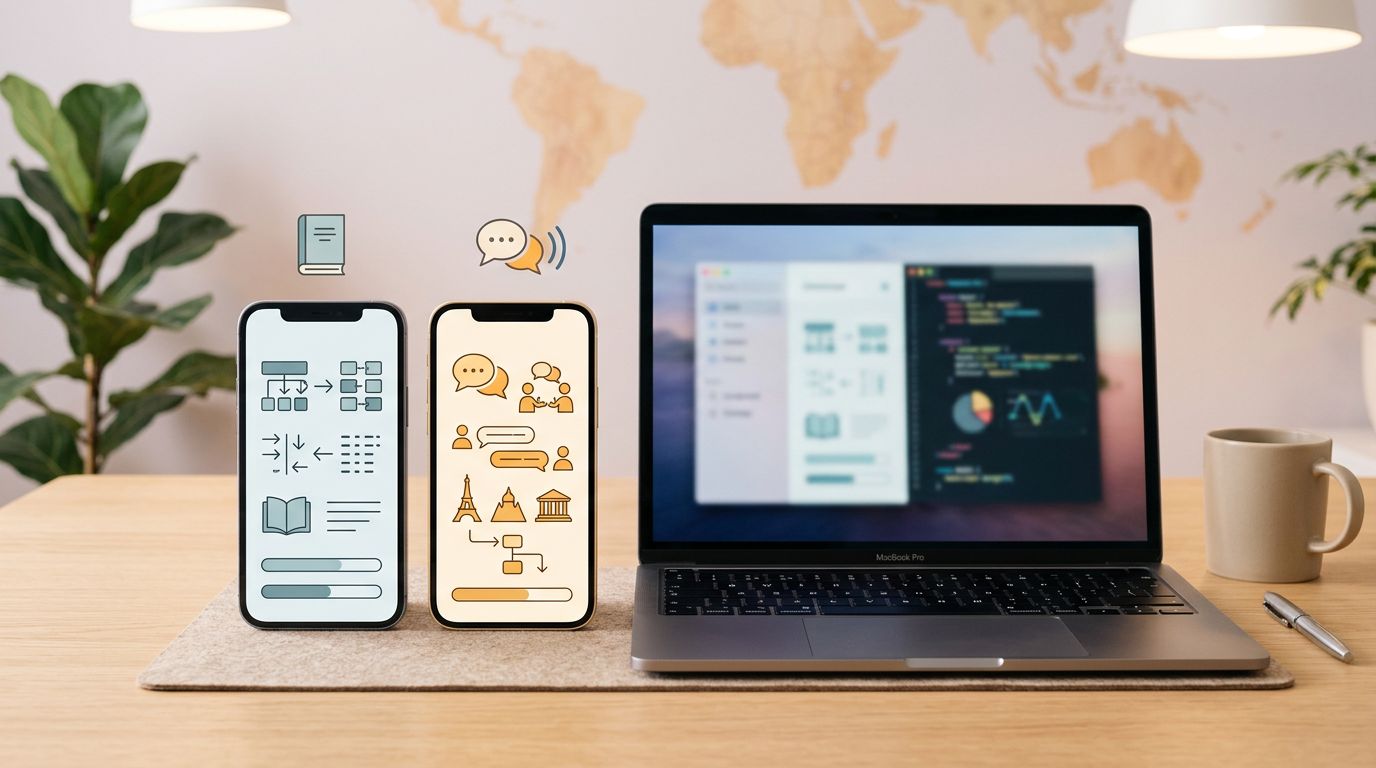
Choosing between Babbel vs Mango Languages in 2026 comes down to how you prefer to study, rather than which platform has the flashier name. Deciding on the right language learning app is ultimately a choice between a structured, academic course and a flexible, phrase-first library.
If you want grammar support, consistent review loops, and a clear path from lesson to lesson, Babbel is easier to trust. If you prefer a wider variety of language options, simpler lessons, and a fast start, Mango Languages makes more sense.
Both apps can help beginners find their footing. The better fit depends on how much structure you require, how many languages you need to explore, and how you align these tools with your personal language goals.
Key Takeaways
- Structure vs. Flexibility: Babbel offers a traditional, curriculum-based approach with heavy emphasis on grammar, while Mango Languages focuses on conversational phrases and intuitive, bite-sized learning.
- Content Depth: Babbel is the superior choice for learners seeking long-term proficiency and clear grammatical explanations; Mango is better for rapid, phrase-based acquisition ideal for travel.
- Library & Institution Perks: Mango Languages is frequently available for free through public libraries and institutions, making it a potentially cost-free alternative to Babbel’s subscription-based model.
- Goal Alignment: Choose Babbel if you need a roadmap and clear progression; choose Mango if you want a wider library of language options or a less intimidating, casual learning experience.
Babbel vs Mango Languages at a glance
The fastest way to separate them is to ask one question: do you want a structured course or a phrase-based tool?
| Category | Babbel | Mango Languages |
|---|---|---|
| Languages | About 14 | 70 languages |
| Lesson style | Structured course with lesson variety | Short, phrase-based lessons with color coding |
| Grammar support | Strong and explicit | Lighter and more conversational |
| Extra content | Audio lessons, podcasts, and native speakers | Mango Movies and progress tracking |
| Best fit | Learners who want depth and clear progression | Learners who want more language choices and quick phrases |
Babbel is the tighter course, and Mango is the broader catalog. That difference shows up almost immediately once you start using them. Both platforms prioritize high-quality audio recorded by native speakers to ensure you are hearing authentic pronunciations from the start.
If you want a wider framework for comparing each language learning app, the language app comparison guide helps you think about value before price.
Babbel is the safer choice for depth. Mango is the easier choice for variety.
Recent 2026 comparisons from Test Prep Insight and Guide2Fluency reach the same broad conclusion.
How the lessons feel after day one
Babbel feels like a structured course built for long-term progress. Lessons move through simulated dialogues, listening, speaking, reading, matching, and fill-in-the-blank work. The app keeps the path clear, so you usually know what comes next. This matters if you dislike guessing your way through your daily practice.

Grammar instruction is where Babbel pulls ahead. It explains patterns clearly rather than hiding them, and if you want to understand why a sentence works, the app provides that foundational structure. To ensure your progress sticks, Babbel relies on spaced repetition and a consistent vocabulary review system. Furthermore, their voice analysis tool provides instant pronunciation feedback through advanced speech recognition technology, helping you refine your accent during speaking drills. If you need even more depth, Babbel Live offers access to expert-led classes to supplement your self-study.
Mango takes a lighter route. It uses a color-coded sentence structure to highlight how phrases fit together, focusing on literal and understood meanings so you can grasp usable chunks of language quickly. This interactive approach feels less intimidating for beginners. Because it prioritizes real-life conversations, the tradeoff is that Mango offers less of the “why” behind the grammar rules compared to Babbel.
Mango also feels more phrase-driven in a practical sense. You hear a line, repeat it, and move on. That style works well for short study sessions and travel prep, where speed matters more than complex theory. Babbel, by contrast, asks you to stay with the lesson a bit longer.
Babbel’s extra content adds more variety too. Audio lessons and podcasts help when you want practice away from the main course. Mango’s extra listening content is smaller, but Mango Movies gives you another way to hear language in context. The result is simple: Babbel feels like a structured class, while Mango feels like a guided, intuitive phrasebook.
Pricing and access in 2026
Price makes this comparison more interesting, because both platforms occupy a middle ground rather than the bargain bin. When comparing these subscription plans, it is helpful to look at how your commitment levels affect the total cost.
| Plan type | Babbel | Mango Languages |
|---|---|---|
| Monthly entry | About $8 to $15, depending on subscription plans | About $12 for one language |
| Multi-language access | Usually tied to the plan you buy | About $20 for all languages |
| One-time option | Lifetime around $200 to $300 | No standard lifetime plan highlighted |
| Access model | Mostly direct consumer subscriptions | Direct subscriptions, plus institutional access |
Babbel can be the better value if you plan to stick with one language for an extended period. The lifetime option is a major benefit for long-term learners, as a single payment often beats the cumulative cost of monthly fees. Mango is easier to justify if you only need one language for a short duration.
Mango becomes a much stronger contender when you consider that many public libraries, schools, or workplaces provide free access to the platform. In those cases, your cost drops to zero. If you already have an account through these public libraries, the value of the tool jumps without any extra effort on your part.
Babbel is typically the cleaner purchase for a solo learner who wants a structured language learning app they can trust. Mango is often the smarter deal if you need access to many languages simultaneously, or if you know the cost will be covered by an institution. A separate Babbel vs Duolingo comparison shows a similar pattern, where Babbel tends to win when course structure matters more than free-form practice.
Which app fits your learning goal?
If you are still undecided, choose by your specific use case instead of by brand.
Beginners who want clear direction
Babbel is the stronger pick for most beginners. It provides a clear path, focuses on detailed grammar instruction, and keeps the lesson flow steady to help you build toward long-term language proficiency. Mango is beginner-friendly too, but Babbel usually feels more intuitive when you want to see visible progress.
Travelers who need phrases fast
Mango has the edge for travel, especially if you want quick access to short, usable lines. Its phrase-first style gets you to the point fast, focusing on real-life conversations that you can use immediately. Babbel can still work for travel, but it requires more commitment to the overall course structure. Additionally, visual learners often appreciate Mango’s color-coded interface, which helps connect vocabulary to specific grammatical concepts quickly.
Heritage learners who want to rebuild confidence
Babbel is a better fit if you know some of the language but need to clean up your grammar and sentence order. It offers more depth for those seeking a formal way to increase their language proficiency. Mango helps if you want to warm up your speaking and recall basic phrases without pressure. The right choice depends on whether your biggest gap is structural knowledge or simple conversational confidence.
Classroom or library access seekers
Mango often makes more sense here, especially if your school or library already provides it. Institutional access can turn a decent app into a great value, especially since Babbel is typically a private purchase. When you access Mango through an institution, you still benefit from excellent lesson variety, ensuring you get a high-quality experience without the personal cost.
Structured lessons versus phrase-based learning
Babbel is the clearer winner for structured lessons. It feels like a complete course with stages, regular review, and logical progression. Because it features audio recorded by native speakers, it provides a consistent environment for learning. Mango is better if you prefer phrase-based learning and want to collect useful language in smaller bites. If you want one app to feel like a traditional class, choose Babbel. If you want an app that acts as a flexible phrase coach for real-life conversations, choose Mango.
Frequently Asked Questions
Which app is better for complete beginners?
Babbel is generally the better choice for beginners who want a structured path and clear grammatical foundations. Its methodical approach ensures you understand the “why” behind sentences, whereas Mango is better suited for learners who prefer a more conversational, phrase-first approach.
Does Mango Languages or Babbel offer more languages?
Mango Languages offers a much broader selection, with around 70 languages available compared to Babbel’s approximately 14. If you have niche language goals or want to study multiple languages at once, Mango is the more flexible option.
Can I use these apps for free?
Babbel typically requires a paid subscription, though they occasionally offer free trial lessons to test the platform. Conversely, many public libraries and universities provide free access to the full version of Mango Languages, which can save you significant money if your institution is a participant.
Conclusion
Babbel wins this comparison for learners who want structure, grammar support, and a course that feels planned from the start. Mango Languages wins for people who want more language choices, lighter lessons, and a setup that gets out of the way.
Ultimately, the choice in the Babbel vs Mango Languages debate in 2026 comes down to your personal learning style. If you want a clear syllabus and deep grammatical explanations, Babbel is the safer bet. If you want variety and a more casual, conversational first step, Mango is the better match.
The best language learning app is the one you will actually keep using on an ordinary Tuesday, not just the one that looks good in a review.
Ready to Take Your Language Learning Further?
Your favorite language-learning app is a great place to start. Rocket Languages can help you go further with interactive audio lessons, pronunciation practice, real-world conversations, and structured learning.
Explore Rocket Languages →Affiliate disclosure: We may earn a commission if you purchase through this link, at no additional cost to you.