
Basque is easy to sample and much harder to study well. A few travel phrases won’t prepare you for verb forms, real radio speech, or a conversation with relatives.
The best Basque learning apps in 2026 are less about polished gamification and more about reliable course material, repeated listening, and a study routine you can sustain. For most learners, one core course plus focused support tools works better than a phone full of subscriptions.
Key Takeaways
- HABE’s online ecosystem is the strongest verified foundation for systematic Basque study, especially beyond beginner phrases.
- Aisa is a free, self-paced beginner option that uses Spanish and Basque, so it suits learners who can already work through Spanish instructions.
- uTalk is the clearest dedicated mobile app for everyday vocabulary and travel situations, but it isn’t a complete Basque course.
- Intermediate and advanced learners should spend more time with extended audio, reading, and live conversation than with isolated vocabulary drills.
- No source reviewed here confirms that every resource teaches Euskara Batua or identifies a regional dialect. Check the course material if a local variety matters to you.
What Serious Basque Learners Need From an App
A good course should make progress visible. You need lessons that build on one another, repeated contact with old material, and enough explanation to understand how sentences change.
Those standards are similar to what makes Babbel’s structured language course useful in major languages. Basque learners have fewer polished app choices, so it matters even more to judge each resource by its actual job.
A clear path through grammar
Euskara has case endings, ergative alignment, and verb forms that reward careful study. An app that only asks you to match translations may build recognition, but it won’t provide enough practice for accurate speaking or writing.
Beginners need sentence patterns, short dialogues, and explanations they can revisit. At B1 and above, learners need materials that expose them to longer texts and less predictable language.
Listening, recall, and feedback
Native audio is necessary, yet passive listening isn’t enough. Replay a short segment, write down what you hear, compare it with a transcript when available, then say a few lines aloud.
A completed lesson only counts as progress when you can recall parts of it without seeing the answer choices.
Apps can help you rehearse pronunciation. However, a teacher, tutor, or regular exchange partner is still better at spotting hesitation, unnatural phrasing, and recurring sound errors.
Best Basque Learning Apps and Resources at a Glance
The strongest options do different jobs. This comparison ranks verified Basque resources by study value, rather than treating every app as a complete course.
| Resource | Best for | Access | Main limitation |
|---|---|---|---|
| HABE, Ikasten, Ikasbil, INGURA | Structured long-term study | Web-based learning ecosystem | Access routes and course formats vary |
| Aisa | Free beginner study | Online, self-paced | Uses Spanish and Basque |
| uTalk | Travel phrases and practical vocabulary | iOS, Android, web, Mac, PC | Limited grammar and extended listening |
| HABE EITB and radio sequences | B2-C1 listening practice | Online | Better after a foundation is in place |
| Euskara Bible app | Extra reading and audio exposure | Android | Religious content, not a language course |
The practical choice is simple: make HABE your foundation when you want depth, then add uTalk only if quick spoken phrases or extra vocabulary fit a real need.
Best overall for structured study: HABE’s ecosystem
HABE is the Basque Government institution for adult literacy and Basque-language learning. Its official site points learners toward Ikasten, Ikasbil, and INGURA, rather than one single consumer-style app.
The HABE learning portal lists beginner audiovisual sequences, B1 blended-learning material, an open introductory course, and advanced telematic study. That range makes it the best starting point for learners who want more than flashcards.
Best paid app for practical basics: uTalk
uTalk is the most straightforward app-style choice for practical Basque vocabulary. It focuses on themed words and useful phrases, such as greetings, food, directions, and common social situations.
Its limits are equally clear. You won’t get a carefully sequenced grammar course, substantial writing work, or enough unscripted audio to reach an advanced level. Use it as a supplement, not your sole program.
HABE, Ikasten, and Ikasbil for Real Progress
HABE’s resources deserve attention because they extend beyond beginner recognition exercises. The collection includes materials for several levels and gives serious learners a route toward authentic audio.

Aisa for beginner-level study
Aisa is a free, beginner-level, self-directed course associated with HABE. It uses Spanish and Basque, which can be helpful for Spanish-speaking learners but creates an extra barrier for English-only beginners.
Use Aisa if you want a no-cost start with guided material. Pair it with a notebook, because writing out sentence patterns makes it easier to notice endings and verb changes.
EITB and radio-based sequences for higher levels
HABE lists 300 A2 sequences based on EITB’s Kerman television series. It also lists 86 B2-C1 sequences built around radio broadcasts. Those are valuable because they move you beyond tidy app dialogue audio.
The HABE resource map identifies Ikasbil and INGURA among its learning resources. At intermediate level, choose one short clip, listen twice without support, then review phrases worth saving.
uTalk for Travel and Supplementary Practice
uTalk works best when you need functional language quickly. It fits heritage learners brushing up on common words, visitors preparing for a trip, and beginners who want a light review between more demanding sessions.
Pricing and device compatibility
uTalk offers Basque through its website, iOS app, Android app, Mac, and PC. Its official pricing page lists $7.99 for one month, $34.99 for six months, and $49.99 for 12 months, with a 28-day money-back guarantee.
Before paying, inspect the current uTalk Basque plans, since subscriptions and storefront terms can change. The annual plan is the lowest listed monthly cost, but only makes sense if you will use the app consistently.
What uTalk teaches, and what it misses
The uTalk Basque course listing labels the language with Spain and France tags. It does not explicitly state whether the content teaches Euskara Batua or a particular regional variety.
Its phrase-first design helps with immediate needs. Still, don’t expect uTalk to explain why a form changes or train you to follow natural-speed discussion. Keep it beside a structured course, not in place of one.
Best Basque Resources for Listening Practice
Listening becomes more important once basic sentence patterns feel familiar. At that point, short app recordings should give way to longer clips with real pacing and more varied vocabulary.
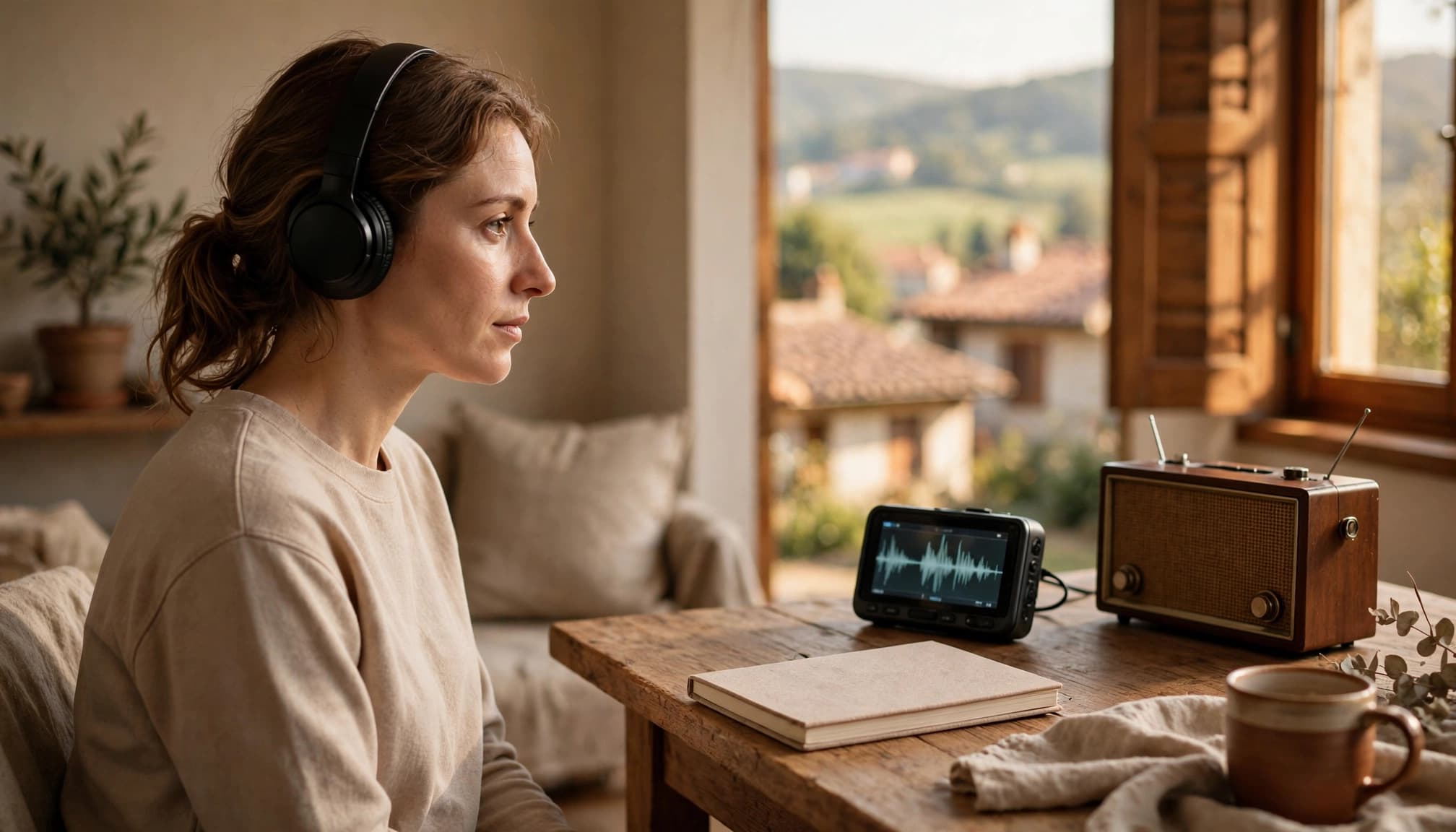
Use HABE audio in short, repeatable sessions
The Kerman and radio-based sequences give you level-appropriate audio without forcing you straight into difficult live broadcasts. Work with one passage at a time and keep each session focused.
First, listen for the general meaning. Next, replay the difficult lines and write down words or chunks that recur. Finally, repeat selected phrases until you can say them without pausing.
Add reading and audio outside your course
The free Euskara Bible app can provide additional reading and audio exposure for learners comfortable with religious material. It is not a replacement for a course, but it can add useful repeated contact with written Euskara.
As your level rises, read short texts and listen to local media around topics you already understand. Save full phrases, rather than isolated dictionary words, for later review.
Euskara Batua, Regional Varieties, and Advanced Study
Most serious learners should begin with standard Basque, Euskara Batua, unless family, work, or location gives them a clear reason to focus on a regional variety. Yet course labels need close attention.
Don’t assume the variety from the app name
The reviewed HABE and uTalk materials do not explicitly confirm a single named variety across all content. uTalk’s Spain and France labels are geographic tags, not a dialect guarantee.
If you are reconnecting with a family variety, ask speakers from that community which words and forms they use. Regional media and a local tutor will answer questions that generic course content cannot.
Advanced learners need people, not more tapping
At B2 or C1, the main task changes. You need to understand longer material, write with control, and speak without translating every sentence in your head.
The Euskara Munduan program supports Basque proficiency accreditation outside the Basque Autonomous Community through Basque centers. Formal study goals can help you choose materials with a clearer level target.
Build a Small Basque Study Stack
A serious routine has fewer moving parts than most learners expect. Give each resource one job, and remove anything that duplicates work without improving your weak points.
A beginner plan for the first six months
Use Aisa or another HABE introductory route as your main course four days a week. Keep sessions short enough to finish, but write down examples rather than tapping through every answer.
Add uTalk for ten minutes on two additional days if you need practical phrases. Once a week, replay a short HABE audio clip and repeat it aloud until the rhythm feels less foreign.
A plan for intermediate and advanced learners
Keep HABE materials for grammar repair and level-appropriate input. Then make listening, reading, and conversation the larger share of your week.
A useful rhythm is two focused audio sessions, two reading sessions, one review session, and one live conversation or voice exchange. Track whether you can retell a clip, write a paragraph, or hold a topic without switching languages.
Frequently Asked Questions
What is the best free app for learning Basque?
Aisa is the clearest verified free beginner option, especially for learners who understand Spanish. For deeper study, HABE’s wider online ecosystem, including Ikasten and Ikasbil, offers more substantial material than a typical phrase app.
Can uTalk make me fluent in Basque?
No. uTalk can build useful survival vocabulary and reinforce common phrases, but it doesn’t provide enough grammar, long-form listening, writing, or speaking feedback for fluency. Treat it as supplementary practice.
Does Duolingo teach Basque in 2026?
No current official Duolingo Basque course was verified for this comparison. The same caution applies to claims about current Basque courses on Memrise, LingQ, Clozemaster, and Glossika.
Choose Depth Over App Collecting
The strongest Basque learning plan is built around one structured foundation and a few tools that fill genuine gaps. HABE’s ecosystem offers the best route for sustained study, while uTalk adds practical phrase practice on almost any device.
As your skills grow, spend less time chasing new apps and more time listening closely, recalling full sentences, and speaking with people who use the Basque you want to learn.
Ready to Take Your Language Learning Further?
Your favorite language-learning app is a great place to start. Rocket Languages can help you go further with interactive audio lessons, pronunciation practice, real-world conversations, and structured learning.
Explore Rocket Languages →Affiliate disclosure: We may earn a commission if you purchase through this link, at no additional cost to you.