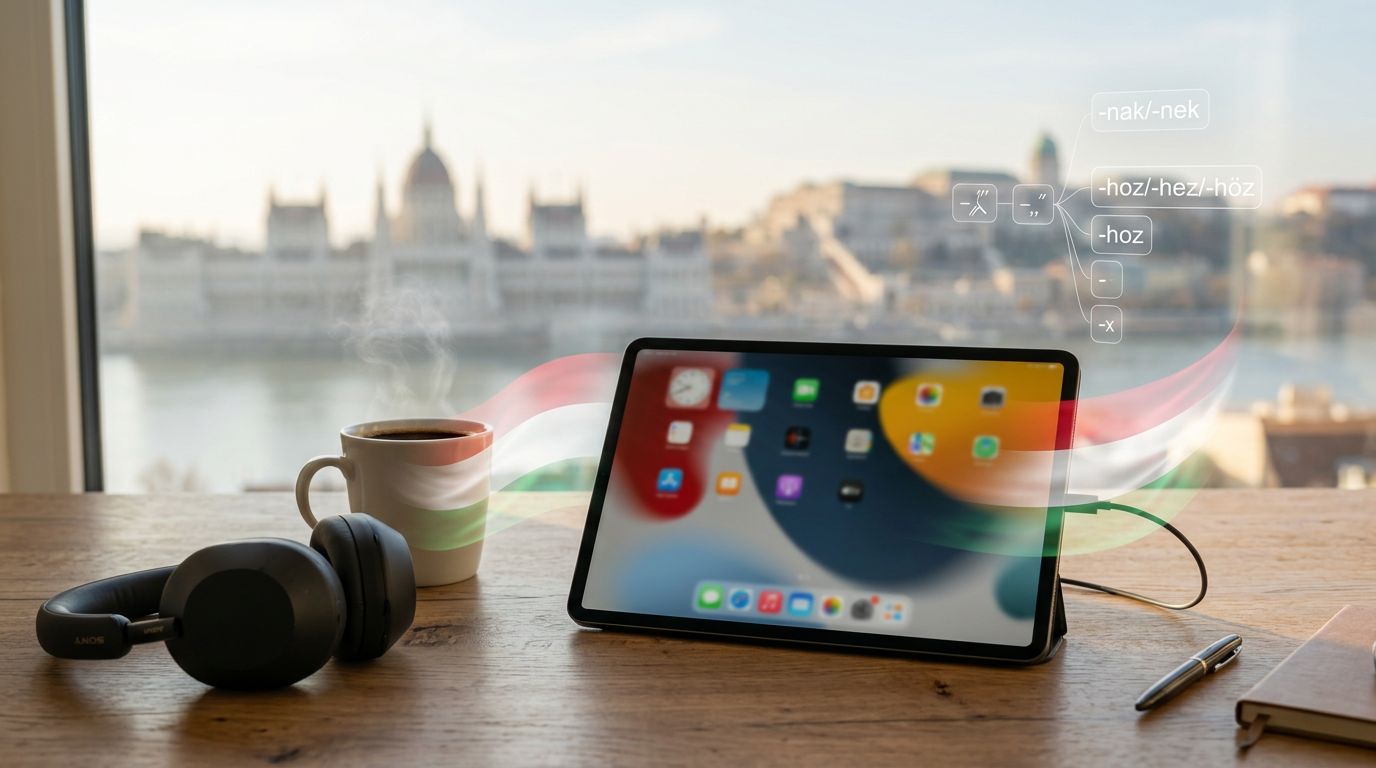
Hungarian punishes sloppy study. Cases, endings, and word order pile up fast, so a casual tap-through app can stall almost immediately.
If you want real progress in 2026, the best Hungarian learning apps are the ones that help you hear the language often, review weak words, and keep grammar in sight. Vocabulary matters, but so does structure.
For serious learners, the strongest setup is usually one app for lessons and one for quick repetition. The apps below fit those jobs best.
What serious Hungarian learners need from an app
Hungarian is not friendly to passive learning. The language asks you to notice endings, not just memorize nouns.
A good app should make grammar visible, not hide it behind cute exercises. It should also give you clear audio, because pronunciation and rhythm matter more than many learners expect.
Here’s the short version of what to look for:
- Grammar support keeps endings in view, not buried under random drills.
- Clear audio helps you hear natural sentence flow and stress.
- Spaced review brings back words before they fade.
- Short sessions make daily study easier to keep.
That mix filters out most flashy apps and leaves a smaller, better list. For Hungarian, consistency beats novelty every time.
The best Hungarian learning apps in 2026
The current standouts are easy to separate once you know the job each app does.
| App | Best for | Platform support | Access model | Main limitation |
|---|---|---|---|---|
| HungarianPod101 | Structured study, listening, and grammar-led progress | Android, iPhone, iPad, Kindle Fire | Membership tiers | Less playful than app-first competitors |
| Mondly | Daily sentence practice and quick core vocabulary | Android and iOS | Freemium with paid upgrades | Grammar depth stays light |
| Drops | Vocabulary retention through short visual sessions | Android and iOS | Free daily use with premium options | Weak for speaking and grammar |
Public pricing and trial terms change often, so check the current store page before you buy. The more useful split is simple: HungarianPod101 for structure, Mondly for sentence practice, and Drops for fast vocabulary recycling.
If you want only one app, HungarianPod101 is the safest place to start. If you want a second app, choose the one that covers your weakest area.
Why HungarianPod101 is the strongest base
HungarianPod101 is the clearest choice for learners who want a real study spine. It is built around lessons, which means you get order instead of random practice. That matters when cases, endings, and sentence patterns start to blur together.
Its official app page lists Android, iPhone, iPad, and Kindle Fire, so it works well across devices. That makes it easier to study at home and review on the move.
It also suits learners who want a deeper path than game-style drills. Heritage learners often like it because they already know some words, but need a better framework. Self-studiers like it because the lesson flow feels organized.
The downside is straightforward. It asks for patience, and it does not feel as quick as a swipe-first app. Still, if your goal is steady Hungarian progress, it does the most important job best.
When Mondly or Drops is the smarter choice
Mondly makes sense when you want momentum. It pushes core words and sentence patterns in short bursts, so it works well on commutes or between tasks. That format is useful when you already have a main course and need extra exposure.
If you use Android, the Google Play listing for Mondly shows the current setup, and iPhone users can compare it with the App Store page for Hungarian practice. Both storefronts present it as a fast way to build common phrases.
Mondly is good for warm-up drills and quick review. It is less convincing for case-heavy grammar practice, so it works best as support, not as your only resource.
Drops goes even narrower. Its strength is vocabulary retention through short sessions and visuals. That makes it easy to repeat, which is useful when you need more exposure to common words.
It is a solid pick for learners who already have some structure and want faster recall. It is not the best place to learn grammar, and it will not give you much speaking practice. For that reason, Drops fits best as a vocabulary tool, not a full course.
One app rarely covers grammar, vocabulary, and speaking equally well.
That is why serious learners usually pair one structured app with one review app. The mix matters more than the brand.

A weekly routine that keeps Hungarian moving
The best routine is boring in a good way. Start with one lesson app, then finish with one review app, then say or write the words out loud.
A simple 20-minute session can look like this:
- Spend 10 minutes on a lesson in HungarianPod101.
- Spend 5 minutes on Mondly or Drops.
- Spend 5 minutes saying the new words aloud or writing two new sentences.
That rhythm gives the language three passes. You hear it, review it, and produce it yourself. As a result, the words stay with you longer.
Heritage learners may want more reading and spelling. Busy students may want faster recall. Self-studiers may need more grammar support. The right app mix changes, but the habit stays the same.
If you already use a tutor, apps can handle the daily repetition between lessons. If you study alone, they can give your week some shape. Either way, the goal is the same, more contact with Hungarian and less wasted time.
Conclusion
Hungarian is hard on shortcuts, so the best app is the one that gives you structure and repetition.
For most serious learners, HungarianPod101 should be the anchor. Mondly and Drops fill the gaps when you need faster daily practice or tighter vocabulary review.
If an app keeps you studying without flattening the grammar, it is doing the right job. That is the standard that matters in 2026.
Ready to Take Your Language Learning Further?
Your favorite language-learning app is a great place to start. Rocket Languages can help you go further with interactive audio lessons, pronunciation practice, real-world conversations, and structured learning.
Explore Rocket Languages →Affiliate disclosure: We may earn a commission if you purchase through this link, at no additional cost to you.