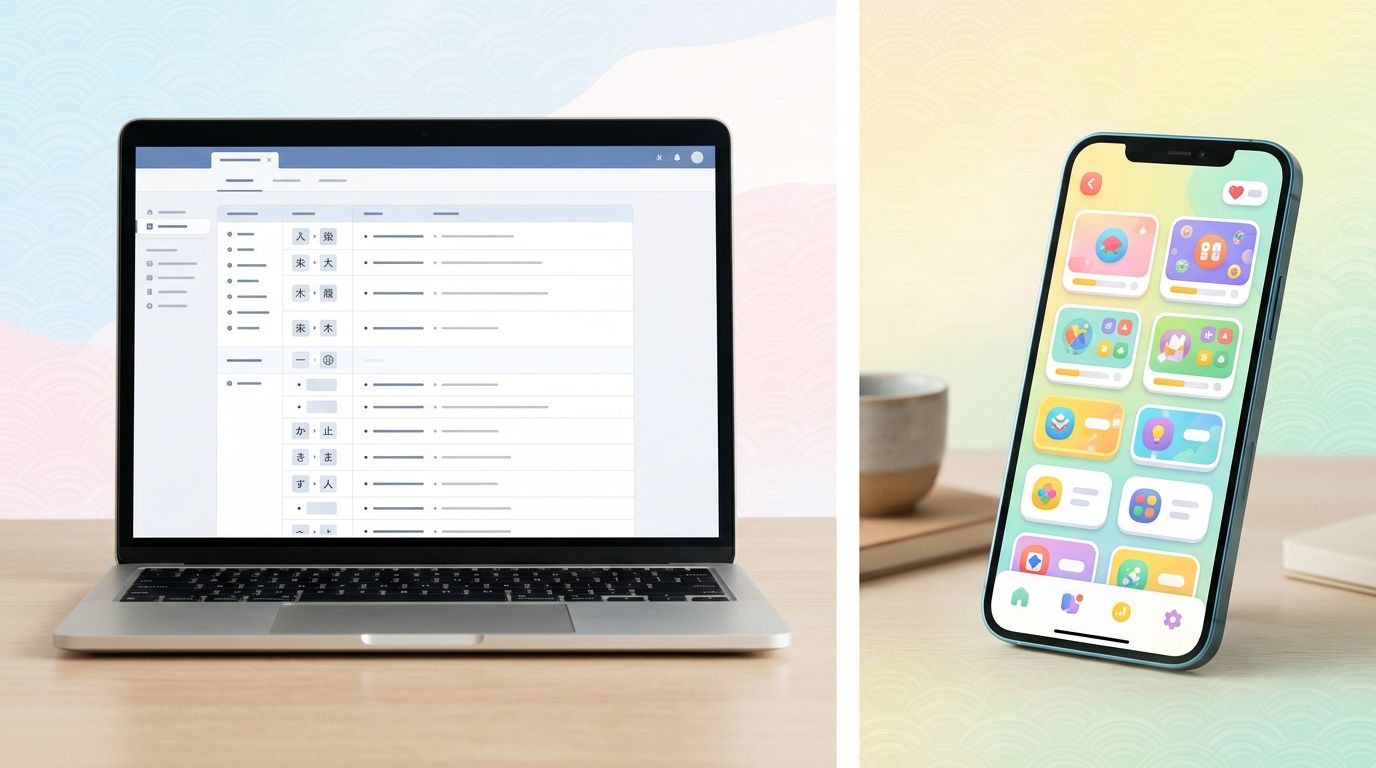
Choosing the wrong grammar app can slow your progress more than a bad textbook. In July 2026, Bunpro and Bunpo still get mentioned together, but they are built for different habits.
Bunpro is a web-first, JLPT-friendly grammar system. Bunpo is a mobile-first app with broader language support and faster everyday use. If you are weighing Bunpro vs Bunpo, the right answer depends on how you study, not on which name sounds more familiar.
Key Takeaways
- Bunpro is the stronger pick for JLPT grammar, structured review, and textbook-based study.
- Bunpo is easier if you want a phone-first app and broader language support.
- Bunpro’s July 2026 public pricing is clear, $5 monthly, $50 yearly, or $150 lifetime.
- Bunpo’s public US pricing is less transparent, so store listings matter before you commit.
- If you want one main grammar system, Bunpro is stronger. If you want convenience, Bunpo feels lighter.
Bunpro vs Bunpo at a glance
A side-by-side view makes the split obvious. If you want a wider field of options, best Japanese grammar apps for 2026 puts these two beside other serious tools.
| Feature | Bunpro | Bunpo |
|---|---|---|
| Main focus | Japanese grammar SRS, JLPT path, textbook decks | Mobile language-learning app with quick grammar practice |
| Platform in July 2026 | Web-first, with iOS and Android apps still in beta or alpha | Mobile-only on iOS and Android |
| Languages | Japanese only | 10 supported languages |
| Public pricing | $5/month, $50/year, $150 lifetime | No single public US price is consistently listed |
| Best for | JLPT self-studiers, intermediate learners, textbook users | Beginners, mobile learners, multi-language users |
| Main trade-off | Less polished mobile experience | Less JLPT depth and less grammar structure |
The pattern is clear. Bunpro is the more specialized grammar tool, while Bunpo is the more general daily-use app. That difference matters more than the branding.
Bunpro in 2026: grammar depth and JLPT structure
Bunpro is still the sharper choice if grammar is your main goal. Its spaced repetition system is built around Japanese grammar points, and its JLPT path runs from N5 through N1. That matters because it gives you a clear order instead of a pile of random lessons.
Bunpro also behaves like a review engine, not a passive lesson library. You see grammar in context, then you review it again before it fades. That helps when you know a pattern in theory but freeze when it appears in a sentence. The system keeps pulling that pattern back into working memory until it starts to feel natural.
The app supports textbook-based study too, including decks like Minna no Nihongo. For self-studiers, that is a real advantage. You can line up what you learn in a book with what you review online, instead of juggling disconnected resources.
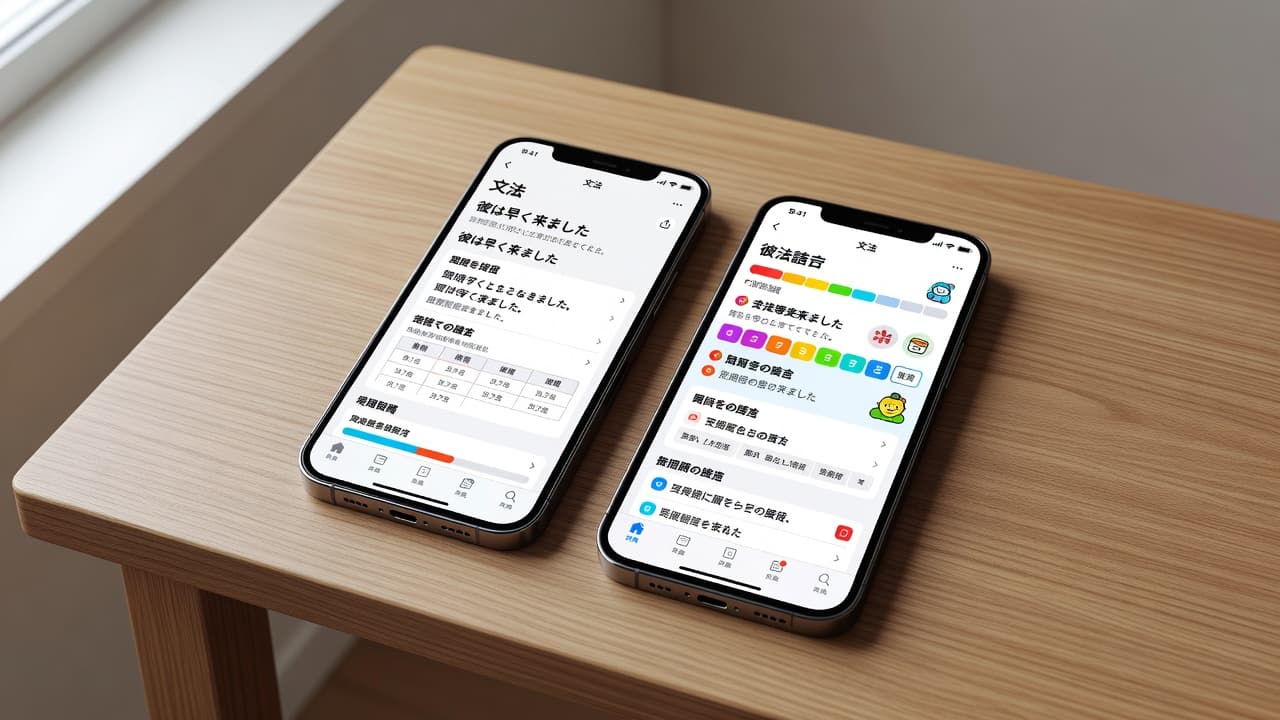
Public pricing in July 2026 is also easy to understand. Bunpro lists $5 per month, $50 per year, or $150 for lifetime access, and new accounts get a 30-day free trial. That simple pricing model makes it easier to compare against other study tools.
The bigger limitation is platform polish. Bunpro is web-first, and its iOS and Android apps are still in beta or alpha. If you study mostly on your phone, that matters. If you study on a laptop or tablet, it matters less.
A recent Bunpro review for 2026 makes a similar point. Bunpro works best when you want grammar to sit at the center of your study routine, not at the edge of it.
Bunpo in 2026: a mobile-first way to study on the go
Bunpo takes the opposite approach. It is a mobile-only app on iOS and Android, and it supports 10 languages, including Japanese, English, Spanish, French, German, Chinese, Italian, Portuguese, Arabic, and Korean. That broader reach makes it a stronger fit if you study more than one language or want a more casual app on your phone.
The app also leans into convenience. Its “boomo snap” feature can translate street signs and menus, then explain what you are looking at. That makes Bunpo feel more like a pocket study companion than a grammar workbook. It is useful in the moments when you do not want a full lesson, only a quick answer and a reminder of how the grammar works.
That lighter feel matters for beginners. A phone app is easier to open during a commute, between classes, or while waiting in line. Bunpo keeps that friction low. You can study in smaller bursts, and that matters when consistency is the main problem.
The public store signals are strong too. The Google Play listing shows 29,000+ five-star reviews, which suggests a large and active user base. Still, review counts do not tell you everything about grammar depth.
Public US pricing is harder to pin down, because store charges can vary by country and the listing does not present one simple number for everyone. If you want a second look at the feature set, this Bunpo feature review walks through its main tools.
For many learners, that difference is enough. Bunpo feels quicker and lighter. Bunpro feels more structured and demanding.
Pricing and access: where the value gap shows up
Bunpro makes budgeting easy. You can start with the monthly plan, switch to the annual plan if you know you will keep studying, or choose lifetime access if you want to stop thinking about subscriptions. The 30-day trial also gives you time to test the workflow before you pay.
That clarity changes how the app feels. When the price is visible, you can make a practical decision about long-term study. A learner who plans to prepare for JLPT over several months can judge Bunpro like a serious study investment, not a disposable app download.
Bunpo is less straightforward. The app is easy to access on mobile, but the public pricing picture is fuzzier in the US, so you need to check your own app store before making a decision. That does not make the app bad. It just makes comparison shopping harder.
The practical difference is simple. Bunpro asks you to pay for a grammar system with a clear price ladder. Bunpo asks you to judge a convenience-first app where the store listing matters as much as the feature list. If you care about long-term JLPT prep, that distinction matters.
Which app fits beginners, intermediate learners, and JLPT study?
Beginners
Bunpo is usually the easier first app. It fits short sessions, it works on your phone, and it does not ask for a big setup. If Japanese is your first serious study project, that lower friction can help you stay consistent.
It also feels less heavy when you are still deciding whether grammar study is going to stick. Bunpo gives you an easy entry point, and that can be enough to build a habit. If you want a softer start, Bunpo is less intimidating.
Intermediate learners
Bunpro pulls ahead once you already know the basics. At that stage, most learners do not need more random exposure. They need a way to catch weak grammar, revisit half-remembered forms, and stop confusing similar patterns.
That is where Bunpro’s review model helps. It keeps grammar in front of you until it sticks. If you are already doing vocab or kanji elsewhere, Bunpro can become the grammar spine of your routine. For a broader setup, best Japanese learning apps for serious learners is a useful companion read.
JLPT-focused students
Bunpro is the clear winner for JLPT prep. Its N5-to-N1 structure lines up with the way test-takers think about grammar progress. Textbook decks also help if you are coming from Genki or Minna no Nihongo.
Bunpo can support your routine, especially if you want a mobile app for daily practice. It should not be your only JLPT grammar tool, though. If exam structure matters, Bunpro is the safer anchor. If you want another grammar app comparison with a broader study system, Bunpro vs Renshuu app comparison is the next logical read.
The final choice in 2026
If your study life happens mostly on a laptop, and grammar is the part you want to fix, Bunpro is the better match. Its pricing is clear, its JLPT structure is strong, and its whole design points toward serious review.
If you want a phone-first app that feels easier to open every day, Bunpo makes more sense. It is broader, lighter, and more convenient for quick practice.
The smartest choice is the one that matches your actual routine. Pick Bunpro for grammar depth and JLPT structure. Pick Bunpo for mobile convenience and broader language use. When Japanese grammar is the goal, the best app is the one you’ll keep using long after the novelty fades.
Ready to Take Your Language Learning Further?
Your favorite language-learning app is a great place to start. Rocket Languages can help you go further with interactive audio lessons, pronunciation practice, real-world conversations, and structured learning.
Explore Rocket Languages →Affiliate disclosure: We may earn a commission if you purchase through this link, at no additional cost to you.