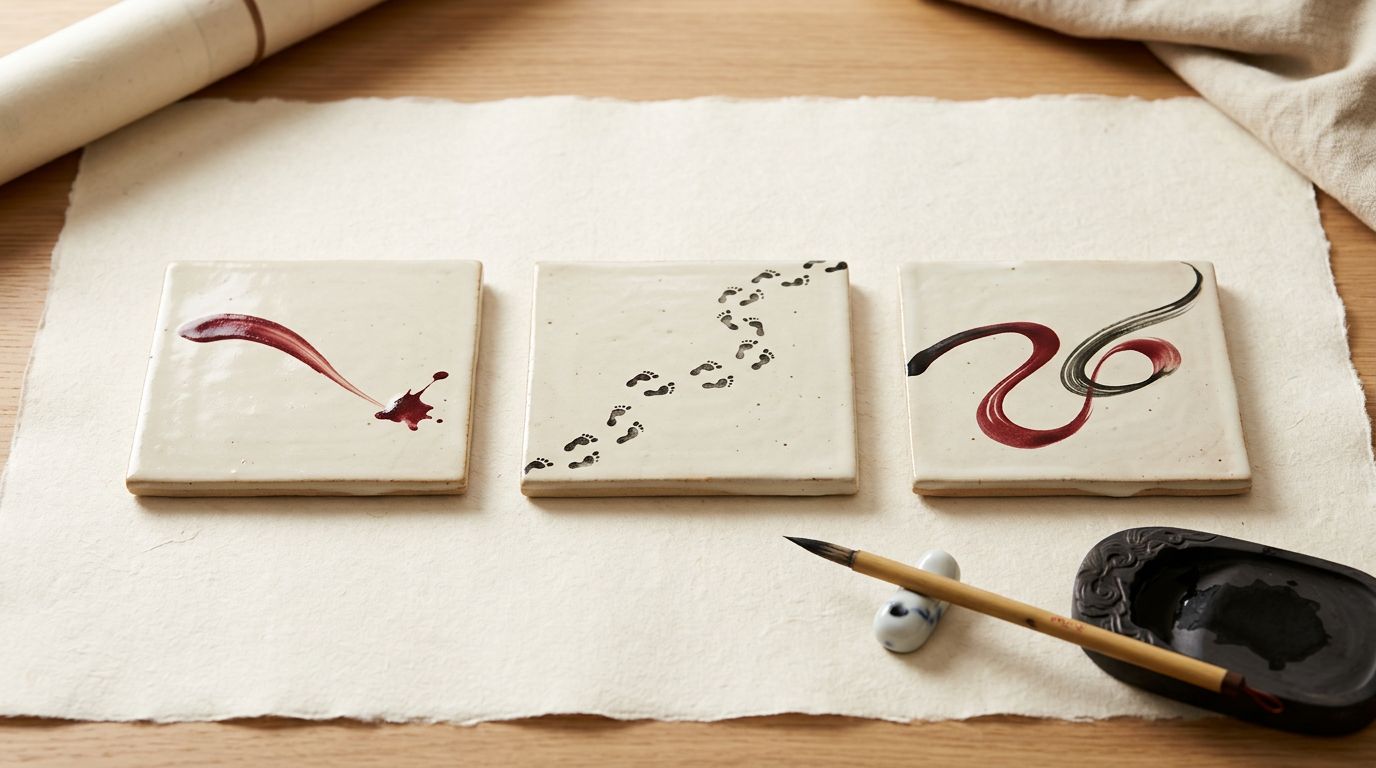
Chinese aspect particles describe how an action unfolds: 了 presents an event as completed or bounded, 过 marks experience, and 着 describes continuation. They don’t map neatly to English past, present, and future tenses.
The tricky part is context, especially because 了 also appears at sentence endings to announce a changed situation. Start with the meaning you want to express, then choose the particle and sentence pattern that fit.
Key Takeaways: Choose the Meaning First
Mandarin verbs don’t conjugate for tense. Chinese irregular verbs don’t mark tense, and separable verbs are a separate word-pattern issue. As the Chinese Grammar Wiki’s explanation of aspect shows, aspect describes an event, so referring to a past event isn’t the same as forming a past tense.
Use this quick comparison before building your sentence.
| Form | Main meaning | Basic pattern |
|---|---|---|
| 了 (le) after a verb | An event viewed as completed or bounded | Subject + verb + 了 + object |
| 过 (guo) | Experience of doing something | Subject + verb + 过 + object |
| 着 (zhe) | A continuing state or action | Subject + verb + 着 + object |
| Sentence-final 了 | A new or changed situation | Statement + 了 |
Time words such as 昨天 (zuótiān, yesterday) and 明年 (míngnián, next year) locate events in time. The particles describe a different dimension.
了: Completed Events and Changed Situations
After the verb: View an event as a whole
The basic pattern is subject + verb + 了 + object.
我买了一本书。
Wǒ mǎi le yì běn shū.
“I bought a book.”
Here, 了 presents buying as a completed action, viewing it as a bounded event. 一本书 means “one book”; 本 is the measure word.
However, post-verbal aspect markers don’t work like English tense endings. Nor does 了 mean you finished every part of a task.
我看了一个小时的书。
Wǒ kàn le yí ge xiǎoshí de shū.
“I read for an hour.”
The reading period ended, but the sentence doesn’t say you finished the book.
At the sentence end: Announce a change
下雨了。
Xià yǔ le.
“It’s raining now.”
Sentence-final 了 introduces a change of state: rain has started. It doesn’t mean the rain finished.
Now compare:
我昨天去书店了。
Wǒ zuótiān qù shūdiàn le.
“I went to the bookstore yesterday.”
This reports a past event, but 了 follows the whole verb-object phrase. Its position and conversational context matter; you can’t classify every 了 by its English translation alone. When 了 follows a verb at sentence end, the two functions can overlap.
It can even appear in a future clause:
明天下了课我就去。
Míngtiān xià le kè wǒ jiù qù.
“I’ll go tomorrow after class finishes.”
A past time word doesn’t automatically require 了, and 了 doesn’t automatically place an event in the past.
过: Experience Rather Than a Particular Event
Use 过 for something you’ve done before
The pattern is subject + verb + 过 (+ object).
我去过北京。
Wǒ qù guo Běijīng.
“I’ve been to Beijing.”
过 presents visiting Beijing as something the speaker has done before, a general past occurrence. The sentence doesn’t identify a particular trip or explain what happened afterward.
As an aspect particle, 过 normally has a neutral tone, guo. Don’t confuse that pronunciation with the full-tone verb 过 (guò), which has meanings such as “pass” or “cross.”
Choose 了 or 过 by your message
我去年去了北京。
Wǒ qùnián qù le Běijīng.
“I went to Beijing last year.”
This reports a particular event. In contrast, 我去过北京 answers the broader question of whether you’ve ever been there.
A time phrase can also accompany 过. Therefore, the rule isn’t “specific date means 了.” Choose according to whether you’re reporting an event or saying whether the action has ever happened.
着: Continuing States and Background Actions
Use 着 for a state that persists
The pattern is subject + verb + 着 (+ object).
她穿着一件漂亮的裙子。
Tā chuān zhe yí jiàn piàoliang de qúnzi.
“She’s wearing a beautiful dress.”
The focus is her continuing state of wearing it, rather than the action of putting it on.
Like the other post-verbal aspect particles, 着 follows the verb.
门开着。
Mén kāi zhe.
“The door is open.”
Here, 着 describes the door’s continuing condition. It doesn’t describe someone opening it.
Distinguish 着 from 在 and 正在
在 (zài) and 正在 (zhèngzài) precede the verb and highlight an action in progress.
她正在穿裙子。
Tā zhèngzài chuān qúnzi.
“She’s putting on a dress.”
Compare that action with 她穿着裙子, “She’s wearing a dress.”
着 also describes an accompanying continuous action, though its common use is for continuing states:
她笑着说话。
Tā xiào zhe shuōhuà.
“She talks with a smile.”
Meanwhile, 已经 (yǐjīng, already) adds another meaning before the verb. 已经 and 正在 are adverbs, not members of the post-verbal particle group.
Negation: When to Use 没 and 不
For an event that didn’t happen or hasn’t happened, use 没 (méi) or 没有 (méiyǒu). Remove aspect 了, but retain 过.
我没买书。
Wǒ méi mǎi shū.
“I didn’t buy any books.”
Compare 买了 (mǎi le, bought) with 没买 (méi mǎi, didn’t buy).
我没去过北京。
Wǒ méi qù guo Běijīng.
“I’ve never been to Beijing.”
Here, 没 negates whether the speaker has ever visited Beijing, so 过 stays.
By contrast, 不 (bù) commonly negates habits, willingness, and future intentions:
我不喝咖啡。
Wǒ bù hē kāfēi.
“I don’t drink coffee.”
Habitual statements normally don’t need 了, even when the habit belonged to the past:
我小时候每天喝牛奶。
Wǒ xiǎoshíhou měitiān hē niúnǎi.
“I drank milk every day as a child.”
The instruction to drop 了 concerns aspect 了. Sentence-final 了 has its own change-of-situation function, so it can occur in negative statements.
Sentence-Final Particles: Attitude Rather Than Aspect
Aspect particles describe an event. Modal particles express the speaker’s attitude, expectation, or emotional tone. Grammars group these categories differently, but their functions provide a useful test.
吗 (ma) makes a statement into a yes-or-no question:
你是学生吗?
Nǐ shì xuésheng ma?
“Are you a student?”
吧 (ba) softens a suggestion:
我们去吃饭吧。
Wǒmen qù chīfàn ba.
“Let’s go eat.”
It can also seek agreement: 他走了吧? (Tā zǒu le ba?), “He left, didn’t he?” Here, 了 and 吧 do separate jobs.
呢 (ne) asks about another topic:
我很好,你呢?
Wǒ hěn hǎo, nǐ ne?
“I’m fine. How about you?”
With a person’s name, it can ask where they are: 小明呢? (Xiǎomíng ne?), “Where’s Xiaoming?”
啊 (a) adds emotion or emphasis. Meanwhile, 嘛 (ma) presents something as obvious or presses the listener:
你快点嘛。
Nǐ kuài diǎn ma.
“Hurry up, will you?”
Intonation and the relationship between speakers affect whether these endings sound friendly, impatient, or demanding. Don’t assign each one a single English equivalent.
Other Chinese Particles: 的, 地, 得, 把, and 被
These forms affect sentence structure rather than marking aspect.
The three structural particles 的, 地, and 得 are all pronounced de in these uses.
| Particle | Function | Example |
|---|---|---|
| 的 | Links a modifier to a noun | 我的书, wǒ de shū, “my book” |
| 地 | Links a descriptive expression to a verb | 慢慢地走, mànmàn de zǒu, “walk slowly” |
| 得 | Introduces a degree or manner complement | 跑得很快, pǎo de hěn kuài, “run very fast” |
得 also appears in potential-result patterns. Position helps distinguish these identical-sounding forms: look at what follows each one.
把 (bǎ) places a known, identifiable object before the verb. Use subject + 把 + object + verb phrase, with a result or other completing material.
我把书放在桌上了。
Wǒ bǎ shū fàng zài zhuō shàng le.
“I put the book on the table.”
被 (bèi) introduces a passive construction: subject + 被 + doer + verb phrase.
书被他拿走了。
Shū bèi tā ná zǒu le.
“The book was taken away by him.”
The doer can sometimes be omitted. Notice that both constructions can contain 了 because word order and aspect perform different jobs.
Practise Aspect With Short Audio Clips
Practise Chinese aspect particles in complete sentences, because an isolated English translation often hides the distinction.
- Choose a short dialogue with an accurate transcript. Listen without reading and transcribe the sentences containing 了, 过, or 着.
- Compare your transcription with the script. Identify the time phrase, particle position, and intended meaning.
- Replay the clip, then record yourself repeating the sentence. Change it into a negative sentence where appropriate.
Our ChinesePod and Du Chinese comparison can help you choose between dialogue-focused lessons and graded stories.
Save the surrounding sentence rather than a flashcard that says “了 = past.” Also note what prompted the speaker’s reply, especially when sentence-final 了 announces a change.
Frequently Asked Questions
Does every past event need 了?
No. A time phrase and context can establish the past without an aspect particle.
昨天我很忙。
Zuótiān wǒ hěn máng.
“I was busy yesterday.”
This describes a past state. Adding 了 would change the meaning rather than supply a required past-tense ending.
Does English “have done” always require 过?
No. English present-perfect sentences can describe either a prior occurrence or a completed event that’s relevant now.
“I’ve been to Beijing” naturally uses 过. However, “I’ve bought the tickets” can use 了 because it reports a completed purchase. Choose the Mandarin meaning rather than translating the English auxiliary “have.”
Choose the Event Meaning Before the Particle
The most useful distinction is event, experience, or continuing state. Then check whether sentence-final 了 announces something new.
Use time words to establish when something happens, and sentence structure to understand what each particle contributes. With complete examples and short listening practice, 了, 过, and 着 become choices you can explain rather than endings you have to guess.
Ready to Take Your Language Learning Further?
Your favorite language-learning app is a great place to start. Rocket Languages can help you go further with interactive audio lessons, pronunciation practice, real-world conversations, and structured learning.
Explore Rocket Languages →Affiliate disclosure: We may earn a commission if you purchase through this link, at no additional cost to you.