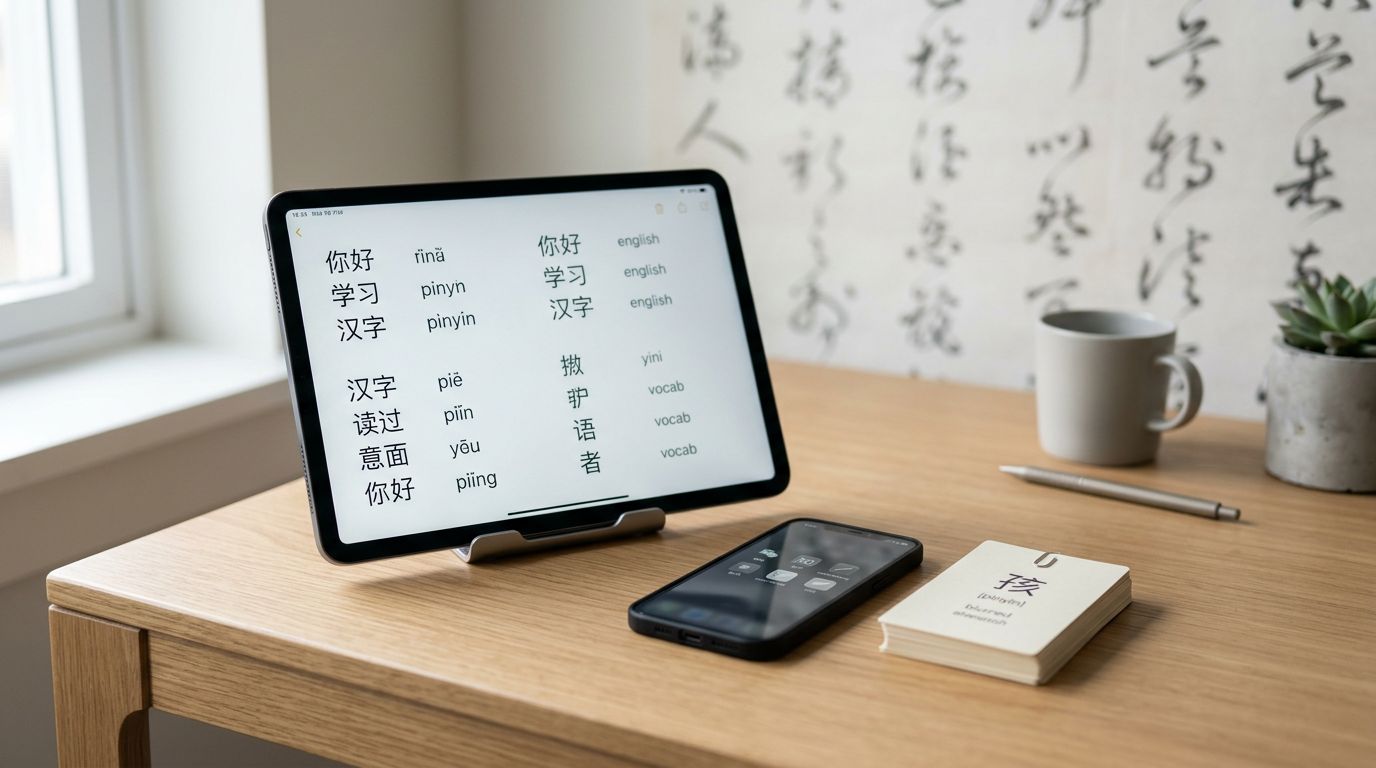
Preparing for a language proficiency test like the HSK gets messy fast when an app looks polished but teaches the wrong content. In 2026, the best HSK prep apps are the ones that match current HSK 3.0 requirements, keep vocabulary review tight, and provide enough test-style practice to help you manage the exam clock. While many learners start by mastering pinyin, serious study requires more than just phonetics as you progress through the traditional HSK levels 1-6 or transition to the updated system. Casual Mandarin apps can help with habit building, but they rarely carry a dedicated learner through the complexities of the official exam.
What you need is a small, specialized stack that covers memory, character recognition, and exam rhythm. The apps below are the ones that earn a place in a real, results-driven study plan.
Key Takeaways
- Prioritize HSK 3.0 Alignment: Avoid generic language apps; choose tools specifically designed for the updated HSK 3.0 syllabus to ensure you are studying relevant vocabulary and grammar.
- Build a Specialized Stack: No single app does everything perfectly. Success comes from combining one app for exam structure (Pass HSK), one for mock testing (SuperTest), and others for memory or writing (Anki, Skritter).
- Master Exam Rhythm: Vocabulary knowledge is not enough. You must use mock exams and timed drills to build the stamina and speed required to complete the test sections under pressure.
- Reinforce with Context: Moving beyond memorization requires seeing vocabulary in action; tools like Clozemaster help you learn how words function within real sentences, which is essential for higher-level comprehension.
How these apps were ranked
To identify the best HSK prep apps for 2026, I evaluated each tool based on its HSK 3.0 alignment, the depth of its review system, and its ability to support real exam tasks. I prioritized apps that integrate official word lists and provide clear explanations for HSK grammar, as these components are essential for success. While a clean user interface is helpful, I focused on core functionality like vocabulary retention, character writing practice, reading speed development, and mock test accuracy.
I also considered how well each platform handles progress tracking, as seeing your advancement is critical for staying motivated during long-term study. For beginners, I ensured the apps maintain a strong focus on pinyin to build a solid foundation before moving into more complex characters. Finally, I looked at whether the tools remain useful beyond the early stages. An effective system should help you master hundreds of new words rather than just providing flashy, superficial lessons.
For another perspective on how your tool selection should evolve alongside your proficiency, Clozemaster’s 2026 guide to Chinese learning apps highlights that the right choice depends on your current level, rather than a broad promise of fluency.
The best HSK prep apps in 2026
The table below gives the fast version before we get into details.
| App | Best for | HSK fit | Standout strength |
|---|---|---|---|
| Pass HSK | Full-syllabus study | HSK 1 to 9 | Built around the current exam structure |
| SuperTest | Test practice | HSK mock tests and drills | Strong exam rhythm and timing |
| Anki | Vocabulary retention | Any level | Spaced repetition with custom decks |
| Pleco | Dictionary support | Any level | Fast lookup and offline study tools |
| Skritter | Character writing | Any level | Stroke order and handwriting practice |
| Clozemaster | Context-based review | Better for intermediate learners | Sentence drills that build recall |
The pattern is clear. Pass HSK and SuperTest handle structure and test shape, while Anki, Pleco, Skritter, and Clozemaster fill the gaps.
One app can cover a gap, but three tools usually cover an exam.
Pass HSK
Pass HSK is the clearest choice if you want one app built around the exam itself. It covers HSK 1 through HSK 9, while still providing robust support for learners targeting HSK levels 1-6. Because it emphasizes consistent listening comprehension throughout its lessons, it ensures you are prepared for the audio sections of the exam.
That matters if you are planning beyond the basics. You want your study path to match the test you will actually take, not a version from years ago. Pass HSK works best as your syllabus anchor, and it is available on iOS and Android.
SuperTest
SuperTest is the app to use when you want the test to feel real. It focuses on HSK practice, meaning you are not wandering through random lessons when you should be rehearsing timing, recall, and question shape. By using their mock exams, you can identify exactly which areas need improvement. These mock exams are vital for building the stamina required for a high score.
If your HSK vocabulary is already growing and you need more exam pressure, SuperTest helps you train under conditions that resemble the real thing. For another HSK-focused look at exam tools, HSKLord’s 2026 app ranking also puts test-oriented apps near the top.
Anki
Anki stays on this list because it uses a highly effective spaced repetition system to ensure long-term retention. Serious HSK learners use it to drill custom HSK vocabulary lists, sentence cards, and even tone patterns. By creating your own flashcards, you can tailor your study sessions to your specific weak points.
Once your flashcards are downloaded, it works offline. Anki is available on iOS, Android, and desktop, which also makes syncing easy across devices. If you want memory that sticks, Anki is hard to beat.
Pleco
Pleco is the app many learners open ten times a day without thinking about it. It is a dictionary first, but that is exactly why it matters for HSK prep. Every unknown word turns into a quick lookup, helping you master Chinese characters and their corresponding pinyin with ease.
After you install dictionaries, it works offline. Pleco runs on iOS and Android, and it often becomes the glue between your other apps. Its value comes from speed, depth, and the ability to look up Chinese characters instantly during your study sessions.
Skritter
Skritter is the best fit if Chinese characters still slow you down. It focuses on handwriting practice and teaches you the proper stroke order for every character, which helps when you need to recognize forms quickly and write them with less guesswork.
That matters more than people admit, especially when a word looks familiar but still slips away under pressure. Skritter is available on iOS, Android, and the web, so you can keep character work in one place. For HSK learners, clean handwriting is not a bonus. It is part of the score.
Clozemaster
Clozemaster is strongest once you already know the basics and want HSK vocabulary inside real sentence frames. Instead of memorizing isolated items, you get used to seeing a word where it belongs in example sentences. This method is excellent for reading practice, as it helps you see how words function in a natural, native context.
For learners who want more graded reading support, The Chairman’s Bao reading tool analysis is useful too, though its older HSK 2.0 alignment makes it better as a side tool.
A note for beginners
If you are just starting your journey, HelloChinese is a fantastic alternative for beginners. It offers an intuitive way to build your foundational listening comprehension while helping you master basic pinyin and sentence structure.
How to build an HSK study stack
A serious HSK plan works better when each app serves a specific purpose. One app should handle structure, one should handle memory, and one should handle test shape. By organizing your tools this way, you avoid wasting time inside a single app that only completes half the work. To succeed, you need a consistent study schedule that integrates these tools to ensure steady progress.
A strong stack often looks like this:
- Pass HSK plus SuperTest plus Anki gives you the clearest exam-focused setup for taking mock exams.
- Anki plus Pleco plus Clozemaster works well when vocabulary mastery is the main problem.
- Skritter plus Pleco makes sense when characters and handwriting keep slipping.
If you still need a guided entry point before moving into a heavier stack, our SuperChinese app review for HSK prep shows where it helps self-learners and where it tops out. While it provides a solid foundation for HSK grammar, serious HSK candidates usually outgrow it.
The best stacks rely on a reliable spaced repetition system to ensure your HSK vocabulary sticks. Pleco and Anki are especially effective because they reduce friction; you can check a word, save it to your flashcards, and review it later without breaking your study flow. Furthermore, using these digital tools provides built-in progress tracking, helping you monitor how well you are retaining your HSK vocabulary over time. Small, consistent habits like these add up fast, turning overwhelming study goals into achievable milestones.
Frequently Asked Questions
Can I pass the HSK using only one app?
While some apps cover a broad range of topics, a single app rarely prepares you for every aspect of the exam. Most successful students build a “stack” that covers structure, vocabulary retention, and timed mock tests to fill the gaps left by all-in-one solutions.
How important is handwriting in the modern HSK?
Even if your specific exam format is digital, learning stroke order and character composition through apps like Skritter is vital for character recognition. Understanding how a character is built helps you identify it faster and prevents it from slipping away during the reading sections.
Are these apps updated for the new HSK 3.0 standards?
The apps listed, such as Pass HSK and SuperTest, were selected specifically for their alignment with current HSK 3.0 requirements. Always verify that your chosen tools explicitly mention 3.0 support, as older study materials may focus on legacy vocabulary lists that no longer match the official exam content.
How do I know if I am ready to move to a more advanced study stack?
You are ready to transition when your current foundational app no longer challenges you or fails to cover the specific vocabulary lists required for your target HSK level. If you find yourself spending more time reviewing known concepts than learning new material, it is time to integrate specialized tools for targeted practice.
Conclusion
Choosing the best HSK prep apps for your journey is a critical step in mastering the HSK 3.0 standards. Success in this language proficiency test requires a balanced approach, where you combine consistent reading practice with the memorization of official word lists. As you progress through HSK levels 1-6, the ability to recognize Chinese characters becomes increasingly important, as does the context provided by learning Chinese characters through example sentences.
Pass HSK is excellent for tracking the syllabus, while SuperTest allows you to simulate the exam environment. By pairing these with specialized tools like Anki, Pleco, Skritter, and Clozemaster, you can effectively fill the gaps that a single application often leaves behind. If you want the most reliable study setup, start with one tool for vocabulary, one for writing, and one for exam simulations. This simple strategy of building a balanced study stack is far more effective than chasing a single all-in-one solution.
Ready to Take Your Language Learning Further?
Your favorite language-learning app is a great place to start. Rocket Languages can help you go further with interactive audio lessons, pronunciation practice, real-world conversations, and structured learning.
Explore Rocket Languages →Affiliate disclosure: We may earn a commission if you purchase through this link, at no additional cost to you.