
Forgetting a word you studied last week is frustrating, especially when it was useful in a real conversation. This Brainscape review finds that the app is a strong tool for bringing vocabulary back before it fades, but it works best as one part of a larger language routine.
Brainscape is a flashcard platform, not a full language course. Its value depends heavily on the cards you study, the context behind them, and whether you also listen, read, and speak beyond the app.
Key Takeaways
- Brainscape’s confidence-based repetition is effective for frequent, focused vocabulary recall.
- You can create, import, share, and study your own flashcards free on the web, iOS, and Android.
- Brainscape Pro adds premium content, private classes, advanced statistics, bookmarks, and reversible cards.
- Audio uploads are supported in higher-tier features, but Brainscape doesn’t clearly offer universal pronunciation feedback or consistent native audio across every deck.
- Public language decks vary in accuracy, context, and quality, so serious learners should review cards before relying on them.
- The app is best for retaining words and phrases gathered from lessons, books, tutors, podcasts, and real conversations.
Brainscape Review: The Short Verdict
Brainscape is good for language vocabulary when you need a simple, polished review system that asks you to judge your own recall. It removes much of the setup friction associated with more customizable flashcard tools, while still letting you build personal decks.
Its main weakness is scope. A card can strengthen your ability to recall “despite,” “hacer falta,” or a Korean sentence ending. It can’t teach you how a speaker reduces sounds in fast conversation, correct your rhythm, or guide you through a grammar sequence.
For learners who already have a textbook, class, tutor, or input routine, Brainscape can become a dependable memory layer. Beginners who want one app to teach vocabulary, grammar, listening, and speech will need more structure than it provides.
Flashcard statistics measure review activity, not language ability. The useful test is whether saved words reappear in reading, listening, writing, and conversation.
How Brainscape’s Confidence-Based Repetition Works
Brainscape uses adaptive spaced repetition. After seeing a card, you rate how confidently you knew the answer. Cards that felt uncertain return sooner, while easy cards move further into the future.
A confidence-based flashcard overview describes the basic principle accurately: learners help shape the review schedule by reporting how well each item was recalled. Brainscape doesn’t publish a detailed public formula for its scheduling system, so it isn’t possible to verify the exact intervals behind each rating.
Confidence ratings create useful retrieval effort
The system works best when you answer before revealing the back of a card. That brief struggle is productive because retrieval strengthens memory more than rereading a translation.
However, confidence ratings only help when you rate honestly. If you select a high score because a word looks familiar, you may postpone a card before you can produce it independently. Give low ratings to items you recognized but couldn’t say, spell, or use correctly.
Keep every card narrow and answerable
Good language cards test one clear piece of knowledge in a few seconds. A Spanish prompt such as “Me di cuenta de que…” can test the meaning and help you retain a reusable sentence frame.
Avoid cards that ask for too much at once. A prompt requiring you to translate a long Korean sentence, explain its grammar, and remember a cultural detail creates review fatigue. Split that material into a sentence card and a short grammar prompt.

Custom Decks and Language Course Quality
Brainscape lets free users create, share, import, and study unlimited self-made flashcards. That makes it practical for saving vocabulary from a lesson, book chapter, TV episode, or tutoring session without paying for basic review.
The platform also offers a marketplace of certified, publisher-created, and user-generated content. Those categories shouldn’t be treated as equal. A polished deck can save time, while an unreviewed public deck may include unnatural translations, outdated vocabulary, weak example sentences, or missing regional context.
Use phrase cards instead of isolated translations
Single-word cards can help at the start, especially with concrete nouns. Yet phrases carry more information about register, word order, collocation, and grammar.
For example, save “tener ganas de” rather than only “ganas.” Add a short example that comes from material you understood. If you encounter a phrase in a podcast or conversation, include the surrounding sentence and a short note about when people use it.
Learners who want more built-in context may prefer Clozemaster’s sentence-based vocabulary practice. Its fill-in-the-blank format makes you retrieve a word within a sentence rather than from an isolated translation pair.
Customization is practical, not limitless
Brainscape’s creation tools are approachable. You can organize classes and decks, share material, import flashcards, and study across devices. This suits teachers building a class set and independent learners collecting high-value phrases.
Still, the platform offers less fine-grained card design than Anki. You may miss flexible templates, extensive add-ons, detailed fields, or highly personalized scheduling controls. Brainscape favors speed and consistency over deep tinkering.
Audio, Pronunciation, and Example Sentences
Brainscape documents audio-related capabilities, including audio uploads in higher-tier features. That can improve a personal deck when you add a clear recording of a word or phrase.
The experience varies by deck, though. Don’t assume every language course includes native-speaker recordings, audio for every card, example sentences, or consistent regional labeling. Test several cards in your target language before purchasing access for audio alone.
Audio helps memory but doesn’t correct speech
Hearing a word while reviewing it can link spelling, sound, and meaning. That is useful for languages with unfamiliar sound systems, including Mandarin, Japanese, Korean, Arabic, and Portuguese.
Brainscape doesn’t clearly advertise a universal pronunciation engine, speech-recognition score, or human feedback system. It therefore can’t tell you whether your Mandarin tone, French vowel, Japanese pitch pattern, or Spanish stress is understandable.
For speaking-focused study, Pimsleur’s listening and pronunciation lessons provide prompted spoken recall. They are more useful when you need guided repetition away from a screen.
Course quality depends on the source
A premium deck may be more consistent than a public set, but flashcards remain a narrow format. Even well-made cards can’t supply enough extended listening, grammar explanation, or free production for broad language progress.
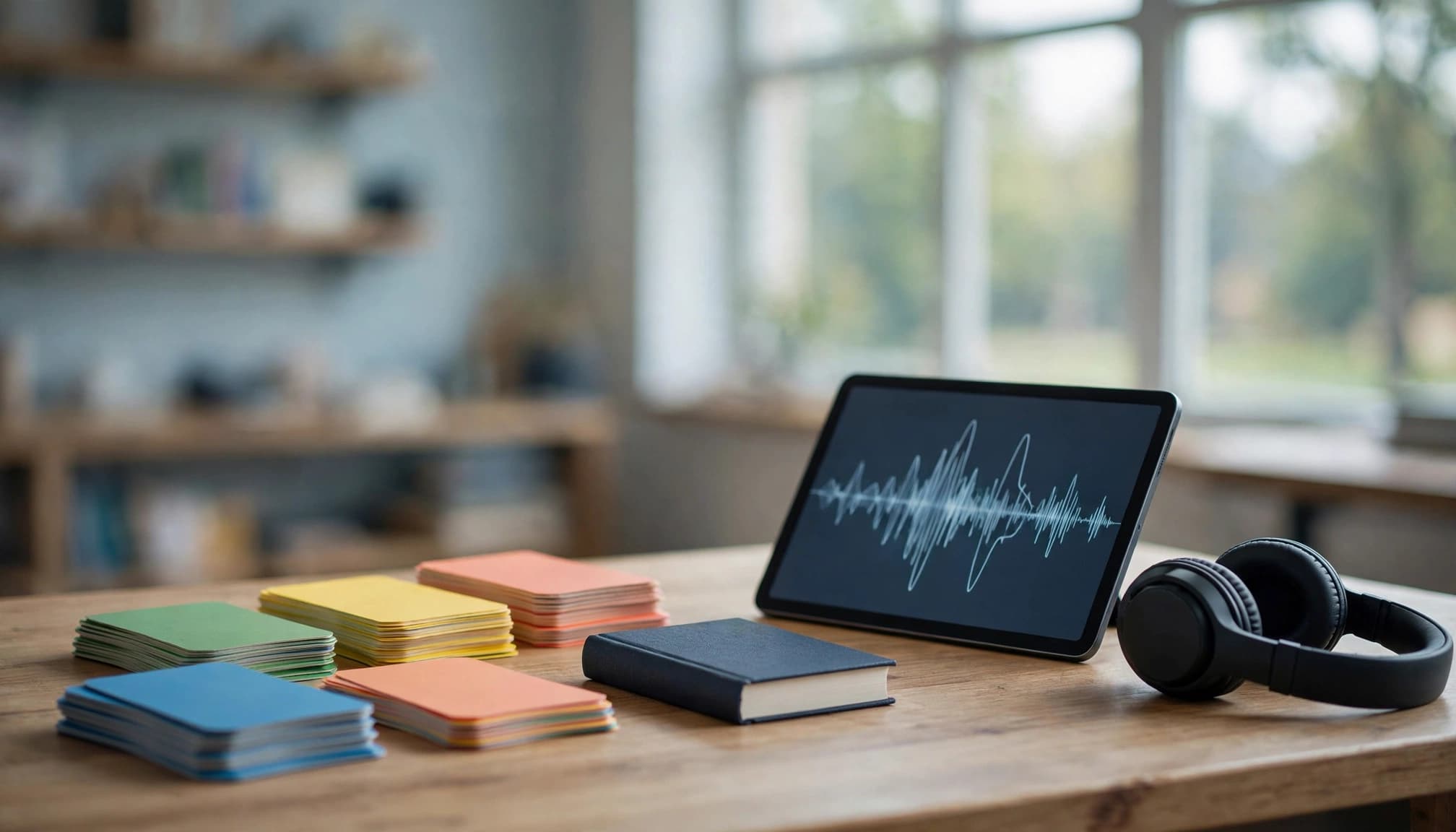
Use Brainscape to retain language you meet elsewhere. Then return to the original podcast clip, dialogue, tutor correction, or reading passage to hear how that vocabulary behaves in context.
Free Access, Pro Features, and Current Pricing
Brainscape’s free plan has real value. You can build and study your own content, use spaced repetition, set study reminders, import cards, and access some AI features without a subscription. For a self-directed learner making personal language decks, that may be enough.
Pro becomes more appealing if you want paid marketplace content, private material, advanced statistics, bookmarks, or card reversibility. It makes the most sense when the premium decks match your language and level, rather than because the app’s review system is locked behind a paywall.
App-store prices and yearly plan discrepancy
As listed in the Apple App Store and Google Play, Brainscape Pro costs $19.99 per month, $59.99 every six months, $95.99 annually, or $199.99 for lifetime access. Availability and local pricing can differ by platform and region.
Brainscape’s official pricing page also promotes a yearly offer described as $7.99 per month. That headline doesn’t exactly match the $95.99 annual app-store listing. Check the checkout screen on your preferred device before subscribing, especially if you are comparing annual and lifetime options.
A 2026 flashcard pricing comparison lists different Brainscape pricing, which is a reminder that third-party plan summaries can fall out of date quickly.
Pay for a defined job
Pro is reasonable if it replaces time spent building decks or gives you access to a course you will use several times a week. It is poor value if you only need a small set of cards from your own learning materials.
Start with the free plan for two weeks. Build one deck from phrases you encountered naturally, then see whether you return to it without forcing yourself.
Mobile and Web Usability for Daily Review
Brainscape runs on the web, iOS, and Android, which matters more than flashy features. A review system only works when it is available during short breaks, commutes, or the minutes before a class.
The interface is generally easier to approach than highly configurable flashcard software. Reviews are quick, confidence ratings are simple, and the study flow doesn’t bury the next card under complicated settings.
Build a small review queue
Don’t import thousands of cards on day one. A giant backlog can turn a useful habit into a source of avoidance. Begin with 10 to 20 phrases that connect to your immediate goals, then add a few cards each week.
A focused 10-minute session is more useful than an hour of distracted tapping. Review cards after breakfast, during a commute, or after a lesson, then stop before the routine feels punishing.
Pair Brainscape with real input and output
Brainscape works well beside an app that gives you structured lessons, sentence exposure, or conversation prompts. For example, MosaLingua’s spaced repetition flashcards place more emphasis on high-frequency phrases and guided language content.
If speaking and listening speed are the problem, Glossika’s sentence-based language learning gives you repeated full-sentence practice. Brainscape can then preserve the phrases that still slip away.
Frequently Asked Questions
Is Brainscape better than Anki for language learning?
Brainscape is easier for learners who want a ready-to-use interface and simple confidence ratings. Anki is better for people who want extensive card templates, detailed customization, and control over imported media. Both can support vocabulary retention when the cards are clear and the workload stays manageable.
Can Brainscape make you fluent in a language?
No flashcard app can produce fluency on its own. Brainscape can help you remember vocabulary and short phrases, but fluency also requires extensive listening, reading, grammar awareness, writing, and real interaction with speakers.
Is Brainscape Pro worth it for vocabulary?
Pro is worth considering if you need specific premium decks, private classes, reversibility, or advanced statistics. Otherwise, free self-created decks provide the core vocabulary-review system. Try that option first and pay only if the extra content solves a clear problem.
Final Recommendation
Brainscape is a capable vocabulary retention tool in 2026, especially for learners who want low-friction spaced repetition across phone and browser. Its confidence-based review can make weak words return at useful intervals, provided you create focused cards and rate yourself honestly.
Choose it for personal phrase decks, class vocabulary, or consistent short reviews. Pair it with a structured course, real media, and speaking practice, because remembered flashcards become useful language only when you use them beyond the app.
Ready to Take Your Language Learning Further?
Your favorite language-learning app is a great place to start. Rocket Languages can help you go further with interactive audio lessons, pronunciation practice, real-world conversations, and structured learning.
Explore Rocket Languages →Affiliate disclosure: We may earn a commission if you purchase through this link, at no additional cost to you.