If you’re serious about language learning, streaks and mascots lose their charm fast. What matters is whether an app helps you recall useful language when you need it.
This MosaLingua review looks at that standard in 2026. The app is strong at building phrase recall and long-term retention, but it still isn’t a full path to confident speaking or grammar control. That tradeoff shapes almost every part of the experience.
How MosaLingua works in 2026
MosaLingua is built around spaced repetition, short flashcard reviews, and high-frequency phrases. You study items in context, rate how hard they felt, and the system brings them back before memory fades.
Unlike apps with a fixed course path, MosaLingua acts more like a smart review engine. You can choose a goal, set a level, take a placement test, and study at your own speed. A 2026 interface refresh made both web and mobile cleaner, but the method is still focused on repetition over entertainment.

That design suits self-directed adults. The app includes native audio, options to record your own voice, and a hands-free mode that works well during walks or commutes. Premium on the web adds custom flashcards, books, audiobooks, videos, and tools that pull study material from native content.
The upside is efficiency. The downside is that MosaLingua asks you to bring your own structure. If you want a softer on-ramp, the contrast with LanguaVibe’s Duolingo habit-building strengths is useful. Duolingo lowers friction better. MosaLingua trains recall better.
There’s also less gamification than in most mainstream apps. Some serious learners will like that because progress feels tied to memory, not points. Others will miss the lighter feel and clearer weekly path.
Can serious learners make measurable progress with it?
Yes, but only if you define progress the right way. MosaLingua is good at helping you remember words, phrases, and sentence chunks. It is much less effective at training open-ended speaking, grammar-heavy writing, or live repair after mistakes.
If you track recall accuracy or count how many saved phrases you can produce without prompts, it can move those numbers fast. If you measure spontaneous conversation or essay quality, gains will be slower because the app trains those skills only indirectly.
This quick scorecard shows the balance.
| Area | Verdict | What to expect |
|---|---|---|
| Vocabulary acquisition | Strong | SRS and phrase cards build recall, not only recognition |
| Speaking and listening | Fair | Audio and shadowing help, but feedback is thin |
| Grammar depth | Limited | Explanations are light, with few structured drills |
| Content quality | Good | Phrases are useful, though some audio varies |
| Motivation | Good for self-starters | Progress feels real, but reviews can feel pushy |
| Access and platform | Mixed | Mobile review is strong; web extras add more depth |
The strongest result is vocabulary retention. Because cards are tied to real phrases, you store language in chunks you can re-use later. That matters more than it sounds. Serious learners often stall because they recognize words on screen but can’t pull them out in real time. MosaLingua attacks that problem directly.
User sentiment supports that strength. Recent Trustpilot reviews are largely positive, with repeat praise for retention, useful phrases, and support. Still, ratings only tell part of the story. They show satisfaction with the method, not proof that a learner reached B2 speaking.
MosaLingua builds active recall better than many gamified apps, but it doesn’t replace speaking practice with correction.
Speaking and listening support land in the middle. Native audio and shadowing can sharpen your ear, and short phrase drills help with rhythm. Yet the app can’t judge whether you sounded natural, hesitated too much, or picked the wrong register. Grammar is thinner still. You get enough explanation to support memory, not enough to master a tense system or produce accurate long-form writing.
Content quality is solid overall. The sentences are usually practical, and the web extras widen the pool of material. Some learners still report uneven audio and a few rough edges in navigation, so the product doesn’t always feel as polished as the top consumer apps.
Where MosaLingua earns its keep, and where it doesn’t
Value depends on how you plan to use it. Current 2026 information points to a 7-day Premium trial and a 30-day refund window. After the trial, billing renews automatically, and the exact price can vary by platform or plan, so check the checkout screen before you subscribe. Course depth also varies by language, so check your target language before treating Premium as an all-in-one package.
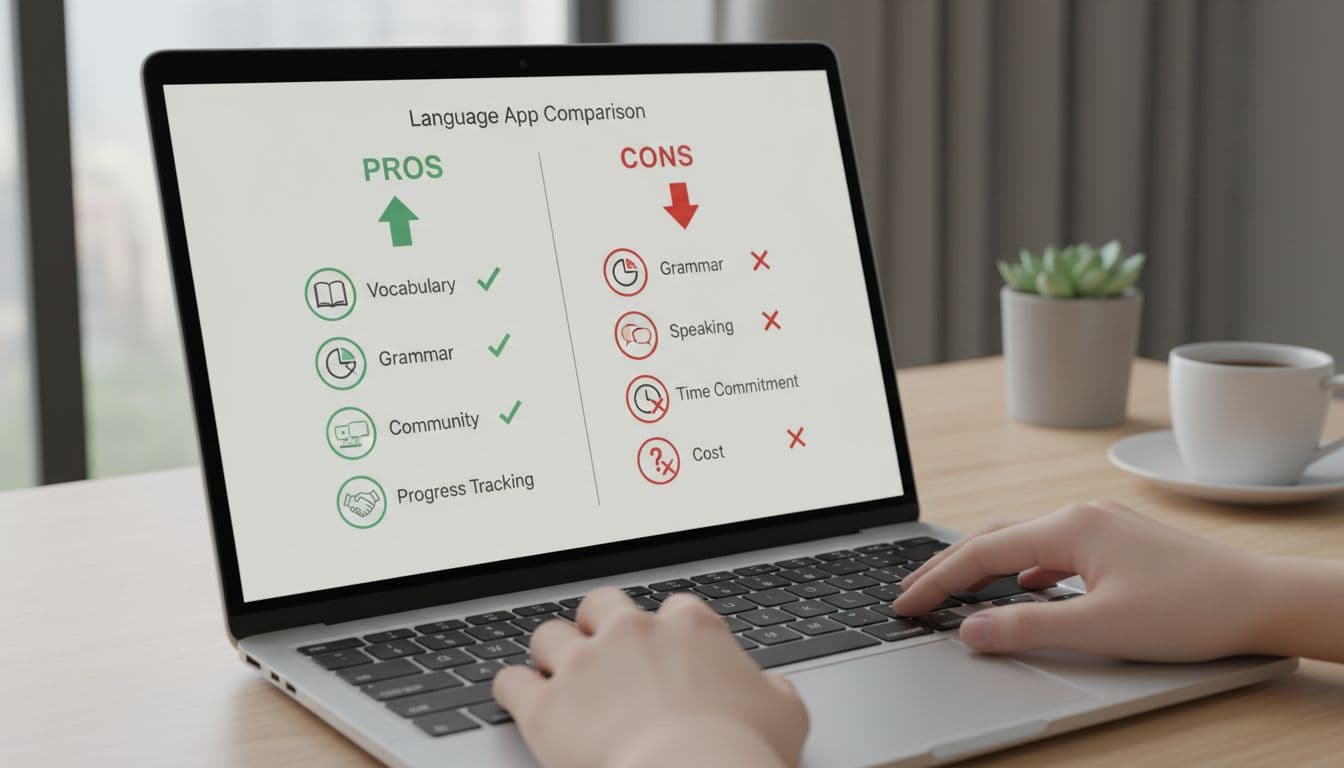
The pros are clear. Retention is strong, review sessions are efficient, and Premium adds useful extras if you want more than flashcards. The limits are just as clear. Grammar depth is light, speaking feedback is missing, and the app expects discipline. A recent independent review of MosaLingua’s strengths and weaknesses reaches a similar conclusion and also flags the interface as less polished than some rivals.
MosaLingua fits busy adults, professionals, students with commute time, and polyglots who already know how to study. It fits complete beginners less well when they need heavy explanation and a rigid path. It also falls short for exam prep if grammar accuracy and extended writing are central goals.
Use it as the memory engine in a broader study plan. Pair it with a grammar resource, regular listening, and weekly conversation practice. For live output and correction, a tutor marketplace can fill the gap, as shown in this italki review for speaking. For travel or patchy Wi-Fi, the mobile review flow is the safer part of the system, while the richer library and browser tools depend more on being online.
Final verdict
Serious learners don’t need an app that looks busy. They need one that sharpens active recall and keeps useful language close at hand. MosaLingua does that well in 2026.
As a full learning system, it still comes up short. Use it to lock in words and phrases, then get grammar depth and real speaking pressure elsewhere. In that role, it’s one of the better support tools you can add to a long-term plan.
Ready to Take Your Language Learning Further?
Your favorite language-learning app is a great place to start. Rocket Languages can help you go further with interactive audio lessons, pronunciation practice, real-world conversations, and structured learning.
Explore Rocket Languages →Affiliate disclosure: We may earn a commission if you purchase through this link, at no additional cost to you.