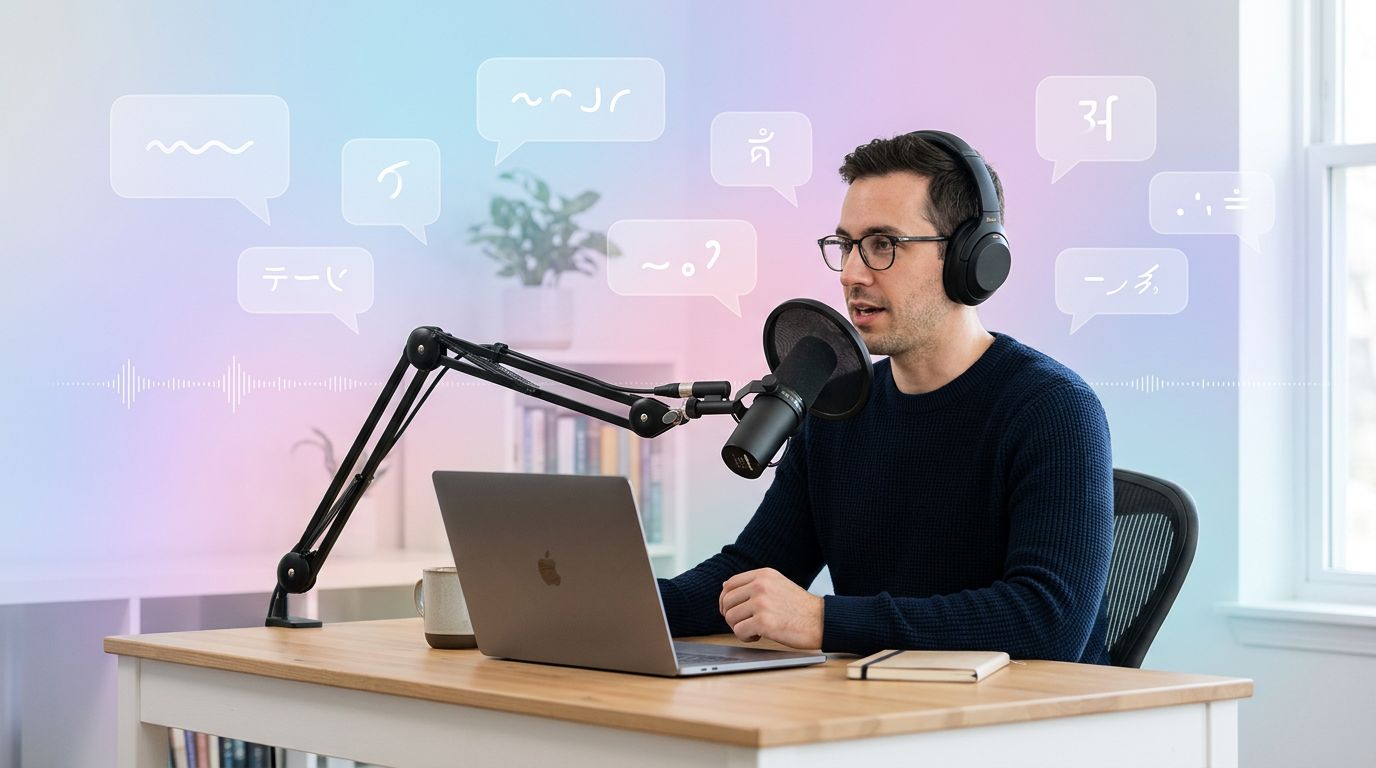
Plenty of language apps promise fluency. Glossika asks you to build it one sentence at a time.
That makes Glossika useful for serious learners and irritating for everyone else. If you want clear lessons, game loops, or lots of explanation, it will feel blunt. This review of Glossika looks at its 2026 pricing, method, language coverage, and whether it suits your level.
How Glossika works in 2026
Any honest review of Glossika has to start with its method. You study whole sentences, not isolated words. The app plays a line, asks you to repeat it, sometimes type or transcribe it, and then brings it back later through spaced repetition.
A session feels closer to shadowing than to a normal lesson app. You hear a sentence, say it aloud, and keep moving. Over time, patterns start to stick because you meet them again and again in full context. Grammar is there, but mostly in the background.
Glossika is best seen as a fluency trainer, not a complete beginner course.

In 2026, the core workflow is still the same. You can switch between full practice and listening-only mode, and the platform includes typing, dictation, recording, and review. The “AI” part matters less than the scheduler behind it. In plain English, Glossika tracks what you know, then feeds old sentences back before they fade.
As of April 2026, pricing is steep. Basic is about $20 per month or $199 yearly. Pro is about $40 per month or $399 yearly. A verified student plan cuts that sharply, and a 30-day trial is usually available. Language coverage is strong, with 65 languages listed, and nine minority languages remain free as part of Glossika’s preservation effort.
That mix of breadth and repetition is why it still gets attention from serious learners. Other hands-on reviews, including Kojii Languages’ 2026 review and FluentU’s Glossika review, describe the same tradeoff: lots of useful sentence practice, but not much hand-holding.
Who gets real value from Glossika
Glossika says it works across levels. In practice, your fit depends on how much ambiguity you can handle and whether repetition keeps you focused or wears you down.
Beginners
True beginners can use it, but most shouldn’t rely on it alone. Because explanations are light, you’ll meet grammar before you understand it. Some learners like that pressure. Most want more support.
If you are starting from zero, Pimsleur, Assimil, Babbel, or a solid textbook will feel clearer. That is even more true in non-Latin scripts, where typing tasks can slow you down if your keyboard skills are weak.
Intermediate and advanced learners
This is Glossika’s best use case. Once you know the basics, the app helps turn passive knowledge into faster recall. It trains word order, sentence rhythm, and listening under mild pressure. That matters if you can read decently but still freeze when you speak.

Advanced learners can also get value, especially for maintenance or less common languages. The gains are smaller, though. At that level, longer native input and live conversation often beat another round of canned sentences.
Heritage learners
Heritage learners may get more from Glossika than the marketing suggests. If you understand a lot but struggle to produce full sentences, this kind of repeated recall can help. It pushes you to activate language you already half-own.
Still, it won’t fix weak literacy on its own. If reading and writing matter, pair it with script study, graded reading, or a tutor.
The main pros are clear. Glossika builds automaticity better than most tap-heavy apps, covers many hard-to-find languages, and gives you more serious repetition than mainstream competitors. The cons are just as clear: the drills get monotonous, grammar support is thin, and the price is high for a tool that often works best as a supplement.
How Glossika compares with the main alternatives
A quick comparison makes its place clearer:
| Tool | Better choice when you need | Where Glossika still wins |
|---|---|---|
| Pimsleur | guided speaking from day one | more languages, more sentence volume |
| Assimil | short lessons with explanations | denser recall practice |
| LingQ | long-form input and reading | more structured sentence drills |
| Clozemaster | cheap sentence exposure | stronger speaking-focused practice |
| Anki | custom SRS and low cost | ready-made audio sentence bank |
| Duolingo, Babbel, Busuu | onboarding and guided structure | less tapping, more full-sentence recall |
Price changes the verdict. At $399 per year for Pro, Glossika is hard to justify as your only tool unless you use it almost daily or need one of its rarer languages. Basic is easier to defend, but budget learners can still build a strong stack with Anki, Clozemaster, podcasts, and occasional tutoring.
Compared with Pimsleur, Glossika is less guided but denser. Compared with Assimil, it offers fewer explanations and more repetition. LingQ beats it for rich input and self-imported content. Clozemaster is the cheap cousin, but it feels lighter and more game-like. Anki remains the best bargain if you don’t mind building your own review system.
Mainstream apps are easier to start and easier to stick with. They also let you coast. If you want a broader shortlist, LanguaVibe’s serious learners’ top app alternatives helps frame where Glossika sits. Before paying, it’s also smart to run a quick 15-minute language app evaluation based on your real goal, not the marketing page.
The weak spots haven’t vanished in 2026. Cost is still the biggest obstacle, and some roundup reviews, such as TopConsumerReviews’ March 2026 write-up, still mention app friction alongside praise for the method.
Final verdict
Glossika is worth buying if you already have a base in the language, want faster listening and speaking recall, and will use sentence drills several times a week. It also makes sense for heritage learners with strong comprehension but weak output, and for polyglots studying languages that other apps barely cover.
Skip it if you are a total beginner who needs explanations, or if your budget only allows one main resource. For best results, use Glossika alongside a grammar source, longer input, and human feedback, such as Assimil or a textbook for structure, LingQ or podcasts for input, and a tutor or exchange partner for correction. Then its repetition stops feeling narrow and starts paying off.
Ready to Take Your Language Learning Further?
Your favorite language-learning app is a great place to start. Rocket Languages can help you go further with interactive audio lessons, pronunciation practice, real-world conversations, and structured learning.
Explore Rocket Languages →Affiliate disclosure: We may earn a commission if you purchase through this link, at no additional cost to you.