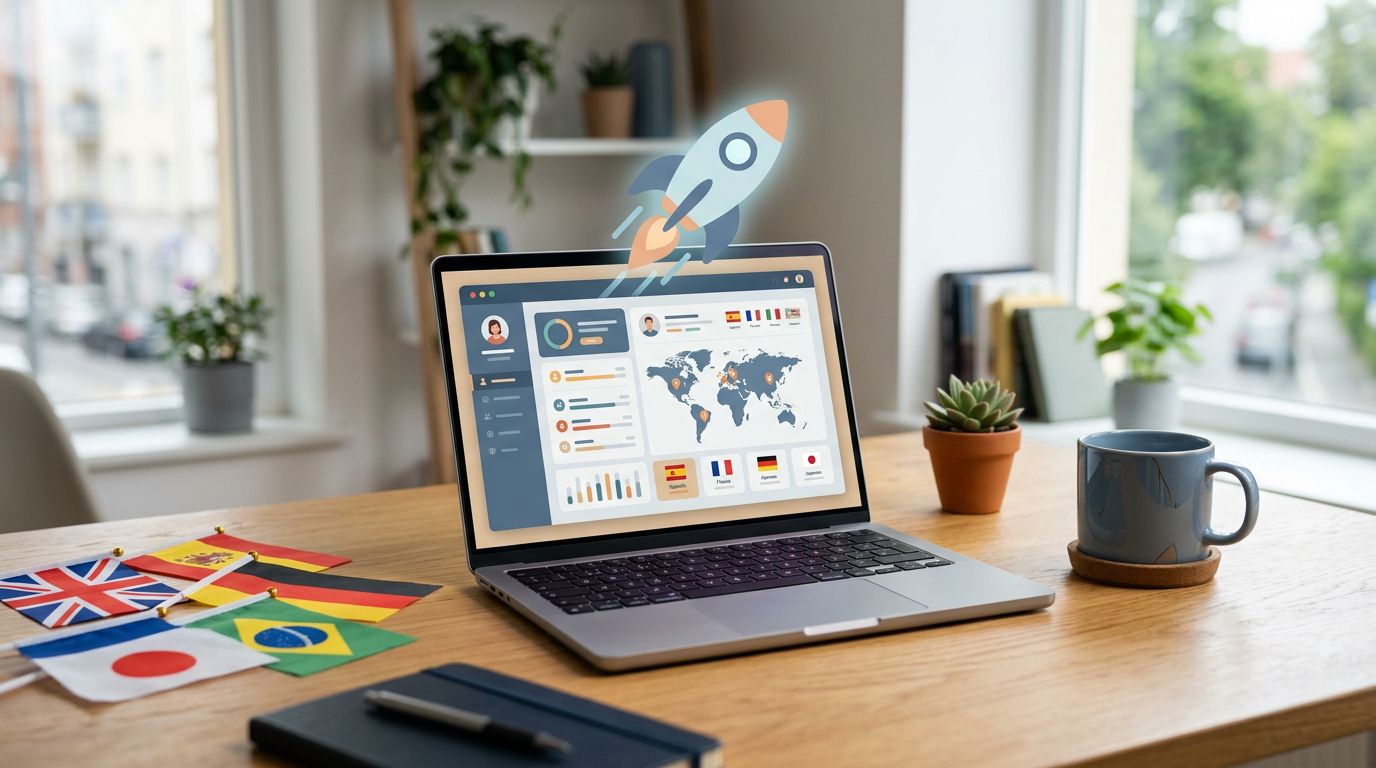
Most language apps sell a habit. Fewer build skills you can still use when the streak stops.
This Rocket Languages review looks at Rocket from a serious learner’s angle in 2026. If you want guided audio practice, full-sentence recall, and a course you own outright, it still has real appeal. If you want advanced fluency, live feedback, or open conversation, the ceiling arrives sooner than the sales copy suggests.
Start with the part that changes the buying decision fastest: what you get, what it costs, and how far it can take you.
What Rocket Languages gives you in 2026
Rocket still stands out because it sells lifetime access instead of another monthly subscription. Current pricing is $149.95 per level, $299.90 for Levels 1 and 2, and $449.85 for all three levels. There’s also a six-month payment plan, plus a 60-day money-back guarantee. Discounts show up often, so few learners pay full list price.
That pricing feels unusual in a market where many major apps still push recurring billing, as shown in this 2026 roundup of language learning apps. The upside is obvious if you study for a year or more. The downside is the high upfront cost, especially if you haven’t tested the method yet. Before paying, it’s smart to run a language app paywall honesty check.
Course depth varies by language. Rocket currently offers major courses and several smaller ones, including Spanish, French, Korean, Arabic, Hindi, Portuguese, Russian, English, and sign language. However, some languages only have one level, which limits long-term progression.
The core design hasn’t changed much, and that’s mostly fine. Lessons revolve around dialogues, guided audio, pronunciation, grammar notes, review drills, and cultural notes. You also get writing-system lessons for languages that need them. On mobile and desktop, the layout is clear, though it feels dated next to newer apps. Serious learners may forgive that because the method still has focus.

Photo by Thirdman
The one-time fee looks best after months of steady use, not after a weekend of curiosity.
How well Rocket trains speaking, listening, reading, and grammar
For actual skill-building, Rocket is stronger than many casual apps because it asks you to produce language, not only recognize it. That matters. Tapping the right answer is easy. Saying a full sentence from memory is harder, and far more useful.
| Area | Verdict |
|---|---|
| Speaking | Good guided output, weak spontaneous conversation |
| Listening | Strong scripted audio, limited messy real-world input |
| Reading | Helpful support, but texts stay controlled |
| Writing | Basic sentence work, little correction |
| Grammar | Clear enough, not deep or systematic |
| Motivation | Adult-friendly, but dry for some learners |
| Long-term growth | Solid start, limited beyond lower-intermediate |
Its best feature is still speaking and listening. The audio lessons push you to repeat, respond, and hold short bits of language in memory before answering. That creates more pressure than Duolingo-style tapping. Listening also gets a boost because Rocket uses longer dialogues than many competitors, so you hear language in chunks, not isolated words.

Still, the speaking practice is guided, not open. Speech recognition can help with pronunciation, but it doesn’t judge turn-taking, hesitation, or how well you recover when you get stuck. In other words, Rocket can prepare you for conversation. It can’t replace conversation.
Reading and writing are useful, but limited. The platform supports reading better than audio-first rivals like Pimsleur because you see transcripts, notes, and written exercises. It also teaches scripts when needed, which helps beginners in languages such as Arabic or Russian. Yet reading stays controlled, and writing rarely moves beyond short prompts or transcription-style work.
Grammar support sits in the middle. Rocket explains patterns more clearly than pure immersion apps, and that helps adult learners. Yet it isn’t the cleanest grammar course on the market. If grammar sequence and lesson structure matter most, this Babbel review for serious learners shows where Babbel often feels tighter.
Motivation depends on your personality. Rocket doesn’t flood you with streak pressure, badges, or cartoon rewards. Some adults will love that calmer tone. Others will stop opening the app after the early novelty fades.
Where Rocket Languages falls short, and who will outgrow it
Rocket’s main weakness is its ceiling. In major languages with three levels, it can take a disciplined learner from beginner into lower-intermediate territory. That’s worthwhile. However, serious learners aiming past that point will need native podcasts, books, tutors, and corrected writing much sooner than they may expect.
The limits show up in familiar places. Listening stays cleaner than real life. Speaking stays narrower than real conversation. Reading doesn’t expand into longer, less controlled material. Writing gets too little feedback to build confidence for work, study, or exams.
That doesn’t make Rocket weak. It makes it specific. Rocket is best for adults who want a structured self-study base, especially commuters and independent learners who learn well through audio-led lessons. It also suits returning learners who need a serious restart without paying every month.
Comparison helps make that clearer. Compared with Pimsleur, Rocket gives you more text, grammar, and review tools. Compared with Babbel, it feels more audio-heavy but less tightly sequenced. Compared with Rosetta Stone, it explains more and asks you to guess less. Compared with Duolingo, it is less motivating day to day, but far more useful for full-sentence practice.
The public review picture is also mixed, which is worth noting. Rocket’s own review page shows a high average score from thousands of customers, but that is still first-party feedback. Off-platform signals are thinner and more mixed on Trustpilot. Star ratings alone won’t answer the real question. The method either matches your learning style, or it doesn’t.
If you already study at B1+, need live speaking correction, or want exam prep, you’ll probably outgrow Rocket fast. In that case, treat it as a base layer, not the whole system.
Rocket Languages is still a strong buy in 2026 for serious beginners who want guided audio, better recall practice, and a course they can keep for years. Its best lessons feel purposeful, and the lifetime model can offer solid value if you use it often.
If your goal is fluent, flexible communication, Rocket is only the first stretch of the road. Once the training wheels come off, you need messier listening, freer speaking, longer reading, and real feedback. Rocket Languages works best as a foundation, not a finish line.
Ready to Take Your Language Learning Further?
Your favorite language-learning app is a great place to start. Rocket Languages can help you go further with interactive audio lessons, pronunciation practice, real-world conversations, and structured learning.
Explore Rocket Languages →Affiliate disclosure: We may earn a commission if you purchase through this link, at no additional cost to you.