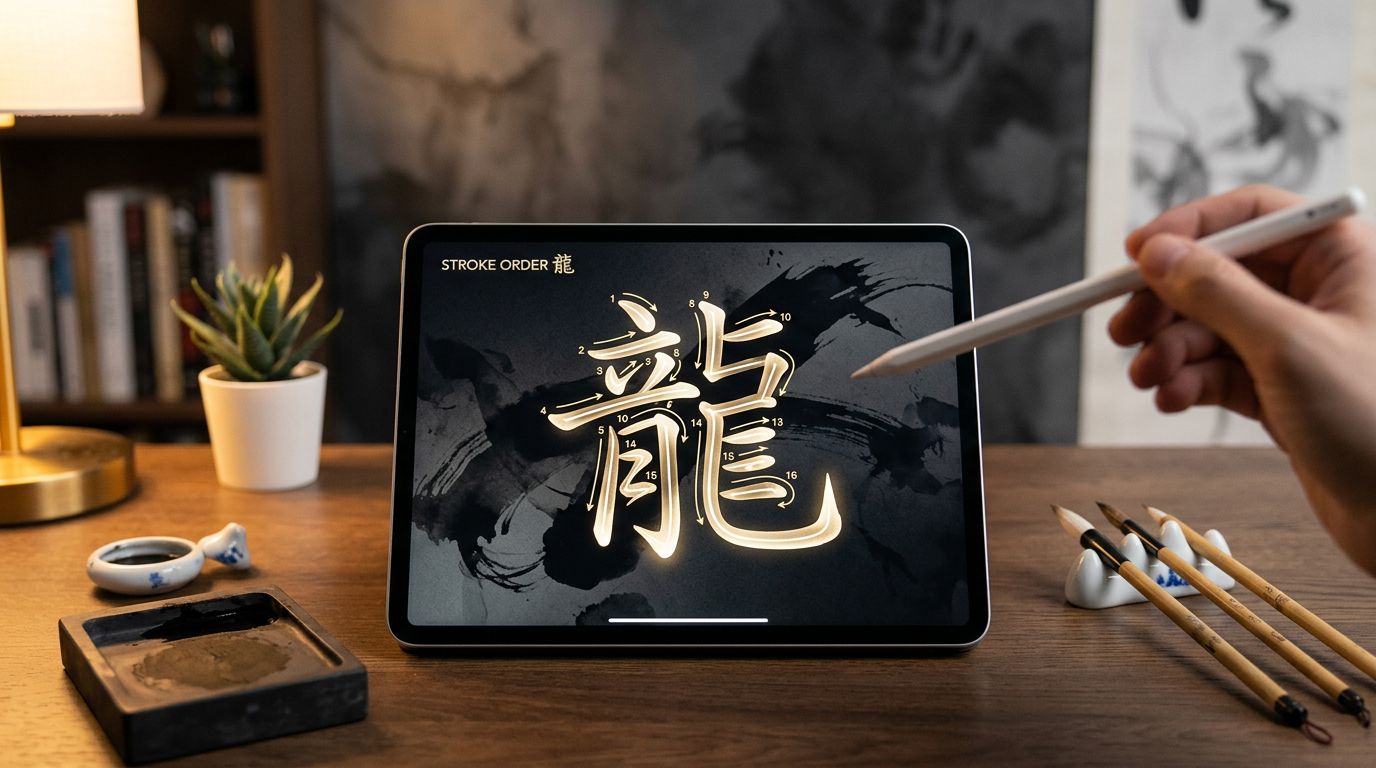
Writing Chinese by hand exposes every weak spot in your study routine. You either know the character, or you don’t.
That’s why Chinese writing apps matter for serious learners. The right app can sharpen stroke order, strengthen recall, and make character production feel less fragile. The wrong one only gives you the illusion of progress.
If you want a broader view of Mandarin tools, the best Chinese learning apps in 2026 roundup shows where writing apps fit inside a full study stack.
What serious learners need from a writing app
Handwriting practice, character memorization, and calligraphy-style practice are three different jobs.
Handwriting practice asks you to produce the character from memory, stroke by stroke. That is the part that builds real recall. If you can trace a character but blank out on a test, the app is helping less than it looks.
Character memorization is lighter. It helps you recognize shapes, radicals, and spacing. That can be useful, especially early on, but it won’t always make your hand faster.
Calligraphy-style practice is different again. It focuses on form, brush feel, and balance on the page. Most apps in this article do not replace real calligraphy drills. They help with writing Chinese, not brush art.
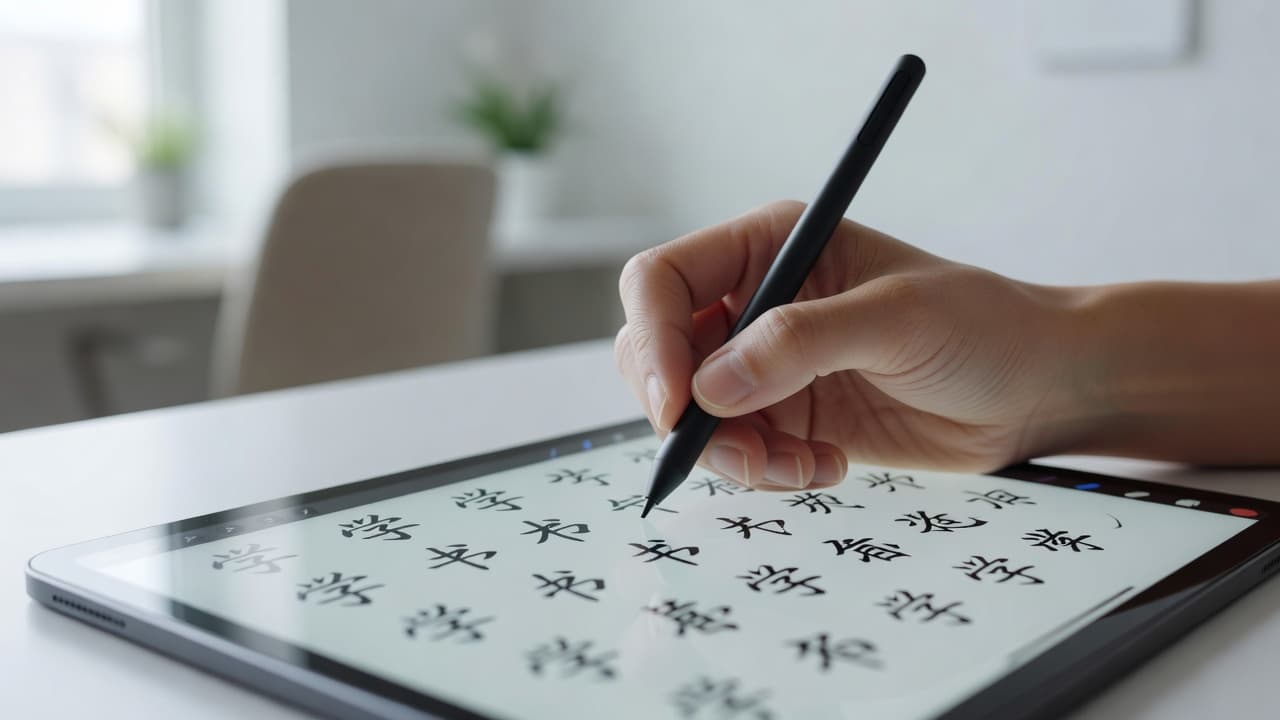
A good writing app should make you recall the character, not just trace it.
That difference matters more in 2026 than it did a few years ago. Plenty of apps now include character lessons. Far fewer of them train writing well.
The Chinese writing apps that are actually worth your time
The short list below focuses on apps that help with handwriting, recall, and stroke order. A few general learning apps are included too, because many learners still want one app that does more than one job.
| App | Best for | Chinese support | Strengths | Weaknesses |
|---|---|---|---|---|
| Skritter | Serious handwriting and recall | Simplified and traditional | Best stroke-by-stroke training, strong review system, good for active recall | Paid, narrow focus, can feel repetitive |
| Pleco | Learners who want writing inside a full dictionary app | Simplified and traditional | Excellent handwriting input, dictionary depth, flashcards, add-ons | Not a guided writing course |
| HelloChinese | Beginners who want structured character practice | Simplified | Clear lessons, friendly pacing, useful early writing support | Not deep enough for advanced handwriting |
| SuperChinese | Self-learners who want guided study | Simplified | Good routine, short lessons, decent character work | Writing depth is limited |
| Chinese Mandarin Handwriting | Simple handwriting drills | Simplified | Minimal interface, easy to start | Small feature set, less depth |
Skritter is the clear leader here. Pleco is the best support tool. HelloChinese and SuperChinese are useful, but they are general study apps with writing features, not true writing specialists.
Skritter still leads for real handwriting practice
In June 2026, Skritter remains the strongest choice for learners who care about handwriting, and our full Skritter review explores the stroke-order and recall method in depth. It is built around active recall, stroke order, and spaced review. That combination is hard to beat.
Skritter also supports both simplified and traditional Chinese, which makes it a strong fit for learners across regions. Its current App Store listing and Google Play page are both active in 2026.
The strength of Skritter is simple. It makes you write, then it checks your work. That sounds basic, but it is exactly what many learners need. It is also the best choice for anyone preparing for exams where character recall matters.
The downside is just as clear. Skritter is focused and expensive compared with casual apps. It does not try to teach you all of Mandarin. If you want listening drills, grammar lessons, and conversation practice in the same place, you will still need another app.
Pleco is the smartest companion app
Pleco is not a dedicated handwriting app, but serious learners still use it every day. Its value comes from being a powerful dictionary first and a writing tool second.
Pleco supports both simplified and traditional Chinese. Its handwriting recognition and flashcard tools make it useful when you want to check a character, review a list, or build custom study cards. If you want to understand where it fits into a wider Mandarin setup, the best Chinese learning apps in 2026 guide shows how it compares with other study tools.
Pleco is best for intermediate and advanced learners who already read and write some Chinese. It helps you verify what you know, but it won’t push you through a full writing curriculum on its own. Think of it as a bench tool, not the whole gym.
HelloChinese works for early writing, not deep practice
HelloChinese is useful when you are still building the basics. Its writing exercises are friendly, and the app does a good job of lowering the fear that many beginners feel around characters.
The app focuses on simplified Chinese. That makes it a good fit for learners following mainland-standard study paths. For a fuller breakdown of its strengths and limits, see the HelloChinese review for 2026.
What makes HelloChinese appealing is its structure. Lessons are short, feedback is clear, and the character work feels manageable. The weakness is depth. Once you move into serious recall, fast writing, and long character lists, HelloChinese starts to feel too light.
For beginners, that is fine. For serious learners, it is a stepping stone.
SuperChinese is decent, but not a writing-first app
SuperChinese gives you a guided study routine, and that can help if your schedule is messy. It includes character work, review, and structured lessons. It also focuses on simplified Chinese.
Still, the writing side is not the reason to choose it. SuperChinese is better viewed as a general Mandarin app with some character support. That makes it useful for learners who want consistency, but it is weaker than Skritter for actual handwriting training.
If your goal is character recall under pressure, SuperChinese will not carry the load by itself. If your goal is to stay on track with a structured app, it has a place.
Chinese Mandarin Handwriting is simple, but limited
Chinese Mandarin Handwriting is aimed at basic character practice. It is the kind of app that helps when you want something direct and low-friction. It focuses on simplified Chinese, and that keeps the experience narrow and easy to follow.
That simplicity is also its biggest weakness. The app is fine for light drills and early practice. It is not strong enough for learners who want deep review systems, large character sets, or serious exam prep.
In other words, it can help you start. It will not take you very far on its own.
Which app fits your study style
Different learners need different tools. The best app for you depends on how much writing you already know and how hard you want to push it.
- HSK learners should start with Skritter if handwriting matters for the exam. Pleco is the best companion app for lookup and review.
- University students often do best with Pleco plus Skritter, because that mix handles both reference and production.
- Self-study beginners can begin with HelloChinese, then move to Skritter once character lists get longer.
- Intermediate and advanced learners should skip light apps first and go straight to Skritter, with Pleco beside it.
- Learners who want a simple daily habit can use SuperChinese or Chinese Mandarin Handwriting, but they should treat both as starter tools.
For character memorization, the ideal app forces recall and checks stroke order. For calligraphy-style practice, paper still matters more than any app. If you want beautiful writing, an app can help your memory, but it won’t replace actual pen control.
Conclusion
If your main goal is stronger Chinese handwriting, Skritter is still the clearest answer in 2026. It is the most focused app for stroke order, recall, and regular writing practice.
Pleco comes next as the best support tool, while HelloChinese and SuperChinese are useful only if you want lighter writing practice inside a broader course. Chinese Mandarin Handwriting can help beginners, but it is too limited for serious long-term work.
The fastest progress usually comes from one rule: choose the app that makes you write from memory, not the one that only makes characters look familiar.
Ready to Take Your Language Learning Further?
Your favorite language-learning app is a great place to start. Rocket Languages can help you go further with interactive audio lessons, pronunciation practice, real-world conversations, and structured learning.
Explore Rocket Languages →Affiliate disclosure: We may earn a commission if you purchase through this link, at no additional cost to you.