
Mandarin apps are easy to download and hard to trust. Many look polished, then stop helping once the lessons get real.
If you study every day, you need apps that support tones, characters, spaced repetition, native audio, and real reading. The best Chinese learning apps in 2026 are the ones that still matter after the first month, not the ones that only make a streak look good.
What serious Mandarin learners need from an app
A serious learner needs more than a reward loop. You need a tool that improves accuracy, keeps review under control, and still feels useful when your Chinese moves beyond beginner lessons.
The best apps for Mandarin usually do at least one of these well:
- Curriculum quality: lessons build in a sensible order, with real grammar and vocabulary control.
- Tone and pronunciation support: the app helps you hear and produce the right pitch patterns.
- Spaced repetition: words come back before you forget them.
- Graded content: reading and listening stay close to your current level.
- Long-term usefulness: the app still helps at intermediate and advanced stages.
If you want a quick way to match a tool to your goal, this app selection guide is a useful filter.
The apps that last are the ones that still help when the streak badge stops mattering.
Quick comparison: which app fits which job
Prices below reflect May 2026 listings and can change with yearly plans or app store deals.
| App | Best for | 2026 pricing | Main strength | Main limit |
|---|---|---|---|---|
| Pleco | Dictionary, OCR, flashcards | Free core, add-ons about $10 to $30 one-time | Fast lookup and deep reference use | Not a full course |
| HelloChinese | Structured beginner study | Free tier, Premium about $9.99/month or $59.99/year | Tone training and clean course flow | Light for advanced learners |
| Du Chinese | Graded reading | Limited free, Premium about $11.99/month | Native audio with levelled stories | Weak for speaking |
| Anki | Custom spaced repetition | Free on desktop and Android, iOS $25 one-time | Total control over review | No guided curriculum |
| SuperTest | HSK prep | Free limited, Premium about $9.99 to $12.99/month | Exam-style practice and AI feedback | Narrow focus |
| LingoDeer | Grammar-first learning | Free limited, Premium about $6.66 to $14.99/month | Clear structure for Asian languages | Less depth later |
| The Chairman’s Bao | Levelled news reading | About $11/month or $88/year | Reading bridge to real news | Can feel expensive |
| HelloTalk | Speaking and writing exchange | Free core, VIP about $12.99/month | Native feedback and conversation | Quality varies by partner |
| ChinesePod | Listening practice | About $29.99/month or $239.99/year | Large audio library with transcripts | Price is high |
A recent 2026 comparison from HSKLord reaches a similar core conclusion. Serious learners need a small stack, not a pile of shiny apps.
The best Chinese learning apps in 2026
Pleco
Pleco is still the app serious learners open most often. It works on iOS and Android, and the free core app already gives you a powerful Chinese-English dictionary. Paid add-ons, usually a one-time purchase, expand flashcards, OCR, handwriting input, and extra dictionary packs.
That matters because Mandarin study creates constant lookup moments. You need fast character search, clean audio, stroke support, and a place to store words you want to review later. Pleco handles those jobs better than almost anything else.
It is not a course, and it should not try to be one. Its value is that it stays useful from day one to advanced reading. If you only buy one app, this is the safest choice. See the official Pleco site for the latest add-on details.
HelloChinese
HelloChinese is still the best all-around starter course for Mandarin. The app’s 2026 refresh keeps its strengths intact, with tone graphs, speech checks, short stories, grammar explanations, and a course path that feels built for Chinese rather than copied from another language.
It works on iOS and Android, and the free tier is useful on its own. Premium is about $9.99/month or $59.99/year. For a serious beginner, that is a fair price if you want a course that teaches pinyin, characters, and basic speaking in one place.
The weak spot appears once you move past early intermediate material. It helps you start well, but it does not carry you far enough by itself. For extra tone work, pair it with these Mandarin tone apps.

Du Chinese
Du Chinese is the cleanest bridge from textbook Mandarin to real reading. Its graded stories cover beginner through advanced levels, with pinyin, translations, and audio you can tap through at your own pace. The app is available on iOS and Android, and the current listing still shows a limited free tier and premium around $11.99/month.
This is the app for learners who want reading to become a habit. It works well for high beginners, intermediate readers, and advanced students who want regular input without guessing every other word. The design is simple, which helps you stay on task.
The limit is obvious: Du Chinese is excellent for reading and listening, but it does little for speaking. If pinyin is still doing too much of the work for you, this romanization dependency test helps you spot that problem early.
Anki
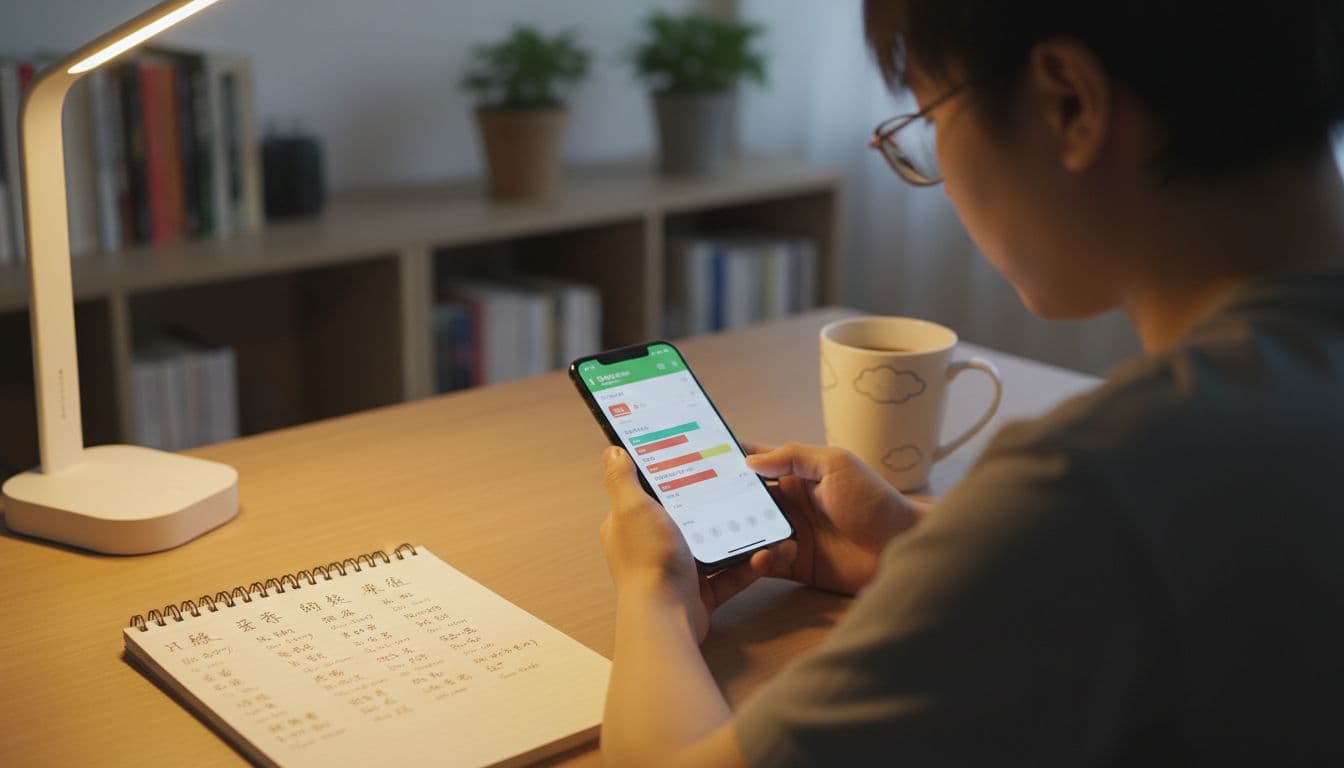
Anki is the least polished app on this list, but it remains one of the most effective. On desktop and Android it is free, and the iOS version is a one-time $25 purchase. That pricing model matters because serious learners use SRS for years, not weeks.
Anki shines when you make the deck fit your exact needs. You can build tone pairs, HSK vocabulary, sentence mining cards, or character review sets. You can add audio and images, then let the spaced repetition system do its work.
The trade-off is time. Anki gives you control, not a curriculum. That makes it perfect for disciplined learners and a poor fit for anyone who wants to be guided through every step. For many people, it becomes the backbone of daily review.
SuperTest
SuperTest is the HSK-focused choice for learners who want exam structure and regular testing. The official site frames it as an AI-driven HSK prep app, and 2026 pricing still sits around $9.99 to $12.99/month for premium access.
Its strengths are clear. You get personalized practice, test-style drills, and a path that fits learners who need measurable progress. That makes it especially useful if your goal is HSK 3, HSK 4, or higher.
It is less appealing if you want broad reading, open conversation, or a richer immersion feed. Still, as a focused HSK tool, it earns its place. For current app details, see SuperTest’s official site.

LingoDeer
LingoDeer remains a strong grammar-first option for Chinese learners who want more structure than most gamified apps provide. It is especially good for beginners and lower-intermediate students who need clear sentence patterns, character support, and a more deliberate pace.
Its 2026 pricing sits roughly between $6.66 and $14.99/month, depending on the plan. That makes it one of the more affordable premium apps if you want a more serious course than a streak builder. The course design also feels more suited to Asian languages than to a one-size-fits-all template.
The downside is reach. LingoDeer is helpful early, but it does not replace real reading, speaking, or deeper review tools later on. If you want a fuller breakdown, this LingoDeer review for Chinese beginners explains where it stays strong and where it fades.
The Chairman’s Bao
The Chairman’s Bao is one of the better reading apps for learners who are tired of textbook dialogs. It offers levelled news articles with audio, flashcards, and quizzes, which makes it easier to move from controlled lessons to real-world topics.
Pricing in 2026 is about $11/month or $88/year. That is not cheap, but the app gives you a steady path into reading speed and vocabulary range. It works best after the basics, when you can already handle simple sentences and want more volume.
The biggest strength here is consistency. You get short, topical reading that keeps your Mandarin active without overwhelming you. If your study routine needs one app that pushes you beyond artificial content, this is a good pick.
HelloTalk
HelloTalk is not a course, and that is why it stays useful. It gives you chat, voice notes, corrections, and real exchanges with native speakers. The free version is useful, and VIP is about $12.99/month.
This app matters once you can say enough Mandarin to hold a small conversation. That is when native feedback starts to fix mistakes that no drill can catch. It also helps you practice writing with real human responses, which is something many course apps never give you.
The weak point is quality control. A bad partner can waste your time, and a chat feed can turn into distraction fast. Use it for a job, not for aimless browsing. If you want to tell clean audio from weak synthetic voices, this guide to fake native-speaker audio is worth reading.
ChinesePod
ChinesePod is still one of the more serious listening tools for Mandarin. It offers a very large audio library with transcripts and vocabulary support, and 2026 pricing sits around $29.99/month or $239.99/year.
That price is high, so this app only makes sense if you will use it often. For learners who need steady listening work, it can be valuable because it trains your ear with real pacing and repeated exposure. The transcripts help, but the real win is the volume of audio practice.
ChinesePod is not the first app I would buy. It becomes attractive after you already have a base in vocabulary and reading, because then the listening starts to stick. For serious students who need more ear training than flash, it still earns a look.
How to build a stack that lasts
Most serious learners do better with a small stack than with a crowded phone. One app should teach, one should help you review, one should help you read, and one should keep your speaking honest.
A simple setup looks like this:
- Beginners: HelloChinese, Pleco, and Anki.
- Intermediate learners: Du Chinese, Pleco, The Chairman’s Bao, and HelloTalk.
- HSK-focused students: SuperTest, Pleco, and Anki.
- Listening-heavy learners: ChinesePod, plus Pleco and Anki for support.
The order matters. First, get a structured course or exam path. Next, keep Pleco open every day. Then add SRS and graded reading. Speaking tools come later, when you have enough words to use them well.
A small, reliable stack beats a crowded phone every time.
Conclusion
The best Chinese learning apps in 2026 are the ones that keep working after the first burst of motivation fades. They teach tones clearly, give you clean native audio, and help you review in a way that lasts.
For most serious learners, the strongest combination is still simple: one good course, one great dictionary, one review system, and one reading tool. If an app does those jobs well, it is worth your time.
Ready to Take Your Language Learning Further?
Your favorite language-learning app is a great place to start. Rocket Languages can help you go further with interactive audio lessons, pronunciation practice, real-world conversations, and structured learning.
Explore Rocket Languages →Affiliate disclosure: We may earn a commission if you purchase through this link, at no additional cost to you.