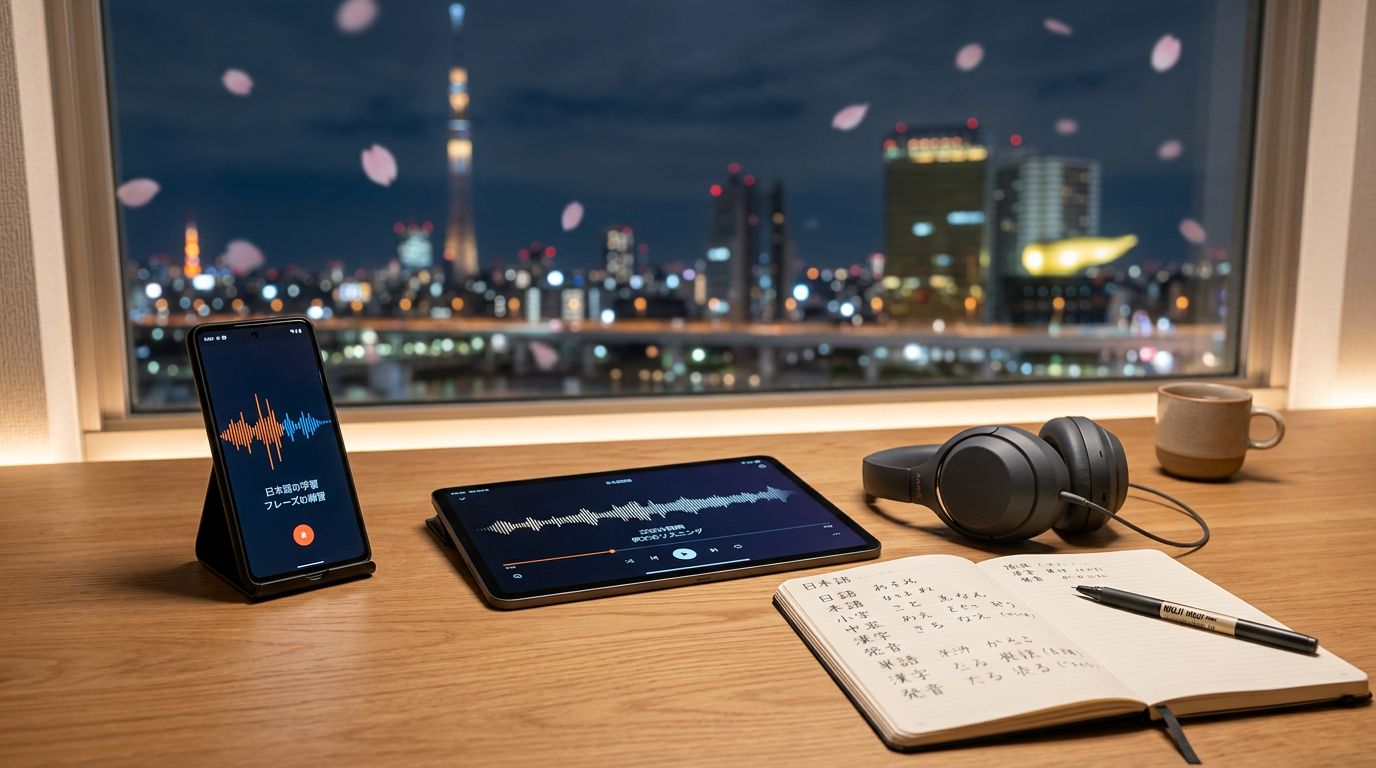
Japanese listening improves fastest when the app matches the kind of audio you can repeat daily. In 2026, the strongest Japanese listening apps do more than play clips, they give you transcripts, subtitles, replay controls, and a way to study the words you missed.
If you are serious about JLPT scores, native-speed conversations, or real shows and podcasts, random app hopping wastes time. The right choice depends on whether you need guided input, clean audio drills, or raw native speech.
What serious learners need from a listening app
A good listening app does one job well, then gives you enough support to stay honest about your progress. That usually means audio you can replay, text you can check, and some way to capture new words before they disappear.
For upper beginners, the sweet spot is comprehensible input, audio you can mostly follow, even if you miss details. For advanced learners, the goal changes. You want faster speech, more natural rhythm, and less hand-holding.
The strongest tools in 2026 also make review easy. If you can slow a clip down, jump back ten seconds, and save unknown words, you can turn one short conversation into ten minutes of useful work.
Passive listening helps your ears get used to Japanese, but progress comes faster when you can replay, shadow, and check the transcript.
Without that support, many apps become background noise. That may feel productive, but it rarely builds sharp listening skill.
The Japanese listening apps that matter most in 2026
The table below compares the tools that serious learners actually keep using.
| App | Pricing model | Level | Listening features | Best use case |
|---|---|---|---|---|
| Pimsleur | Subscription | Beginner to lower-intermediate | Native audio, repeat drills, strong playback control, lesson scripts | Building ear training and pronunciation habits |
| Rocket Japanese | Paid course, often one-time depending on platform | Beginner to intermediate | Dialogue audio, scripts, review exercises, some vocab support | Guided audio lessons with structure |
| Migaku | Subscription | Intermediate to advanced | Bilingual subtitles, sentence mining, playback controls, vocab capture | Anime, dramas, and YouTube with study tools |
| Satori Reader | Freemium or subscription | Upper-beginner to intermediate | Audio with text, easy replay, vocab notes | Guided input that still sounds natural |
| Renshuu | Freemium | Beginner to advanced | Audio on study items, vocab support, JLPT paths | Daily review beside other tools |
| italki / HelloTalk / Tandem | Tutor pay-per-lesson or free exchange | Intermediate to advanced | Live listening, no built-in transcripts, no subtitle tools by default | Real conversation and fast feedback |
The pattern is simple. Guided audio helps you build accuracy, while native media and live conversation push speed. Most serious learners need both.
A newer video-first option is Japanese Listening & Speaking on Google Play. It can help if you want structured clips with a visual cue, but it still works best when you pair it with stronger transcript or subtitle support.
Which apps fit your level and study style
Upper beginners need support, not chaos
If you are still fighting to catch the shape of words, start with audio that gives you guardrails. Pimsleur works well because it forces short responses and steady repetition. Rocket Japanese is better if you want a more traditional lesson path with dialogue and review.
Satori Reader also fits here, even though it is not a pure listening app. Its value is the bridge between reading and hearing. That matters when you want to listen without feeling lost every ten seconds. The Satori Reader review for intermediate Japanese learners shows why that bridge helps people who are leaving beginner material behind.

Intermediate learners need a bridge to native speech
Once you can follow short, slow dialogues, the next step is not more beginner drills. You need longer stretches of real Japanese with enough support to stay in the game.
Migaku is strong here because it lets you study from native content instead of only course material. You can watch a show, replay a line, and save the words that matter. If you already consume a lot of Japanese media, the Migaku review for immersion learners is worth a close look.
Renshuu belongs in this stage too, but for a different reason. It does not replace native listening. It gives you the vocab and grammar base that makes listening easier later. The Renshuu review for Japanese learners shows how it can support daily study without taking over your whole routine.
Advanced learners need native speed and real people
At the advanced stage, the main question changes. Can you follow natural speed without leaning on easy subtitles every time? If the answer is no, you need more contact with real speech.
That is where italki, HelloTalk, and Tandem pull ahead. They give you live listening, pauses, overlaps, corrections, and all the mess that real speech brings. That mess is useful. Native speakers do not wait for your ears to warm up.
Migaku still matters at this level, especially for people who use anime, YouTube, or drama clips as daily input. It is better for advanced native-speed listening than beginner-friendly comprehensible input, because it assumes you already want to work with unsimplified material. For a deeper breakdown of that style, the Migaku review for immersion learners covers the trade-offs well.
How to build a routine that actually improves listening
A strong app matters, but the routine around it matters more. Ten focused minutes beat an hour of vague background audio.
If you can replay it twice and explain it once, you have a real listening task.
A simple weekly structure works well for most serious learners:
- Start with one supported source each day, such as Pimsleur, Rocket Japanese, or Satori Reader.
- Replay short sections until you can hear the key words without looking.
- Move one clip or one conversation into native-speed practice through Migaku or a live tutor app.
- Save new words in Renshuu or another review system so they do not vanish.
This is where the best apps earn their place. They let you move from guided listening to unsupported listening without starting over each time. That transition is what many learners miss when they jump between random tools.
If you only want easy audio, progress will stall. If you only want hard audio, motivation will fade. The right stack gives you both.
Conclusion
The best choice in 2026 depends on your current level and the kind of listening you want to train. Upper beginners usually need structure first, while advanced learners need native speech, transcripts, and fewer training wheels.
For most serious learners, one app is not enough. A guided audio course, a native-content tool, and a real conversation platform create a much stronger path than any single subscription.
Japanese listening gets easier when the app matches the job. Pick the tool that fits your next stage, then use it every day.
Ready to Take Your Language Learning Further?
Your favorite language-learning app is a great place to start. Rocket Languages can help you go further with interactive audio lessons, pronunciation practice, real-world conversations, and structured learning.
Explore Rocket Languages →Affiliate disclosure: We may earn a commission if you purchase through this link, at no additional cost to you.