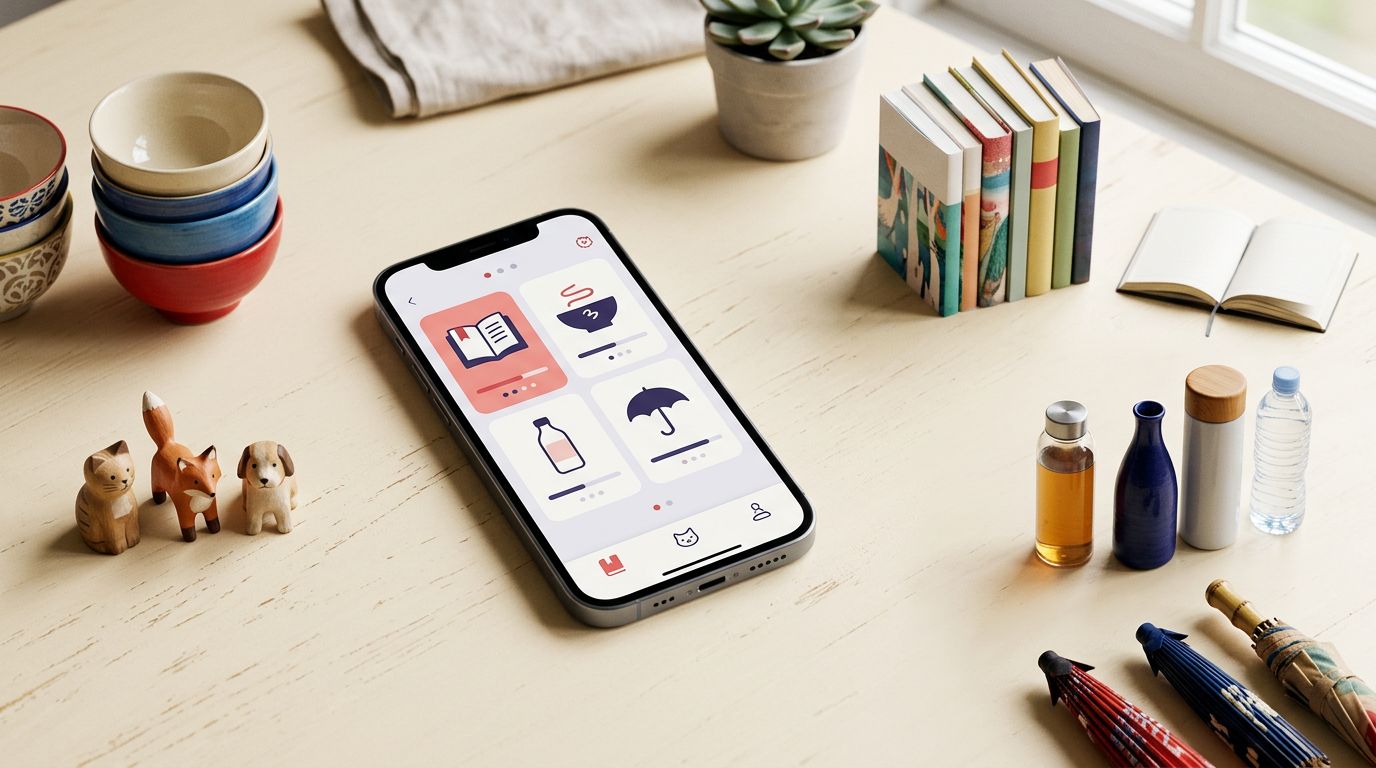
Japanese numbers can look easy on a flashcard and still cause hesitation at a restaurant, station, or store. The best Japanese counting apps help you practice the number, the counter, and the sound changes together, so you can say “three people” as 三人 (さんにん, sannin) without translating word by word.
That distinction matters for travelers, expats, and students building a reliable foundation. The apps below separate general-number trainers from dedicated counter tools, then show how to practice 人, 本, 枚, and 匹 in short daily sessions.
Japanese numbers are only half the task
Japanese has several counting patterns. Native forms such as ひとつ (hitotsu) and ふたつ (futatsu) count general, unspecified things. Sino-Japanese numbers such as 一 (ichi), 二 (ni), and 三 (san) combine with counters for people, objects, animals, books, machines, and more.
The number can also change pronunciation when a counter follows it. 二人 is futari, while 三人 is sannin. Similarly, 一本 is ippon, 三本 is sanbon, and 六本 is roppon. A learner may recognize each individual number but still struggle to produce the complete phrase quickly.
A number app teaches you to recognize “three.” A counter app helps you say “three people,” “three bottles,” or “three sheets.”
A Japanese numbers reference can help you review the basic systems, but repeated listening and recall are what make these forms usable.
Start with four high-value counters
You don’t need to learn every counter at once. Begin with the categories that appear often in daily conversation:
- 人 (にん, nin) counts people. Remember the special forms 一人 (hitori) and 二人 (futari).
- 本 (ほん, hon) counts long, narrow objects such as bottles, pens, umbrellas, and trees.
- 枚 (まい, mai) counts flat or thin objects, including paper, shirts, plates, and tickets.
- 匹 (ひき, hiki) counts many small animals, including cats, dogs, and fish.
These categories also expose the sound changes that make Japanese counters difficult. A useful app should let you hear the entire phrase, not only the isolated counter.

Best Japanese counting apps for iPhone
The strongest dedicated options in the current listings are iPhone apps. Their store labels and prices reflect listings checked in August 2026, although availability and in-app purchase details can vary by country.
Kaunta: Japanese Counters
Kaunta is the most focused choice for learners who want counters rather than a full Japanese course. The App Store listing says it starts with 19 essential counters and expands to 84 counters covering people, animals, flat objects, long objects, machines, buildings, and time.
It also provides ten example phrases for each counter, with readings in hiragana and romaji. That combination helps beginners connect kanji, kana, and pronunciation instead of memorizing a translation alone.
Kaunta is listed as Only for iPhone and Free with In-App Purchases. Choose it when counter vocabulary is your main weakness and you want a structured set of categories.
Japanese Counter Calculator
Japanese Counter Calculator works more like a practical reference and drill tool. You enter a number, select an object type, and receive a Japanese counting phrase. Its listing includes examples such as 三本 for three bottles, 二匹 for two cats, 五人 for five people, and 四冊 for four books.
The app includes common counters such as 本, 枚, 匹, 人, 冊, 個, and 台. It also states that users can hear counting phrases spoken in natural Japanese. You can review the Japanese Counter Calculator listing before installing it.
The app is listed as Free and designed for iPhone. It suits travelers and busy learners who want to check a phrase quickly, then repeat it aloud.
Japanese Numbers Trainer
Japanese Numbers Trainer teaches general number reading and pronunciation. It includes listening and counting practice, with exercises that move beyond small numbers, such as reading 8472 as 八千四百七十二.
The app is listed as free and iPhone-only. It is a better fit for learners who need number recognition, listening speed, and large-number practice. Treat it as a general numbers trainer rather than a complete course in Japanese counters.
Best Android apps for Japanese numbers
Android has fewer narrowly focused counter tools, but it offers useful options for spoken numbers and broader counting practice.
Numbiro
Numbiro is an Android app from SULISOFT LIMITED. Its core exercise asks you to listen to a number spoken in Japanese and identify it. The number range can expand from single digits to very large values, including millions and billions.
Numbiro also includes Japanese counters, with 20 counters available in the free version. The Google Play listing identifies the app as ad-supported and points users toward a separate premium, ad-free version. That makes it a practical choice for Android learners who want both number listening and a starter counter set.
Because its main exercise is auditory, Numbiro works well for students who can read numbers but lose track when a speaker says them quickly.
Japanese Number – Japanese 123
Japanese Number – Japanese 123 is an Android app by Te.f.E MobileSoft. The listing says it teaches users to read, remember, pronounce, and write Japanese numbers.
Its explanation also distinguishes the native Japanese number system from the Sino-Japanese system. That distinction matters because Sino-Japanese numbers appear with counter words, or 助数詞 (josūshi). The app is useful for learners who want basic number writing and a clear introduction to how the two systems relate.
The public listing does not provide a universal price that applies to every region. Check your local Google Play page before downloading or paying for extra content.
Count in Japanese
Count in Japanese focuses on numbers, people, and objects. It also includes days of the week, days of the month, and months, so it may help travelers or beginners who want a wider set of calendar vocabulary.
The listing says the app was designed by a beginning Japanese learner. It is available through Google Play, but the reviewed listing does not show a clear universal price. Use it as a broad counting aid, then add a dedicated counter app if you need more practice with readings such as ippon, sanbon, and roppiki.
How to choose among Japanese counting apps
The right pick depends on the moment when you usually make mistakes. A focused app is often better than a large course if you need one specific skill.
Match the app to your goal
For a traveler using an iPhone, Japanese Counter Calculator offers fast phrase generation for people, animals, books, and objects. Kaunta fits a student who wants systematic counter coverage. Japanese Numbers Trainer is more useful when large numbers and listening cause problems.
Android users should start with Numbiro if spoken numbers are difficult. Japanese Number – Japanese 123 is better when writing and number systems need attention. Count in Japanese adds calendar vocabulary to basic counting.
If counters are only one part of a wider study plan, pair a specialist tool with a broader app. LanguaVibe’s Renshuu Japanese app review covers an app with kana, kanji, vocabulary, grammar, reading, audio, writing, and JLPT study paths.
Check audio, kana, and kanji support
A counter list is useful, but audio should guide your choice. Japanese counter readings often change in ways that aren’t obvious from the written form. Listening to 三本 and repeating sanbon is more effective than silently reading “three plus long-object counter.”
Kana readings help beginners connect the kanji to pronunciation. Romaji can support an early review, but don’t rely on it forever. As your reading improves, switch to kanji and kana first, then use audio to confirm the sound.
Confirm platform and pricing
Several strong options above are iPhone-only, so Android users should check compatibility before building a study plan. Free listings can also include ads, locked lessons, or in-app purchases.
Kaunta lists in-app purchases. Numbiro offers an ad-supported version and mentions a separate premium edition. Other listings show free access but may not display every regional purchase option. Store prices, subscriptions, and availability can change by country, so confirm the current details on your device.
A ten-minute routine for Japanese counters
Apps work best when each session ends with spoken recall. Use the same short routine for two weeks before adding more counters.
Practice one category at a time
- Spend two minutes reviewing numbers from one to ten, including the pronunciation changes you already know.
- Choose one counter, such as 人 or 本, and study five number phrases.
- Listen to each phrase without looking at the answer, then say it aloud before checking your response.
- Write the kanji, kana reading, and pronunciation for two phrases. Finish by saying four complete sentences.
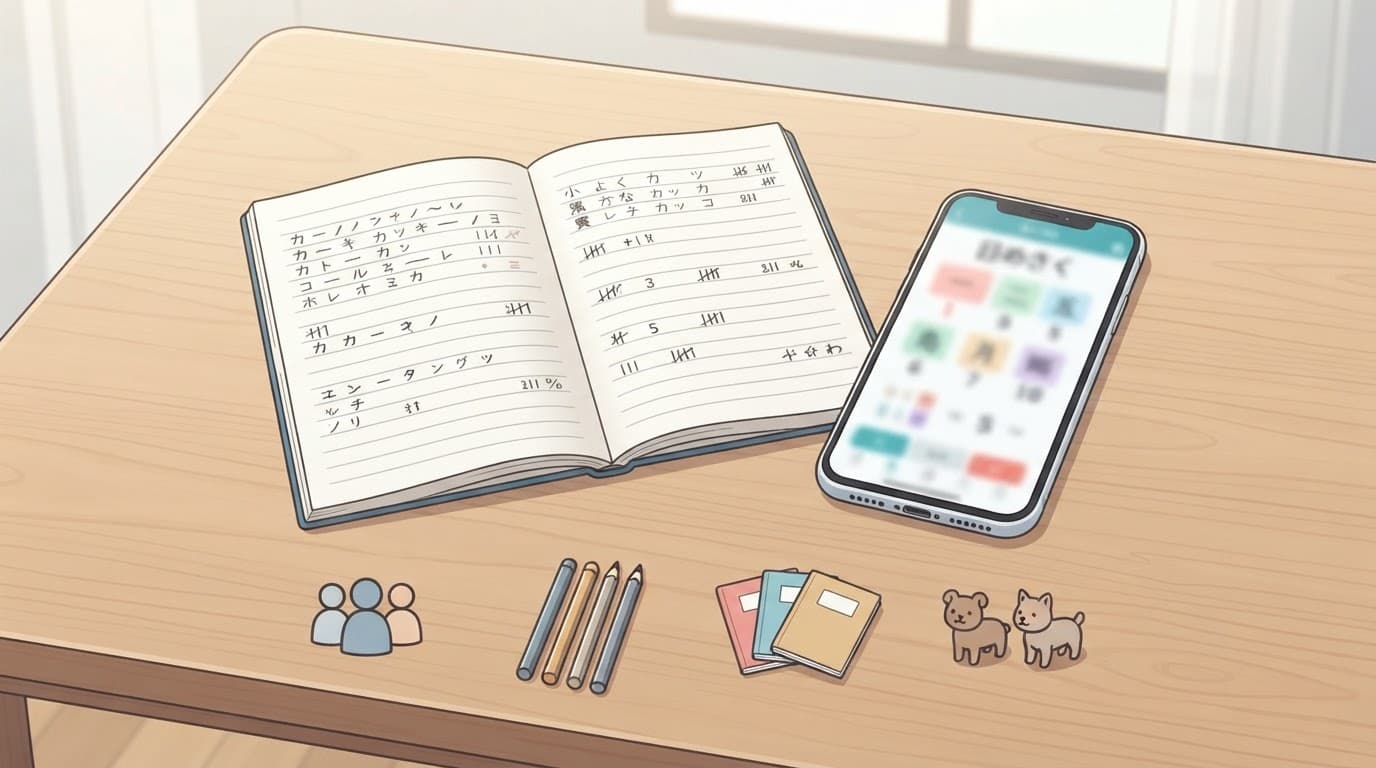
Keep the category connected to real objects. Count pens with 本, tickets with 枚, people with 人, and pets with 匹. That connection gives the counter a clear meaning and makes recall easier.
Turn drills into useful sentences
After an app presents a phrase, place it in a sentence. For example:
- 友達が三人います。 means “I have three friends.”
- ペンを二本買いました。 means “I bought two pens.”
- 切符を二枚ください。 means “Two tickets, please.”
- 猫が二匹います。 means “There are two cats.”
Say each sentence twice. On the second repetition, look away from the screen. Once a week, record yourself and compare your pronunciation with the app’s audio.
This routine also reveals gaps that isolated flashcards hide. You may remember that 人 counts people, yet still need practice with hitori, futari, sannin, and yonin in real sentences.
Conclusion
Japanese numbers become easier when you study the number and the counter as one spoken unit. Kaunta and Japanese Counter Calculator offer focused iPhone practice, while Numbiro and Japanese Number – Japanese 123 give Android learners useful options for listening, writing, and basic counter work.
Start with 人, 本, 枚, and 匹, then practice short sentences instead of reviewing lists alone. At the station, store, or restaurant, that habit turns number knowledge into language you can use.
Ready to Take Your Language Learning Further?
Your favorite language-learning app is a great place to start. Rocket Languages can help you go further with interactive audio lessons, pronunciation practice, real-world conversations, and structured learning.
Explore Rocket Languages →Affiliate disclosure: We may earn a commission if you purchase through this link, at no additional cost to you.