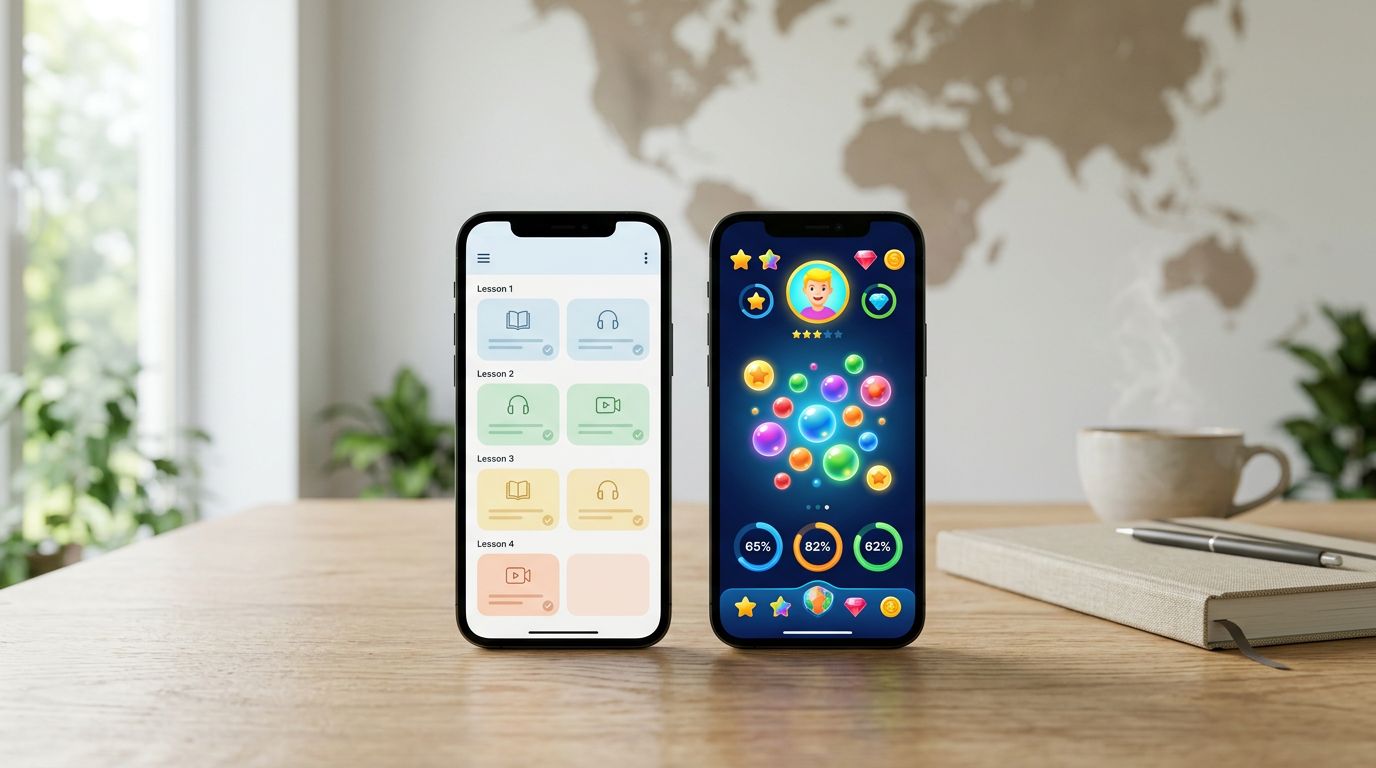
If you want a language app that keeps you showing up, Duolingo still has an edge. If you want one that pushes you toward measurable progress, Busuu is often the better pick.
That gap matters more in 2026 than it did a few years ago. Serious learners need structure, correction, and a path that does more than reward streaks. The best choice depends on how you study, not on which app looks more fun.
The difference becomes clear once you compare how each app teaches.
The real split in 2026
Busuu and Duolingo solve different problems. Busuu feels closer to a guided study plan. Duolingo is built to make daily practice feel easy.
A recent 2026 Busuu vs Duolingo comparison makes the same basic point, and that matches what many learners say in online discussions too.
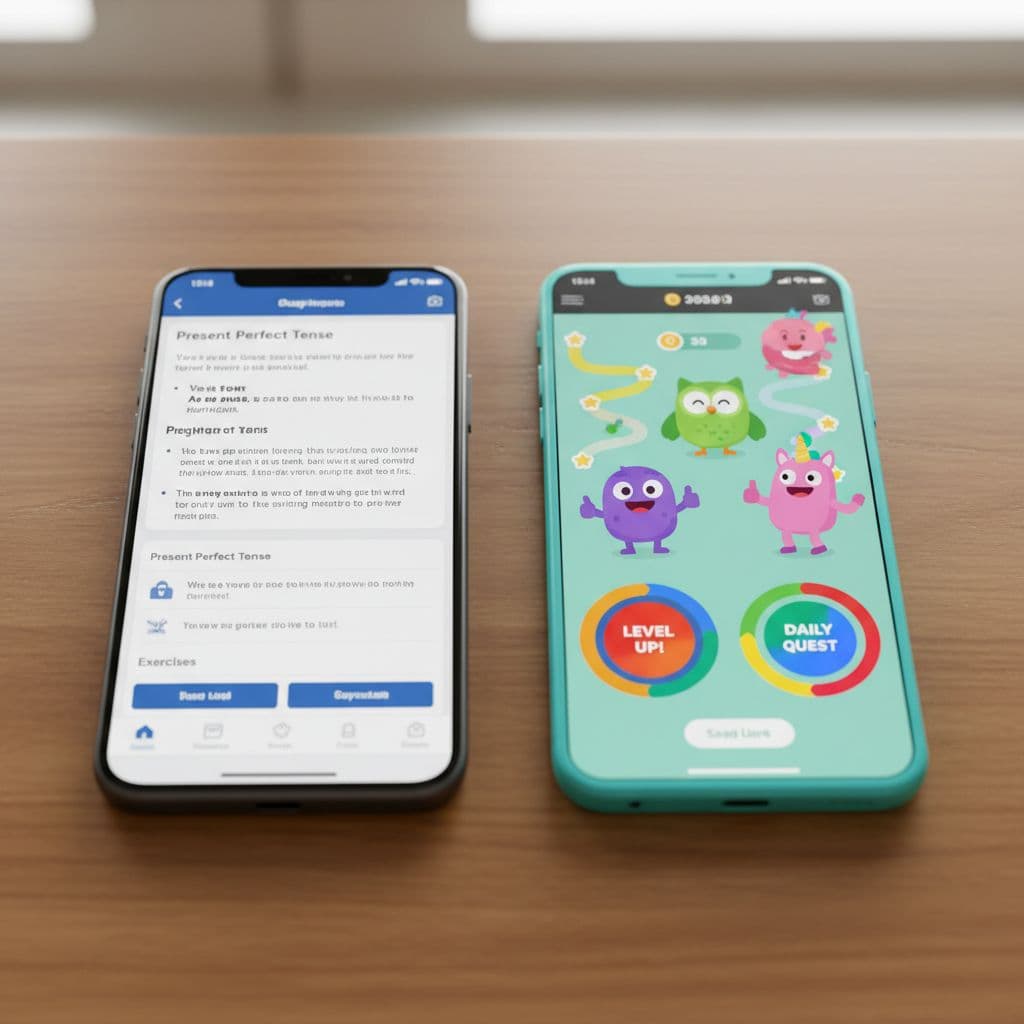
Here is the quick side-by-side view.
| Feature | Busuu | Duolingo | Better fit |
|---|---|---|---|
| Lesson style | Structured lessons with clearer progression | Short, gamified exercises | Busuu |
| Grammar support | Built into the course | Present, but lighter | Busuu |
| Speaking and writing | Stronger practice, plus community feedback | Present, but less detailed | Busuu |
| Habit building | Good, but less sticky | Very strong streak system | Duolingo |
| Language range | Smaller catalog | Much wider selection | Duolingo |
| Free access | Limited free tier | Stronger free tier | Duolingo |
| Best use | Serious self-study and exam prep | Daily practice and maintenance | Depends on your goal |
The takeaway is simple. If you care about clear progress, Busuu leads. If you care about staying consistent, Duolingo is still hard to beat.
Why Busuu fits serious study better
Busuu is the more serious study tool for most committed learners. It gives you a clearer sense of progress, and that matters when you want more than casual exposure.
Its courses are more structured, and the lessons usually feel more intentional. Grammar support is built in, so you spend less time guessing what a pattern means. Busuu also includes speaking practice, writing practice, and native-speaker feedback in the community, which helps more than passive tapping through exercises.
That is why many learners reach for Busuu when they want to study with a purpose. If you want a deeper look at its lesson design and premium features, see the Busuu review for serious learners.
Busuu is also a better match for learners who like visible goals. Its CEFR-aligned paths are useful when you want to map study time to real levels. Some plans also include AI review, personalized study plans, and official language tests, though availability can vary by language and region.
Busuu works best when you want your app to behave like a course, not a toy.
That said, Busuu is not perfect. The free tier is limited, and the language list is smaller than Duolingo’s. Still, if your main question is “Which app helps me learn better?”, Busuu usually wins.
Why Duolingo still wins for daily momentum
Duolingo stays popular because it removes friction. You can open it, finish a short lesson, and move on with your day. That matters more than people admit.
For beginners, Duolingo lowers the bar. You do not need much energy to start, and that makes it easier to build a habit. Its streaks, reminders, and bite-size tasks are good at pulling you back tomorrow. If your main problem is consistency, that is real value.
Duolingo also gives you access to a wider range of languages. That alone makes it the only practical option for some learners. In addition, its free tier is still one of its biggest strengths. If you want to test a language with little commitment, it is easy to recommend.
The trade-off is depth. Duolingo can help with routine practice, but it offers less grammar explanation and less serious output practice than Busuu. If you want a fuller breakdown of its strengths and limits, the Duolingo review goes further.
You can also see this split in a recent language-learning forum discussion. The pattern is familiar. People praise Duolingo for consistency, then turn to Busuu when they want more structure.
Pricing and value in 2026
Price matters because serious learners often end up paying for one app, maybe two. In May 2026, Busuu’s paid plans start around €9.99 per user per month in major pricing listings, although the final cost changes by region and billing cycle. Duolingo still offers a free tier, and its paid plans vary by market.
Here is the value picture in plain language.
| Use case | Busuu value | Duolingo value | Better pick |
|---|---|---|---|
| Free testing | Limited, but enough to sample the course | Strong and easy to keep using | Duolingo |
| Paid self-study | Better structure, feedback, and progress tracking | Good for convenience and extra features | Busuu |
| Daily maintenance | Useful, but more study-focused | Excellent for habit building | Duolingo |
| Serious progress | Stronger return if you use the output tools | Weaker unless paired with other study | Busuu |
Busuu gives you more serious-study value per subscription if you plan to use the whole system. Duolingo gives you more free value and more low-pressure practice. If your budget is tight, Duolingo is easier to keep. If your goal is progress, Busuu is easier to justify.
Pros and cons at a glance
Busuu
Pros
- Clearer lesson structure.
- Better grammar support.
- Stronger speaking and writing practice.
- More useful for CEFR-style goals and exam prep.
Cons
- Smaller language catalog.
- Limited free plan.
- Less addictive than Duolingo, so it takes more self-discipline.
Duolingo
Pros
- Very easy to use every day.
- Strong free tier.
- Wide language selection.
- Great for habit building and quick review.
Cons
- Less grammar depth.
- Weaker output practice.
- Progress can feel lighter, especially for serious learners.
Which app fits your learning goal?
If you’re a beginner
Duolingo is often the easier entry point. It keeps things light, and that matters when you are still building a routine. If you know you want a more guided path, Busuu is the better long-term choice.
If you travel often
Duolingo works well for quick refreshers and basic vocabulary. Busuu helps more when you want sentence patterns that feel usable in real conversations. If you only have five minutes a day, Duolingo is easier to keep up with.
If you’re studying for an exam
Busuu is the stronger pick. Its structure, grammar support, and level-based progression fit exam study much better. Duolingo can still help with repetition, but it should not be your only tool.
If you want conversational fluency
Busuu should be your main app. It gives you more speaking and writing practice, plus feedback that can expose weak spots. Duolingo can still help with review, but it works best as support.
For most serious learners, Busuu is the main course and Duolingo is the warm-up.
If you want both consistency and depth, use them that way. Busuu can handle the study session, while Duolingo can handle the daily habit.
Conclusion
Busuu vs Duolingo in 2026 comes down to purpose. Busuu gives serious learners more structure, more correction, and a better shot at real progress. Duolingo gives you a simpler way to keep learning every day.
If you can only choose one app for serious study, Busuu is usually the safer pick. If you need an app that keeps you coming back, Duolingo still earns its place.
For many learners, the best setup is not either-or. It is Busuu for depth and Duolingo for momentum.