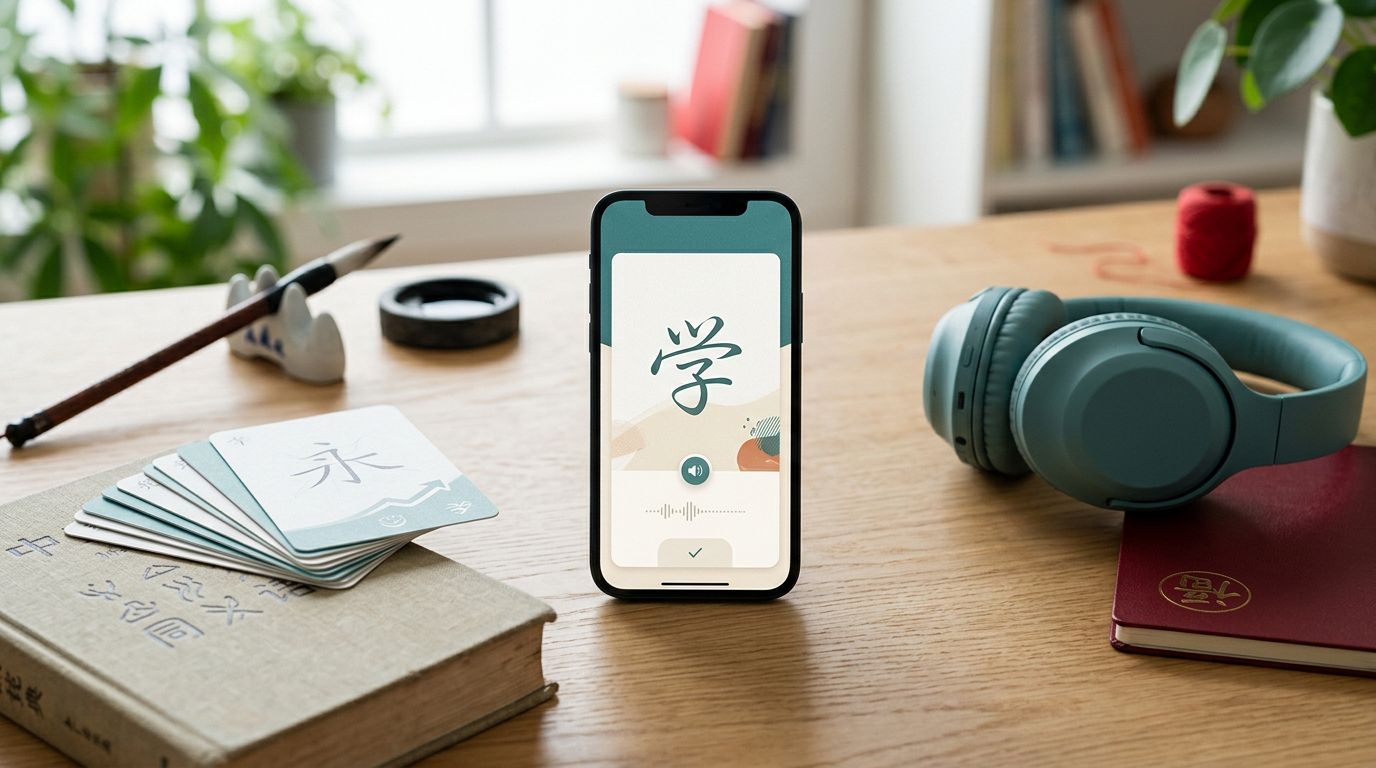
Tofu Learn once had a strong idea for Mandarin students: combine spaced repetition, Chinese character practice, audio, and ready-made HSK vocabulary decks in one focused app. For learners who prefer building their own word lists, that combination was appealing.
However, the most important fact in this Tofu Learn review is its current status. As of July 2026, the original app is no longer a dependable study option because it has been removed from major app stores and the service appears to be offline. Its old feature set still deserves attention, especially if you’re comparing vocabulary tools or considering its community-built successor.
Key Takeaways
- Tofu Learn is no longer an active, supported app for most new users in 2026.
- Its original Chinese tools included HSK decks, SRS reviews, audio, dictionary lookup, and handwriting practice.
- The app was strong for character and word recall, but weak for grammar, extended listening, and sentence-based learning.
- Pricing details are historical because the original service is unavailable.
- New learners should choose an active alternative, while former users may want to watch the open-source successor project.
The Current State of Tofu Learn in 2026
Tofu Learn was unpublished from Google Play on February 2, 2025. It was also removed from the United States App Store. Community reports describe the service as offline, with no clear indication that the original platform will return.
That changes the answer to the main question. Tofu Learn isn’t worth starting with today if you need a stable app you can download, sync, and use every day. A vocabulary system only works when you can reliably access your cards and review schedule.

Tofu Learn’s current availability is the main concern for new users.
The original product supported 56 languages, with a special focus on Chinese. It offered both web and mobile access, which made it easier to review vocabulary across devices. The Hacking Chinese resource page on TOFU Learn describes it as an SRS flashcard application with dedicated Chinese support.
A community-built, open-source successor has appeared in beta after former users began looking for a replacement. That project may preserve parts of the original experience, including handwriting and spaced repetition. Still, beta software can change quickly, and feature parity, account migration, and long-term support shouldn’t be assumed.
For this reason, separate the historical product evaluation from the current buying decision. The old app had useful learning ideas. The original service is not currently a safe foundation for a new Mandarin study plan.
What Tofu Learn Offered for Chinese Vocabulary
The original Tofu Learn was more focused than a general Mandarin course. It didn’t try to teach every language skill. Instead, it helped learners collect, review, and test vocabulary.
Its Chinese content included three decks for each HSK level from 1 through 6. Those decks covered recognition, pinyin, and writing. Learners could study both simplified and traditional characters, which gave the app more flexibility than tools limited to one writing system.
The review system supported several testing styles:
- Multiple choice, useful for quick recognition checks.
- Writing input, useful for connecting meaning with character form.
- Self-assessment, where learners revealed the answer and judged their recall.
That variety matters because Chinese vocabulary has several separate parts. You may recognize 学习, know that it means “to study,” and still struggle to write it or pronounce it correctly. Testing only one of those skills can create a false sense of progress.
Tofu Learn also included audio pronunciation, pinyin display options, tone markers, tone coloring, and bopomofo settings. These controls were useful for students who wanted more information on the card without abandoning character-first study.
The built-in dictionary made the app more practical. Learners could look up Chinese words from flashcards, use autofill while creating decks, and view character decomposition. A quick-add function also supported saving vocabulary encountered during reading or conversation.
Personalization went beyond adding words. Users could attach notes and images to cards, which helped with memory hooks or details about how a word appeared in context. Traditional-character learners could keep their preferred script instead of converting every card to simplified Chinese.
The historical base app was free, while a professional subscription offered additional content. Current prices cannot be verified because the original app and service are unavailable. Any online pricing page should be treated as historical unless it clearly refers to the successor project.
How Well Does It Support Long-Term Vocabulary Retention?
Tofu Learn’s strongest area was active recall through spaced repetition. Instead of reviewing every word at the same interval, an SRS schedules difficult cards more often and familiar cards less often. That keeps review focused on words at risk of being forgotten.
For Chinese, this approach works best when you separate the skills you want to retain. A recognition card might show 学校 and ask for the meaning. A pinyin card might ask you to connect “xuexiao” with the characters. A writing card might provide the meaning and pronunciation, then require 学校 from memory.
Tofu Learn’s separate recognition, pinyin, and writing decks supported that structure. It gave learners more control than a single card with English on one side and Chinese on the other.
Character writing was another clear strength. Handwriting practice can reveal confusion between similar forms, missing components, or incorrect stroke order. It won’t replace reading, but it adds a physical recall task that recognition cards cannot provide.
Audio also helped with pronunciation recall. Hearing a word during review can reinforce the connection between its written form, pinyin, and sound. However, audio on a vocabulary card is different from listening practice in a dialogue. Tofu Learn didn’t provide the sustained comprehension work needed for connected Mandarin speech.
Example sentences were a larger weakness. The documented feature set emphasizes words, cards, dictionary information, audio, and custom notes. It doesn’t establish a broad lesson system built around natural example sentences. That matters because Chinese words often change meaning or tone depending on the surrounding phrase.
For example, learning 方便 as “convenient” is less useful than seeing how it functions in a complete sentence. Vocabulary retention improves when you meet words in real phrases, readings, and conversations. Tofu Learn could support that process if you added your own notes or examples, but it didn’t supply the same context as a graded reading app.
The HSKLord list of free Chinese learning apps makes a similar distinction, describing TOFU Learn as a vocabulary drilling tool rather than a grammar or listening course. That narrow focus was a strength for review sessions, but a limitation for complete language development.
Tofu Learn was best treated as a vocabulary engine, not a complete Mandarin course.
Building a Personalized Study Workflow
If the original app were still active, its workflow would suit learners who already have a source of useful Chinese. You could read a short article, save unfamiliar words, check their meanings, and add selected items to a personal deck. Then, SRS reviews would handle recall while handwriting and audio settings added extra practice.
That approach is more useful than importing every unfamiliar word. A large deck can become a burden, especially when it contains rare words you won’t meet again. A smaller list connected to your current textbook, graded reader, teacher, or daily conversations is easier to maintain.
A practical Tofu-style workflow would include:
- Choose one HSK deck or create a focused personal deck.
- Review recognition and pinyin before adding writing practice.
- Keep words you expect to use or see often.
- Add a short example or personal note when a word has several meanings.
- Pair flashcard work with reading and listening outside the app.
The last step is essential. Tofu Learn could help you remember vocabulary, but it couldn’t show you how native speakers use every word in a conversation. Beginners would still need structured lessons for tones, grammar, and sentence patterns. Intermediate learners would need substantial authentic input.
For character lookup and personal vocabulary collection, the Pleco dictionary app review is a useful comparison. Pleco offers fast Chinese dictionary searches, handwriting input, OCR, and its own flashcard features. It may be a better active option for learners whose vocabulary grows through reading.
Students who need a guided beginner course should also compare it with the HelloChinese app review for beginners. HelloChinese provides a broader learning path, including pronunciation, characters, grammar, and early speaking practice. It doesn’t offer the same narrow flashcard identity, but it gives beginners more structure.
Tofu Learn Compared With Active Alternatives
Tofu Learn’s old appeal came from its combination of Chinese-specific SRS tools and flexible card creation. Today, the comparison is less about which app has the best feature and more about whether the service is available.
| Study need | Tofu Learn’s historical fit | Better current direction |
|---|---|---|
| HSK vocabulary review | Strong, with levels 1 through 6 | Use an active SRS app with verified decks |
| Character writing | Strong, with handwriting input | Choose a tool with stroke and writing practice |
| Dictionary lookup | Useful, with Chinese dictionary support | Pleco remains a practical choice |
| Example sentences | Limited in the documented feature set | Use graded reading and sentence-rich resources |
| Grammar and course structure | Not a main feature | HelloChinese or a structured course |
| Current availability | Unreliable or offline | Select a maintained app with current store access |
Another simple flashcard option is Tobo’s Chinese vocabulary app on Google Play, which advertises vocabulary, phrases, Hanzi, pinyin, and 3,500 words. Its availability and features may change, so check the current store listing before committing.
For reading-based retention, the Du Chinese reading app review covers a different approach. Graded texts, natural audio, and built-in vocabulary support place words inside meaningful content. That method takes longer than isolated drilling, but it helps learners connect recognition with actual comprehension. For interactive, story-based reading, the WordSwing review explains how branching text adventures keep vocabulary in context.
Former Tofu Learn users may find the beta successor appealing if they value handwriting and custom SRS decks. New learners should wait until its support, storage, and feature set are clear before making it their main system. Keep exported vocabulary in a separate format whenever possible.
Who Should Use Tofu Learn in 2026?
For most people, the answer is no, because the original app isn’t currently available as a supported service. A new beginner shouldn’t build a study habit around software that may disappear or fail to sync.
The historical design would have suited intermediate self-learners, character-focused students, and people who enjoy creating personal decks. It was also a good conceptual fit for learners studying simplified or traditional Chinese, since both systems were supported.
You may still encounter old references, cached app listings, or recommendations from earlier years. Treat those pages carefully. A listing doesn’t prove that downloads, logins, subscriptions, or cloud data still work.
If you already used Tofu Learn, look for export options and save your decks before relying on a successor. If you never used it, choose an active tool that covers your immediate gap. That might be SRS vocabulary review, Chinese reading, dictionary lookup, or a complete beginner course.
Conclusion
Tofu Learn had a thoughtful feature set for Chinese vocabulary retention. HSK decks, spaced repetition, audio, character writing, dictionary lookup, and custom cards addressed several problems that Mandarin learners face.
The current availability issue outweighs those strengths. As of July 2026, Tofu Learn is best understood as a discontinued app with a possible community successor, not a dependable product for new learners. Its approach remains worth borrowing, especially the separation of recognition, pinyin, and writing review, but your study plan needs an active platform and real Chinese input alongside flashcards.
Ready to Take Your Language Learning Further?
Your favorite language-learning app is a great place to start. Rocket Languages can help you go further with interactive audio lessons, pronunciation practice, real-world conversations, and structured learning.
Explore Rocket Languages →Affiliate disclosure: We may earn a commission if you purchase through this link, at no additional cost to you.