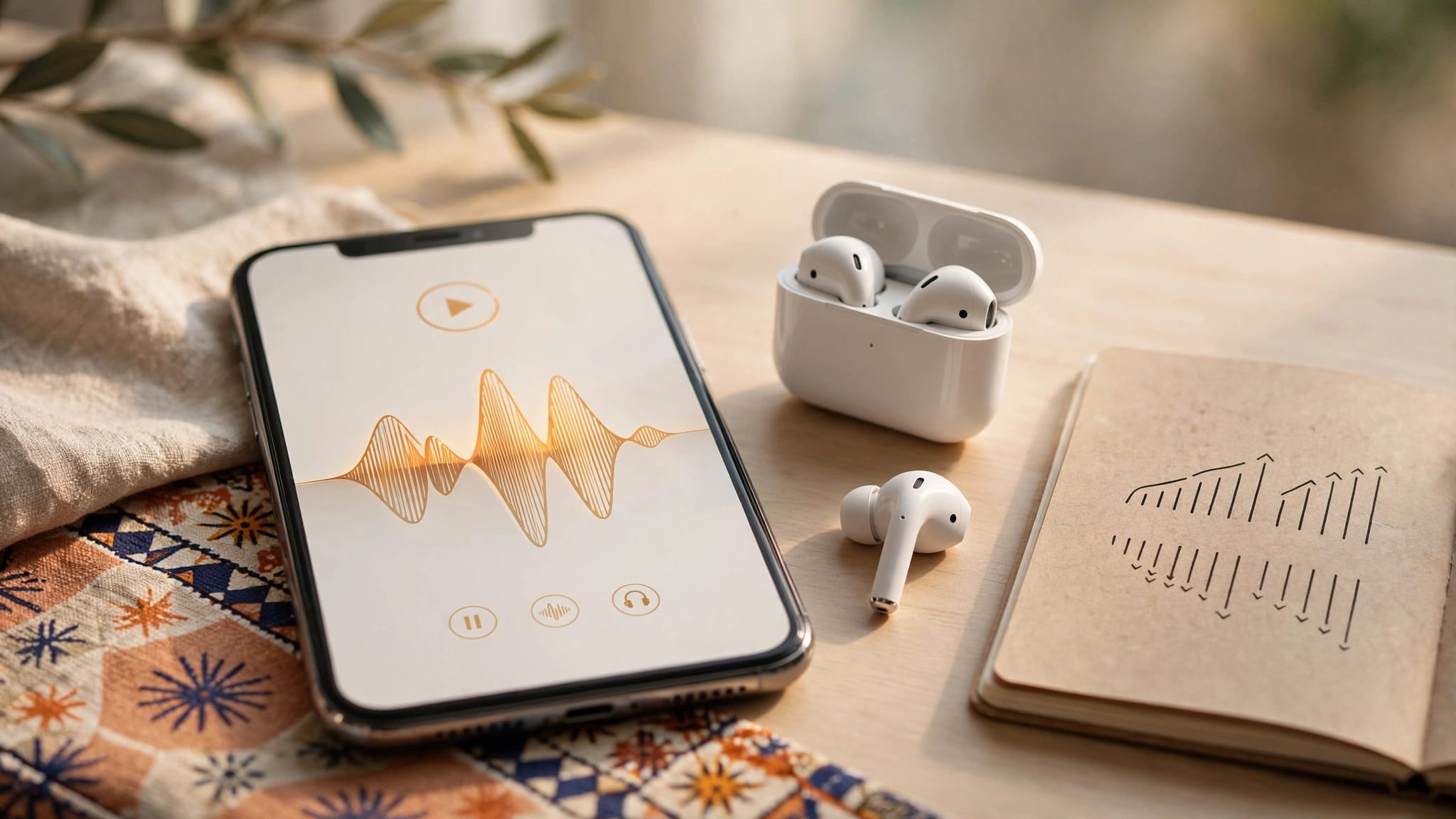
You can recognize an Igbo word on your phone and still miss it in conversation. The best Igbo learning apps pair clear audio with phrases you can recall and use as you learn Igbo.
IgboLearn is our strongest all-round pick, while Lingawa offers personal correction and NKENNE suits audio-first practice. To speak Igbo in everyday conversations, choose an app that helps you hear and produce tones in the Igbo language.
Igbo Learning Apps Compared at a Glance
These five Igbo learning apps include dedicated Igbo lessons, a live-teaching platform, and a general vocabulary tool. The options aren’t interchangeable, and a free Igbo app may include selected content rather than a complete course.
| App or platform | Best fit | Price and free access | Confirmed platforms |
|---|---|---|---|
| IgboLearn | All-round beginner study | Selected content free; US Premium $4.99 monthly or $49.99 yearly | Android, iOS |
| KOYO | Short beginner lessons | Free in the published review; current price unverified | Current availability not established |
| Lingawa | Live conversation and correction | Weekly individual option $18 per session; monthly package $60 for four | Web lessons and practice tools |
| NKENNE | Audio-first learning | Free access; US iOS Premium $9.99 monthly, $24.99 quarterly, or $89.99 yearly | Android, iOS |
| Drops | Vocabulary support | Free five-minute sessions; optional paid access | Mobile app |
The IgboLearn review quoted N4,900 in Nigeria and $5 internationally. Those review-time figures differ from the current US App Store prices above.
Offline course access isn’t established across this shortlist, so none receives an offline-first recommendation. Subscription prices don’t establish the cost of separate tutoring.
What an App Needs to Teach Igbo Tones
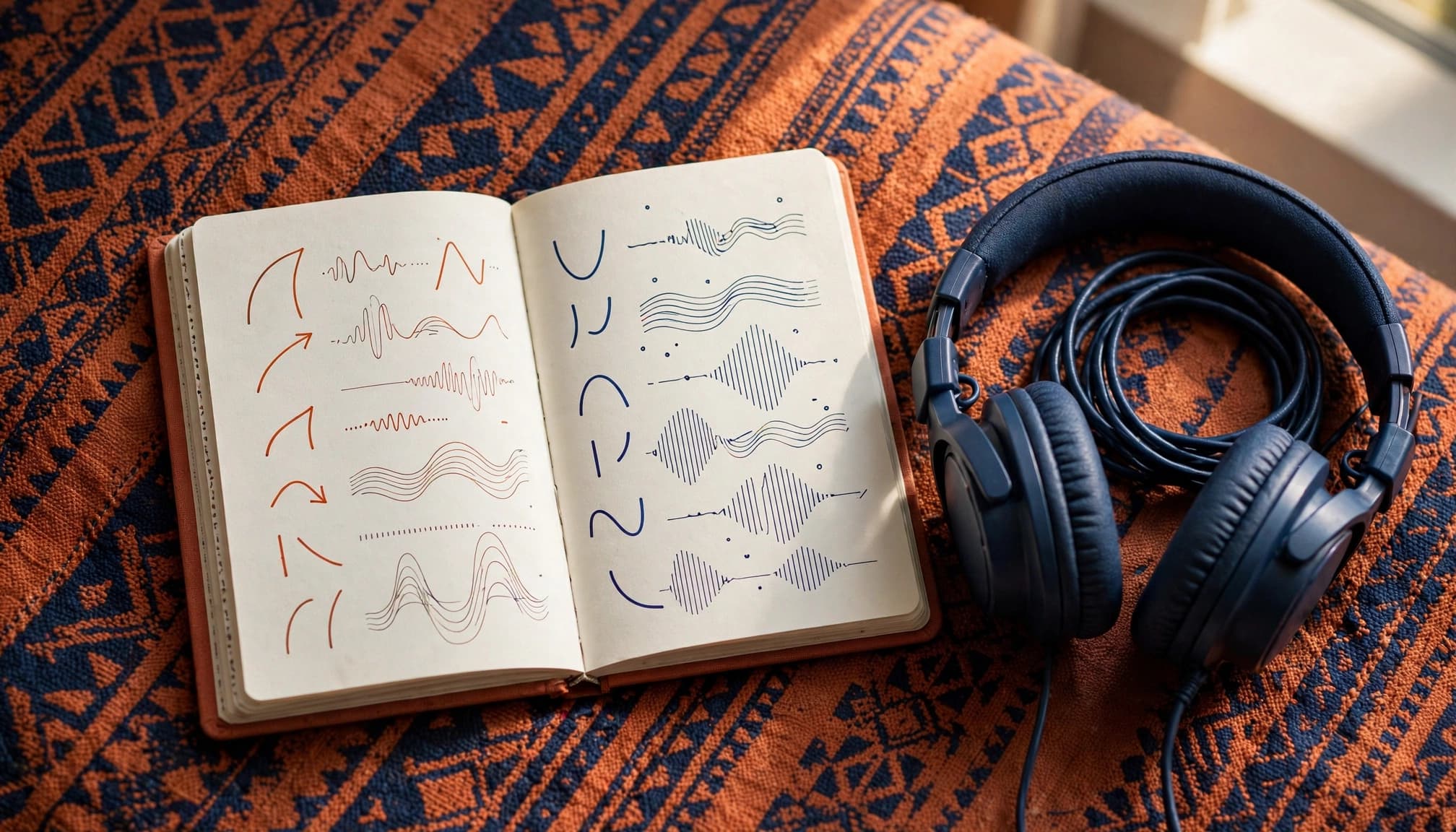
Hear pitch inside complete phrases
The Igbo language uses pitch contrasts to distinguish meaning, so vocabulary study needs audio, not just English translations beside written words. Audio lessons can provide recorded examples in complete phrases.
Tones and accent marks in Igbo connect written forms with pronunciation. However, don’t confuse tone marks with the dots under vowels such as ị, ọ, and ụ. Those dots identify vowel sounds.
Listen to a word within a phrase, then copy the relative pitch between syllables. You don’t need to match a speaker’s exact voice height.
Separate repetition from correction
A recording models pronunciation, but it can’t explain your recurring mistakes. Likewise, an automated score doesn’t prove that someone will understand your spontaneous reply.
Accurate repetition of one recording doesn’t establish accurate tones when you choose your own words.
For heritage learners, familiar vocabulary can hide uncertain pronunciation. Practice phrases you understand but hesitate to say, then ask a speaker to distinguish tone errors from vowel errors.
IgboLearn: Best Overall for Structured Speaking Practice
Daily lessons connect words with situations
IgboLearn is our strongest starting point because it combines several learning tasks in one dedicated app. Its developer-written comparison also names it best overall.
Word of the Day, Phrase of the Day, and Proverb of the Day include audio pronunciation and scored practice. IgboLearn’s structured Igbo lessons last about three to five minutes and include assessments.
Guided Conversations cover situations such as greetings by time of day and shopping at the market. These scenarios help learners recall vocabulary aloud, and Guided Conversations give beginners practical speaking practice. Meanwhile, the dictionary, translator, flashcards, and ten puzzles provide additional review. For beginners, Guided Conversations are more useful than collecting disconnected translations.
Premium access and tone limitations
The US IgboLearn App Store listing lists Premium at $4.99 monthly and $49.99 yearly. The free tier includes selected lessons, puzzles, and dictionary features.
Paid plans expand the Igbo lessons, practice modes, dictionary content, and IgboLearn GPT tools. Those tools support translation, explanations, and conversation practice.
IgboLearn’s audio and scoring encourage repeated pronunciation practice, but detailed diagnosis of individual tone errors isn’t established. Comprehensive dialect coverage also isn’t established. If your goal is speaking with relatives, combine its lessons with feedback on the forms your family uses.
KOYO: Best Review-Time Free Pick for Short Lessons
A clear sequence for first conversations
IgboLearn’s published comparison describes KOYO as free, making it an appealing low-cost beginner option. That’s a review-time claim, not a verified current subscription policy.
KOYO’s beginner Igbo lessons use question-and-answer exchanges such as First Hello, How Are You, My Name Is, Where Are You From, and Yes, No, Please and Thank You. You complete one module before the next unlocks.
This sequence gives new learners a manageable route through essential exchanges. A predictable question becomes useful conversation practice when you can answer without seeing the lesson.
Audio helps, but tone teaching remains unclear
The review describes audio pronunciation, including Phrase of the Day, and a dictionary that shows dialect differences. These features support listening and repetition, and can help you notice differences between family speech and a recorded model.
Systematic tone instruction and diagnostic pronunciation feedback aren’t established. Current official platform availability and pricing also remain unverified.
Use KOYO’s short exchanges for listening and spoken recall, but don’t treat module completion as proof of conversational ability.
Lingawa: Best for Live Correction and Family Dialects

A tutor can respond to your speech
Lingawa is a live-teaching platform with companion practice tools, not a standalone self-study course. Private online lessons pair you with a real teacher for back-and-forth conversation.
Standard lessons last 55 minutes, while children under seven receive 25-minute lessons. Lingawa matches tutors by dialect, which helps when you want to communicate with family.
Use a session for speaking practice on a focused task, such as introducing yourself or asking about a purchase. Ask your Igbo tutor to correct tones and vowel differences separately. A tutor can hear errors that matching exercises and repeated recordings may miss.
Lesson prices and between-session practice
Lingawa’s weekly individual booking option is $18 per session. A monthly package costs $60 for four sessions, or $15 each, while a 25-lesson package costs $300.
Lingawa’s published lesson pricing also advertises bundles starting at $10.50 per lesson. These are separate package offers, not one universal session rate.
Lingawa’s companion tools include vocabulary review with Vocabulary Drills, Dialogue, Sentence Builder, and Matching Games. Vocabulary Drills and the other tools support practice between lessons, but live sessions provide the main advantage for tones and unscripted conversation. Lingawa is the strongest choice when you need a teacher to explain what to change.
NKENNE: Best for Audio-First Rehearsal
Listen, repeat, then recall
NKENNE teaches the Igbo language through audio lessons and listen-and-repeat practice. It suits learners who prefer hearing speech before working through written exercises.
NKENNE’s Igbo lessons teach Standard, or Central, Igbo. For learners whose families use another variety, the NKENNE course offers a shared foundation but may differ from the language spoken at home.
After repeating a recording, pause before the answer and produce it yourself. The recordings provide audio pronunciation models, but they don’t assess your own pronunciation. Pause-and-recall practice helps you respond without relying on a familiar voice.
Free content, Premium, and LiiVE
The published review describes a free tier with limited Igbo lessons, cultural blogs, podcasts, and community access. Premium opens the larger lesson library.
The US NKENNE App Store listing lists $9.99 monthly, $24.99 quarterly, and $89.99 annually. Those are iOS subscription prices, not established Android prices or tutoring rates.
NKENNE LiiVE offers one-on-one teaching with native-speaking tutors. Audio lessons provide tone models, while live feedback can address your own speech. Detailed automated tone diagnosis isn’t established, and LiiVE pricing isn’t supplied here.
Drops and Older Apps: Useful Within Clear Limits
Drops is a vocabulary supplement
Drops’ Igbo course offers free five-minute daily sessions. It’s a general language-learning tool with Igbo content, not an Igbo-only course.
Its strongest role is building a small vocabulary habit alongside a main course. Brief exercises don’t teach tones in detail or provide open-ended conversation practice.
After studying, recall the words aloud. Then check their pronunciation against reliable audio and use them in phrases. For children, short reviews can support family learning, but they don’t replace adult guidance or conversation.
Treat older recommendations as supplementary leads
Older Talkasoft descriptions of Learn to Speak Igbo Language mention Basic quizzes without accented characters and Advanced quizzes with them. They also describe results feedback and calendar reminders. Accented characters can draw attention to written tone marks, but quiz feedback can’t diagnose spoken tones.
A social recommendation describes Ibo Amaka as teaching numbers, the alphabet, and colours. It says Learn Igbo language offers more terms and explanations with native-speaker narration.
The same recommendation names “Unkene,” with 30-to-40-minute lessons taught by real-time Igbo speakers and optional paid tutoring. Its identity and current availability aren’t established, so it can’t be ranked as a separate verified product.
These descriptions don’t establish current prices or access. Voice-dictation translators can help with translation, but they’re reference tools, not substitutes for sequenced Igbo lessons.
Build a Routine That Leads to Conversation
A useful daily session connects listening, meaning, and production. Choose a short exchange in NKENNE or review phrases from IgboLearn audio lessons instead of switching apps.
- Listen to the NKENNE recording without reading, then identify the meaning and relative pitch.
- Read the transcript when available, then replay the phrase.
- Record yourself and compare one uncertain feature at a time.
- Hide the text, recall the phrase, and answer a related question to practice speaking Igbo.
Later, ask an Igbo tutor or competent speaker to correct a spontaneous reply. Request a short corrected recording you can revisit.
Our language exchange app comparison distinguishes voice-note practice from live calls. Lingawa can support live correction, while a voice-note partner lets you rehearse at your own pace. Igbo partner availability varies.
The developer-written IgboLearn review found apps focused on one to three African languages more detailed than tools covering over 100. Treat that as one reviewer’s observation. Actual Igbo lesson depth, reliable audio, and useful feedback matter more than the number of languages advertised.
Frequently Asked Questions
Which Igbo learning app is best for beginners?
IgboLearn is the strongest all-round pick, with short lessons, audio, and guided conversations. KOYO offers short beginner exchanges, but its current price and availability aren’t verified.
Can Igbo learning apps teach tones?
Audio lessons provide pronunciation models, and IgboLearn includes scored practice, but detailed diagnosis of tone errors isn’t established. Lingawa’s live tutors can listen to your speech and correct it.
Does NKENNE teach the Igbo spoken by every family?
NKENNE teaches Standard, or Central, Igbo, which may differ from the variety your family uses. Lingawa matches tutors by dialect.
Which Igbo learning apps have free content?
IgboLearn and NKENNE offer selected free content, and Drops has free five-minute daily sessions. KOYO was described as free in a published review, but its current offer isn’t verified.
Choose One Main App and a Speaking Outlet
Choose IgboLearn for structured study as you learn Igbo, Lingawa for live correction, or NKENNE for audio-first rehearsal. KOYO’s free recommendation is based on its published review, and KOYO’s current offer may differ.
The strongest setup pairs spoken recall and vocabulary review with feedback on sentences you choose yourself. IgboLearn supports speaking practice, while Lingawa adds personal correction. Conversation shows whether you can understand someone and speak Igbo without the screen.
Ready to Take Your Language Learning Further?
Your favorite language-learning app is a great place to start. Rocket Languages can help you go further with interactive audio lessons, pronunciation practice, real-world conversations, and structured learning.
Explore Rocket Languages →Affiliate disclosure: We may earn a commission if you purchase through this link, at no additional cost to you.
