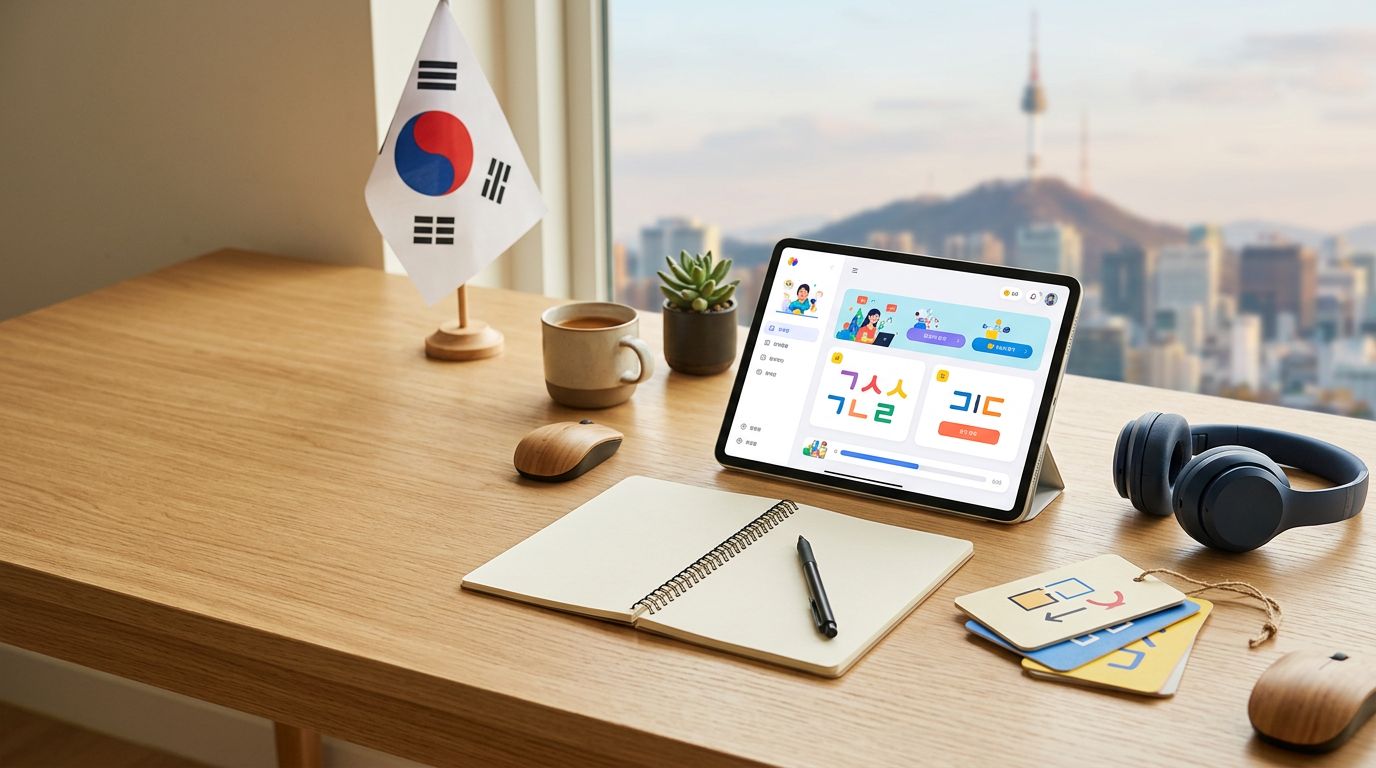
Any useful Talk To Me In Korean review should answer one practical question: will you keep studying after the novelty wears off? For complete beginners and lower-intermediate learners, TTMIK is worth considering if you want guided grammar, clear explanations, and steady listening practice.
In August 2026, the yearly course subscription offers strong value, but TTMIK isn’t a complete speaking or vocabulary system by itself. Your best results will come from pairing its structured lessons with regular output practice.
Talk To Me In Korean review: what you get
Talk To Me In Korean, usually called TTMIK, is a Korean learning platform built around structured audio and video courses. Its main subscription currently includes access to more than 1,700 lessons, mobile and web study, quizzes, reviews, and an online community.
The course catalog covers beginner grammar, sentence patterns, vocabulary, listening, pronunciation, and more advanced areas. Lessons are organized in a suggested order, so you don’t need to guess which topic comes next.

That structure is TTMIK’s main advantage. Korean beginners often collect random resources, learn a few phrases, then lose track of their progress. TTMIK gives you a central course path instead.
The platform also offers free material through YouTube lessons, podcasts, blog posts, and social media. However, the paid course subscription unlocks the full lesson library and organized learning experience. Books, ebooks, and some other TTMIK services are sold separately.
An independent overview of TTMIK’s features also points to the size of its catalog. Still, current pricing and plan terms should come from TTMIK’s own website.
What TTMIK does especially well
A clear path through Korean grammar
TTMIK explains Korean grammar in a friendly, conversational style. Lessons usually focus on one small idea, such as a sentence ending, particle, verb form, or common expression. That keeps the material easier to absorb than a dense grammar textbook.
The explanations often include context instead of presenting rules in isolation. You learn how a form sounds, when Koreans use it, and how its meaning changes in a sentence.
For a beginner, this sequence removes much of the guesswork. You can study Hangul and foundational grammar first, then move into longer sentences and more natural expressions. Lower-intermediate learners can also use the catalog to fill gaps without restarting every basic topic.
TTMIK’s lessons won’t replace a formal classroom, but they give independent learners a dependable framework. You can study for 15 minutes, complete one lesson, and know exactly what to review next.
Strong listening support and natural examples
Audio is central to the TTMIK experience. You hear Korean phrases spoken aloud, then study their meaning and construction. Repeated listening helps you notice word endings and rhythm that are easy to miss when you only read romanization or translations.
The lessons also introduce everyday expressions and cultural details. That matters because textbook Korean can sound stiff when it doesn’t explain how people actually speak.
The main weakness is output. Listening and repeating a phrase isn’t the same as building your own answer in a conversation. TTMIK gives you useful input, but you must create speaking opportunities elsewhere.
TTMIK pricing in 2026
TTMIK’s current course prices are listed in US dollars before tax. The official TTMIK pricing page currently shows these options:
| Plan | Current price | Trial |
|---|---|---|
| Monthly | $16.99 per month | No free trial |
| Standard yearly | $122 per year, about $10.17 monthly | 7-day free trial |
| Smart Save yearly | $85.40 per year, about $7.12 monthly | No free trial |
Taxes vary by country and appear at checkout. The standard yearly plan includes a seven-day free trial, while the monthly and Smart Save plans don’t. TTMIK says subscriptions renew at the same price as the first payment, and cancellation takes effect at the end of the billing period.
The Smart Save plan is the best price for learners who already know they’ll study throughout the year. The standard yearly plan is safer if you want to test the full catalog first.
At $85.40 annually, Smart Save costs less than eight months of the monthly plan. That makes the subscription reasonable for consistent learners. However, occasional users may get better value from free lessons and individual books.
Remember that the course subscription doesn’t automatically include every TTMIK product. TTMIK Stories and the company’s speaking app operate as separate services, and books remain separate purchases. Check the exact product description before paying if you want access to a specific app.
Where Talk To Me In Korean falls short
The biggest limitation is limited spontaneous conversation practice. Course lessons help you understand Korean and repeat useful sentences, but they don’t give you the pressure of answering a real person.
That gap matters once you can form basic sentences. Without regular speaking, you may understand a grammar pattern but hesitate when someone asks you a simple question.
The large catalog can also feel overwhelming. More than 1,700 lessons offer plenty of material, yet some learners may spend too much time browsing instead of following a manageable plan. Use the suggested course order rather than jumping between topics.
TTMIK includes quizzes and review activities, but it isn’t a dedicated spaced-repetition vocabulary tool. Learners who forget words quickly may need Anki, Clozemaster, or another review system alongside the course.
The paid model is another consideration. Free TTMIK content remains useful, but the most organized experience sits behind a subscription. If you only study once or twice a month, the monthly price may not feel worthwhile.
If speaking is your main goal, compare TTMIK with other Korean speaking apps before subscribing.
How to use TTMIK without wasting the subscription
A simple routine works better than trying to consume the catalog quickly. Study one lesson, listen to its audio more than once, and write or say several original sentences using the target pattern.
During your first pass, focus on meaning and pronunciation. The next day, review the lesson without looking at every translation. Try to recall the structure, then check your answer.
Keep a short note of patterns you can use in real life. For example, after studying a request form, write sentences about ordering food, asking for help, or making weekend plans. Personal examples are easier to remember than copied sentences.

Set a weekly speaking target as well. You might record yourself for five minutes, read a dialogue aloud, or send voice messages to a language partner. TTMIK supplies the material, but your routine must turn that material into active Korean.
For lower-intermediate learners, use TTMIK selectively. Search the catalog for grammar points you still confuse, then spend the remaining study time listening and speaking instead of repeating familiar beginner lessons.
How TTMIK compares with other Korean resources
These tools serve different purposes, so the right choice depends on the skill you need most.
| Resource | Best for | Main strength | Main limitation |
|---|---|---|---|
| TTMIK | Structured grammar and listening | Large, ordered course library | Limited unscripted speaking |
| LingoDeer | Beginner app-based study | Interactive foundations and drills | Less extensive lesson-style audio |
| Teuida | Speaking confidence | Guided conversations and prompts | Practice can feel controlled |
| HelloTalk | Real language exchange | Conversations with other learners and speakers | Feedback quality varies |
TTMIK is the strongest choice when you want one organized core course. LingoDeer may suit beginners who prefer more game-like exercises and a highly interactive introduction. You can compare both in this guide to the best Korean learning apps.
Choose based on your goal:
- For complete beginners, start with TTMIK if you want clear explanations and a defined sequence. Add a separate Hangul practice tool if reading feels slow.
- For grammar-focused learners, make TTMIK your main resource. Review each lesson actively, then write your own examples.
- For speaking confidence, use TTMIK for preparation and add Teuida or live conversation practice. This Teuida review covers its speaking-focused approach.
- For lower-intermediate learners, use TTMIK to repair grammar gaps, then spend more time with native content and real conversations.
- For budget-conscious learners, begin with the free lessons. Subscribe only after you know you can maintain a regular study schedule.
Final verdict: is Talk To Me In Korean worth it?
This Talk To Me In Korean review reaches a clear verdict: TTMIK is worth it for structured Korean study, especially if grammar explanations and listening practice are your priorities. The Smart Save yearly plan offers the strongest value for consistent learners, while the standard yearly plan gives new users a seven-day trial.
TTMIK works best as the center of a study routine, not the entire routine. Pair its lessons with vocabulary review and regular speaking, and the platform can take you well beyond basic phrases without making Korean grammar feel inaccessible.
Ready to Take Your Language Learning Further?
Your favorite language-learning app is a great place to start. Rocket Languages can help you go further with interactive audio lessons, pronunciation practice, real-world conversations, and structured learning.
Explore Rocket Languages →Affiliate disclosure: We may earn a commission if you purchase through this link, at no additional cost to you.