Most Tamil apps are built for quick wins, then they run out of steam. If you want real progress, you need more than streaks and snack-size phrases. You need script practice, clean audio, grammar support, and a way to keep using the language after the first week.
That matters whether you’re a heritage learner, an expat, or a student who wants steady improvement. A 2026 roundup from Preply’s Tamil app guide points to the same split many serious learners already feel, course apps help with structure, while conversation apps help with fluency.
The best Tamil learning apps in 2026 are the ones that help you build habits, not just log taps. The strongest choice depends on how you learn, and what part of Tamil you need most.
What serious Tamil learners need from an app
A serious Tamil app should do four things well. First, it should teach the Tamil script, because transliteration only gets you so far. Second, it should give you clear native audio or close to it, so your pronunciation does not drift.
Third, it should build vocabulary in a way that sticks. Fourth, it should offer grammar or sentence patterns, because Tamil’s structure is too rich to leave to guesswork. If an app only gives you travel phrases, it is a tool, not a course.
The best setup is usually a stack, not a single app. One app should teach structure, one should force real conversation, and one should help you review words when your memory slips.
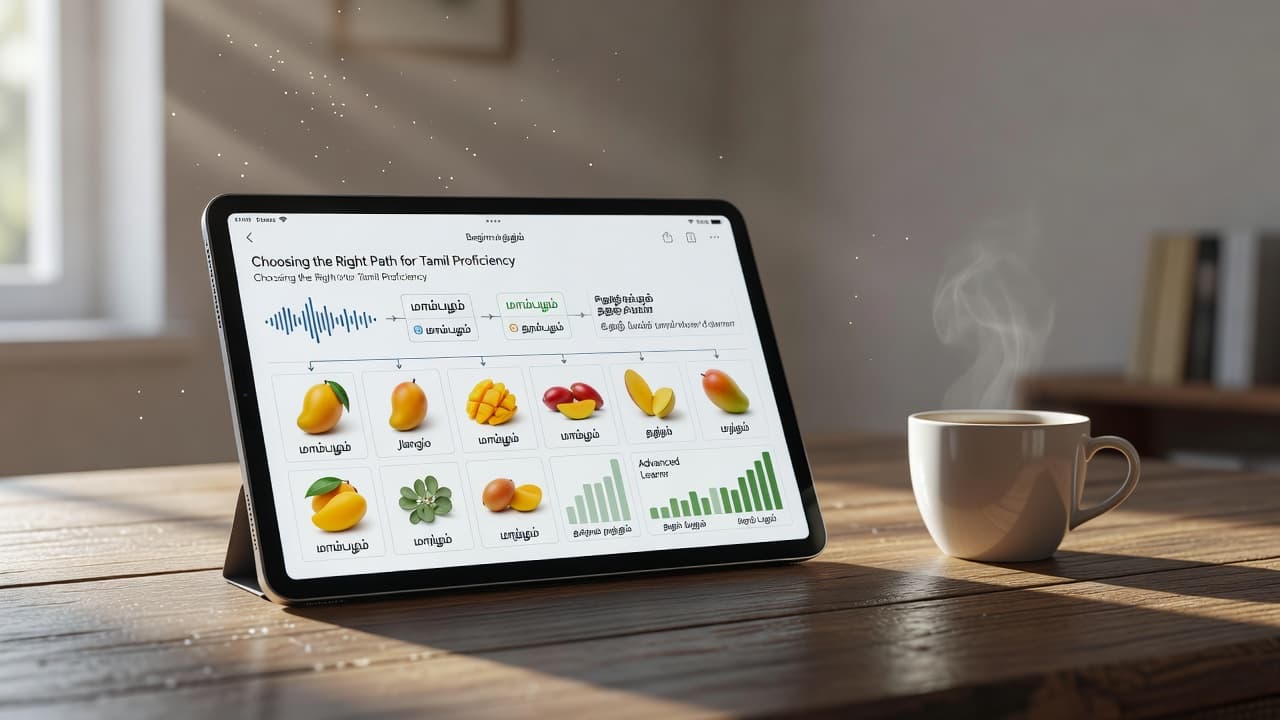
Tamil learning apps compared at a glance
Here is the quick view before the deeper reviews.
| App | Best for | Tamil script | Pronunciation | Vocabulary | Grammar | Conversation | Pricing model |
|---|---|---|---|---|---|---|---|
| Ling | All-around study | Yes | Yes | Yes | Yes | Limited built-in | Subscription, often with trial |
| Mango Languages | Steady course-style learning | Partial | Yes | Yes | Partial | Limited | Subscription, sometimes bundled |
| HelloTalk | Real speaking with natives | No | Yes, through voice | Yes, through chat | No | Strong | Free tier + premium |
| Tandem | Flexible chat and calls | No | Yes, through voice | Yes, through chat | No | Strong | Free tier + premium |
| Brainscape | Vocabulary review | No | No | Yes | No | No | Free tier + paid Pro |
The pattern is clear. Ling and Mango Languages teach. HelloTalk and Tandem make you speak. Brainscape keeps your vocabulary from fading.
The strongest Tamil learning apps in 2026
Ling, the best all-around course
Ling is the closest thing to a full Tamil course on a phone. It covers script, listening, speaking, vocabulary, and grammar in one place. The current Ling – Learn Tamil Language listing on Google Play shows that it still targets learners who want guided study, not random word games.
Its biggest strength is balance. You can start with letters, move into sentence building, and keep returning to review. The weakness is that it still cannot replace a real person. You will need conversation outside the app if you want natural speed and flexible listening.
Ling fits self-study learners, heritage learners who need structure, and beginners who want a clear path. It usually uses a subscription model, often with a trial or limited free access.
Mango Languages, for slow and steady progress
Mango feels calm and deliberate. It is built for learners who want a lesson to unfold in order, with plenty of audio and repetition. That makes it a good fit for Tamil learners who prefer routine over flash.
It handles pronunciation and vocabulary well, and it helps with sentence patterns too. Script support and deeper grammar are weaker than Ling’s, so it is better as a guided course than as a full language lab. That said, many serious learners like its pace because it lowers the noise.
Mango works well for adults, academic learners, and anyone who studies a little every day. It usually runs on a paid subscription model, although access is sometimes bundled through schools or libraries.
HelloTalk, for real Tamil conversations
HelloTalk is not a lesson app first. It is a language exchange app, which means the value comes from the people you meet. For Tamil learners who already know basic script or sentence patterns, that can be a big jump forward.
It does well with speaking, listening, and informal vocabulary. Voice notes help with pronunciation, and chat corrections can be useful when you are ready to write simple Tamil messages. It does not teach grammar in a structured way, and it does not guide you through the script from the start.
The strength here is exposure to real speech. The weakness is uneven quality, because your progress depends on who you talk to. HelloTalk is best for learners who already have a base and want active practice. It is free to start, with premium features for extra control and reach.
Tandem, for flexible speaking practice
Tandem works in the same broad space as HelloTalk, but it often feels a little cleaner and more focused on direct exchange. You can text, send voice messages, and move toward calls when you’re ready. That makes it strong for learners who want low-pressure speaking practice.
It helps with pronunciation because you hear real voices. It also builds everyday vocabulary fast, especially when you keep the chats in Tamil instead of drifting back to English. It does not teach the script or grammar in a course-like way, so it is not a full solution on its own.
Tandem is best for intermediate learners, heritage speakers who want more conversation, and expats who need real-world practice. It uses a free tier with premium features for more reach and matching options.
Brainscape, for vocabulary that sticks
Brainscape is the most focused tool in this group. It is built for spaced repetition, so it works well when you need Tamil words to stay in your head longer. That makes it a smart companion app, not a main course.
Its strength is recall. If you already have a textbook, a tutor, or a course app, Brainscape can help you hold onto the words you learn there. It does not teach script, pronunciation, grammar, or conversation in a meaningful way. It is a memory tool, plain and simple.
That narrow focus is also why it works. Serious learners often need a review system more than another lesson. Brainscape suits self-study learners, exam prep, and anyone building a large vocabulary list. It offers a free tier and a paid Pro plan.
What not to rely on first
If an app gives you a few phrases and then recycles them forever, it will stall your progress. That kind of app can help with travel basics, but it rarely supports reading, writing, or real listening.
Student-focused tools can still help, though. For example, the Arignar Tamil Learning app looks more classroom-minded, so it may suit younger learners or school support. It still belongs in the support category, not the “full course” category.
Serious Tamil study needs more than novelty. It needs a path, feedback, and repetition that gets harder over time.
Best picks by learner type
- Self-study learners: Start with Ling, then add Brainscape for spaced review. This pairing gives you structure and memory support.
- Heritage learners: Use Ling for script and grammar, then move to HelloTalk for family-style speech and everyday phrases.
- Speaking practice: Choose HelloTalk first if you want a broad pool of partners. Pick Tandem if you prefer a cleaner chat-and-call flow.
- Exam or academic learners: Begin with Ling or Mango Languages, then use Brainscape to lock in vocabulary and sentence patterns.
If you want one simple stack, this works well for most people: Ling for lessons, HelloTalk for conversation, Brainscape for review.
Conclusion
The best Tamil app in 2026 depends on the job you need it to do. If you want a real foundation, Ling is the strongest single choice. If you want speaking practice, HelloTalk and Tandem matter more than another lesson app.
The useful shift is this: stop looking for one app that does everything. Build a small system that covers script, review, and conversation, and your progress will feel much more solid.
A good Tamil app should feel like a class, not a toy.
Ready to Take Your Language Learning Further?
Your favorite language-learning app is a great place to start. Rocket Languages can help you go further with interactive audio lessons, pronunciation practice, real-world conversations, and structured learning.
Explore Rocket Languages →Affiliate disclosure: We may earn a commission if you purchase through this link, at no additional cost to you.