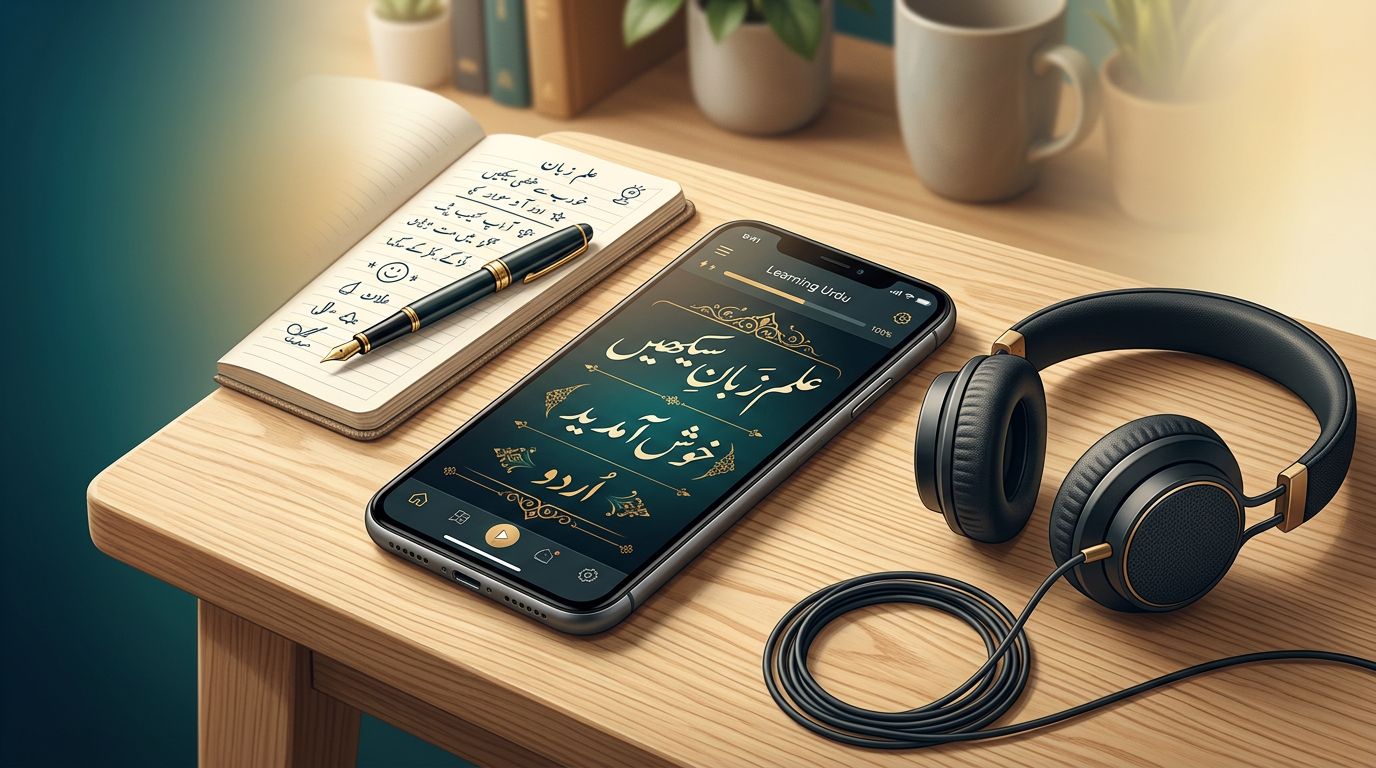
A good Urdu app can get you moving fast. A great one can keep you improving after the novelty wears off.
That difference matters, because Urdu asks a lot from a learner. You need script, sound, grammar, vocabulary, and real speaking practice. The best Urdu learning apps in 2026 do more than feed you travel phrases. They help you build habits that hold up over months, not days.
What serious Urdu learners should expect from an app
The strongest apps for Urdu give you a path, not just a set of words. They should help you read Urdu script, hear native pronunciation, and repeat material often enough for it to stick. If an app hides Urdu in transliteration only, it may feel easy at first, but it slows you down later.
For serious learners, three things matter most. First, the app needs clear audio from real speakers. Second, it should include enough structure to build grammar awareness. Third, it should give you something to do after the lesson ends, whether that is review, speaking practice, or tutor feedback.
If you want long-term progress, choose one app for structure and one tool for live practice.

Quick comparison of the best Urdu apps in 2026
| App | Best for | Pricing model | Devices | Helps most with | Main limitation |
|---|---|---|---|---|---|
| Ling | Balanced daily study | Subscription, trial | iOS, Android | Script, vocab, speaking, listening | Light grammar |
| Pimsleur | Pronunciation | Subscription | iOS, Android, web | Speaking, listening | Weak script support |
| italki | Live conversation | Pay per lesson | Web, iOS, Android | Speaking, listening, grammar feedback | No built-in course path |
| UrduPod101 | Listening practice | Subscription, free content | Web, iOS, Android | Listening, script, grammar notes | Less interactive speaking |
| Memrise | Vocabulary retention | Free tier, subscription | Web, iOS, Android | Vocab, listening | Thin grammar coverage |
| Mondly | Gamified practice | Subscription, trial | Web, iOS, Android | Speaking, listening, vocab | Shallow depth |
| Simply Learn Urdu | Offline phrases | Free, in-app purchases | iOS, Android | Speaking, listening | Not enough for deep study |
Ling and italki make the strongest pair for most serious learners. Pimsleur and UrduPod101 add the listening work many apps miss. Simply Learn Urdu is useful, but more as a backup than a main plan.
The best Urdu learning apps in 2026
Ling
Ling is the best all-around pick for most learners who want a daily routine. It mixes short lessons, audio, and review in a way that feels manageable. It helps with Urdu script, listening, speaking, and basic grammar, although the grammar explanations stay light. Pricing is usually subscription-based, with free access or a trial in many regions. It runs on iOS and Android, and the current Android listing is on Google Play.
Pimsleur
Pimsleur is the strongest choice if you want to hear and say Urdu well. The lessons are audio-first, so you spend more time speaking than tapping through screens. That makes it great for commuters and for learners who want better recall under pressure. The downside is obvious, script support is thin, and grammar teaching stays implicit. It uses a subscription model and is available on iOS, Android, and web. Beginners benefit most, especially if they need confidence with pronunciation.
italki
italki is the best option for real conversation. You pay tutors per lesson, so the cost depends on how often you book and which teacher you choose. That flexibility is useful, but it also means you need a plan. It works on web, iOS, and Android. It helps with speaking, listening, and grammar correction more than any app here. For reading and script, it works best when you bring your own text or ask the tutor to correct writing.
UrduPod101
UrduPod101 suits learners who like structured audio lessons with notes. It gives you listening material, transcripts, and vocabulary support, so it feels more complete than a phrasebook app. That makes it strong for Urdu script, listening, and grammar review. It is less useful for live speaking because it does not replace a tutor. Pricing is subscription-based, with some free content available. It runs on web, iOS, and Android. Beginners and lower-intermediate learners get the most value.
Memrise
Memrise is best when your biggest problem is retention. Its review system helps words stick, and native-speaker clips can sharpen your ear. It is useful for vocab, listening, and some speaking practice. Script support depends on the course, so check that the Urdu deck uses real Urdu text and not only romanization. Grammar is light, and that is the main limit. Memrise offers a free tier and a subscription plan, with apps on web, iOS, and Android. It works best as a supplement, not your only tool.
Mondly
Mondly is the friendliest app on this list for quick, game-like sessions. It gives you a low-friction way to keep touching Urdu each day, which helps with consistency. Speaking and listening are its stronger areas, and some learners like the guided repetition. Still, the depth is limited, so it will not carry you far on its own. Pricing is subscription-based, often with a trial. It runs on web, iOS, and Android. It is best for beginners who want an easy start and do not mind shallow grammar coverage.
Simply Learn Urdu
Simply Learn Urdu is the closest thing here to a serious offline phrasebook. It is useful when you need fast travel phrases, standard answers, and quick listening practice without a data connection. That said, it is not a full study app. Script support is limited, grammar is minimal, and speaking practice is mostly repetition. The app is free with in-app purchases and is available on iOS and Android. For serious learners, it works as a backup reference, not as a main learning system.
How to build a stronger Urdu study stack
The best results usually come from pairing apps instead of hunting for one perfect option. A balanced setup often looks like Ling for daily structure, italki for correction, and Pimsleur or UrduPod101 for listening. If vocabulary is slipping away, Memrise can fill that gap.
Your level should shape the mix. Beginners usually need more guided repetition and more audio. Intermediate learners need feedback, longer listening, and real reading practice. If you are heritage learner working on script, choose tools that show Urdu text often and do not hide behind transliteration.
A simple phrasebook app can still help, but it should not be the center of your plan. Apps like Learn Urdu For Beginners are fine for starter phrases, yet serious learners usually outgrow that format quickly.
If you want more structure outside an app, compare your options with a broader online Urdu courses roundup. That can help you decide whether you need lessons, tutoring, or a mix of both.
Conclusion
Serious Urdu study needs more than flashcards and a few travel lines. The strongest apps in 2026 help you hear the language clearly, read the script with more ease, and keep moving toward real communication.
If you want one safe starting point, choose Ling for daily study and italki for speaking. Then add Pimsleur, UrduPod101, or Memrise based on the skill that needs the most work. The best app is the one that fits your study habit and keeps you coming back tomorrow.
Ready to Take Your Language Learning Further?
Your favorite language-learning app is a great place to start. Rocket Languages can help you go further with interactive audio lessons, pronunciation practice, real-world conversations, and structured learning.
Explore Rocket Languages →Affiliate disclosure: We may earn a commission if you purchase through this link, at no additional cost to you.