
A good WaniKani review in 2026 has to answer one simple question: does it help you keep kanji long enough to use them? For many learners, the answer is yes, but only if they want structure and can live with a steady review queue.
WaniKani is built for people who want a clear path through kanji and related vocabulary. It is less helpful if you want grammar, speaking, or full control over what appears next. That split matters, because the wrong tool can turn a good plan into a daily chore.
What WaniKani does well for kanji retention
WaniKani’s main strength is that it removes guesswork. It teaches radicals first, then kanji, then vocabulary, so each new item sits on top of something you already know. That structure makes the system feel tight instead of random.

The spaced repetition system is the real engine here. If you keep up with reviews, the app pushes information back at the right intervals. That is why many learners remember readings better with WaniKani than with a loose self-made list.
The mnemonic style helps too. Some stories feel a little silly, but they lower the mental cost of recall. A long list of kanji can look like static. A linked story gives your memory something to hold.
Tofugu’s WaniKani review still gives a solid picture of the platform. The core idea has not changed much, and that is part of the appeal.
WaniKani works best when you trust the system and keep showing up.
The free tier also matters. You can try the first three levels before paying, which is enough to tell whether the method fits your brain.
Pricing, app support, and the 2026 picture
As of April 2026, the public pricing is still simple. Monthly is $9, annual is $89, and lifetime is $299. The free levels remain the best way to test it before you commit.
There have been no obvious public changes to the core plan this year. The product is still focused on the same fixed curriculum, and no official retention-rate claim gives you a magic answer. The only useful test is your own consistency over a few weeks.
WaniKani also still feels browser-first. That is fine for many learners, but it does matter if you expect a polished mobile app to do all the work. In practice, the experience is strongest when you treat it like a daily study tool, not a casual game.
A small but important point: the subscription makes sense only if you plan to stay active. If you study in short bursts, the yearly or lifetime plans can look cheaper than they are. If you are not sure, start monthly and watch your review habit.
Where WaniKani loses points
The biggest weakness is obvious once you use it for a while. WaniKani teaches kanji and vocab, but it does not teach grammar, speaking, or listening. If you use it alone, you will know more symbols without necessarily reading more Japanese.
The workload can also get heavy. Miss a few days, and the review pile grows fast. Because there is no hard daily cap, a bad week can feel like homework with a debt collector.
Some learners love the mnemonic style. Others hate it. If you prefer building your own memory hooks, WaniKani can feel too locked-in. Its fixed order is a strength, but it also removes freedom.
For learners who want more than recognition, the limits show up quickly. If you want handwriting practice, check Japanese kanji app comparison options alongside it. WaniKani is not the best tool for stroke order or writing speed.
WaniKani vs. Anki, Bunpro, and textbooks
The cleanest WaniKani vs. Anki comparison is still about control. Yomikamo’s breakdown captures it well, because Anki gives you freedom while WaniKani gives you structure.
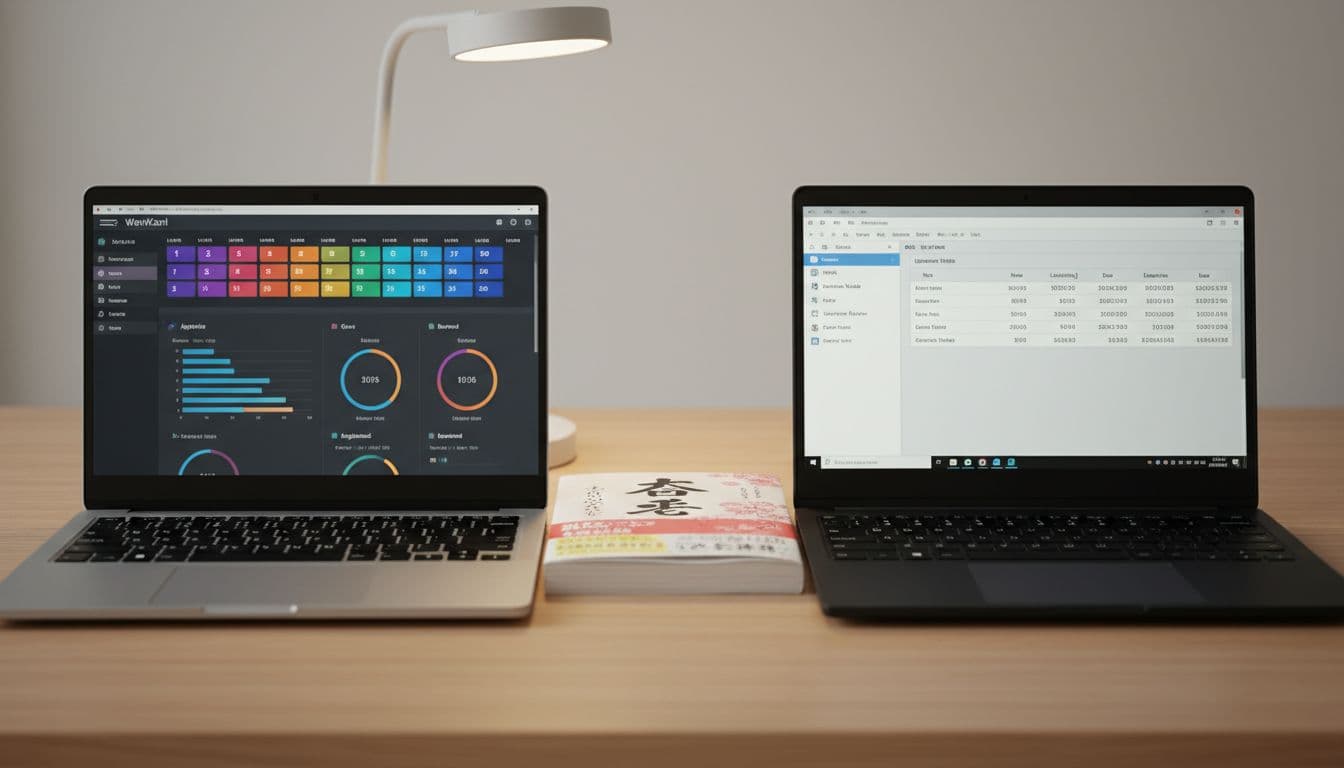
For grammar, WaniKani is the wrong tool. A grammar SRS like Bunpro fits much better beside it, and many self-studiers pair the two. BayMap’s Japanese app guide makes that pairing clear.
A simple comparison helps:
| Tool | Best for | Main strength | Main limit |
|---|---|---|---|
| WaniKani | Kanji and vocab retention | Guided SRS with mnemonics | No grammar or speaking |
| Anki | Custom study | Full control and free decks | You build the system |
| Bunpro | Grammar review | Structured grammar SRS | Not a kanji course |
| Textbooks | Broad foundations | Grammar flow and context | Less daily review automation |
The takeaway is simple. WaniKani is the easiest way to get a serious kanji routine started. Anki is better if you want total control. Textbooks and Bunpro fill the gaps that WaniKani leaves open.
Who should use it in 2026
WaniKani makes the most sense for a few learner types:
- Busy professionals: You want a fixed routine and little setup. WaniKani gives you that.
- JLPT-focused self-studiers: You need kanji recognition and steady review. WaniKani helps there.
- Intermediate learners who stall on kanji: You already know some Japanese, but your reading speed needs help. This can give you momentum.
It is a weaker fit if you want one app for everything. If your main goal is conversation, sentence mining, or grammar depth, another tool should lead.
A good middle path is common. Use WaniKani for kanji, Anki for custom sentences, and Bunpro or a textbook for grammar. That mix takes more effort, but it covers more of the language.
Conclusion
WaniKani is still worth it in 2026 if your main problem is kanji retention. It gives serious learners a clear system, strong recall support, and a pace that keeps items moving.
It is less convincing if you want flexibility or a full Japanese course. The app is effective, but only inside its lane. If you want a disciplined kanji habit and you can handle the queue, WaniKani still earns its place.
Ready to Take Your Language Learning Further?
Your favorite language-learning app is a great place to start. Rocket Languages can help you go further with interactive audio lessons, pronunciation practice, real-world conversations, and structured learning.
Explore Rocket Languages →Affiliate disclosure: We may earn a commission if you purchase through this link, at no additional cost to you.