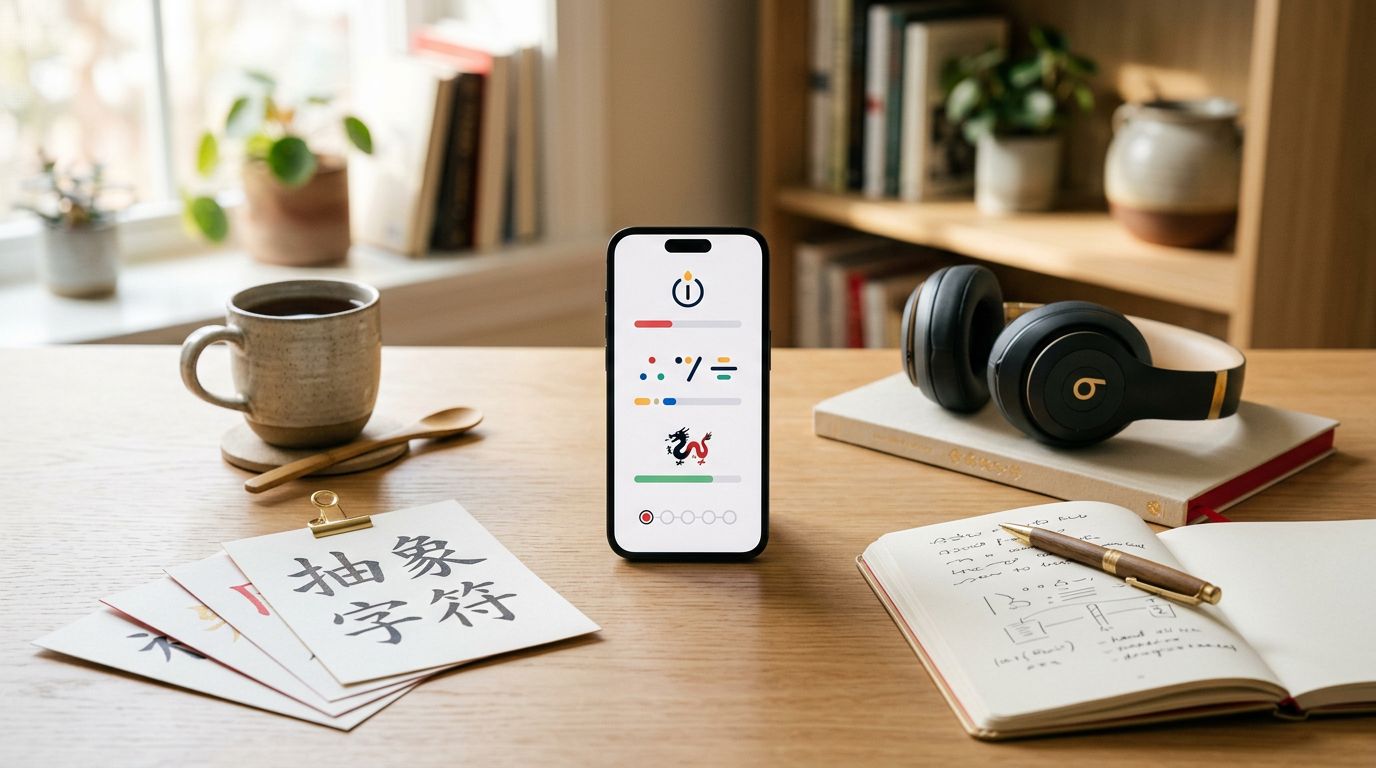
A short Chinese lesson can be easy to skip when it feels disconnected from your goals. Maayot takes a different approach: it sends you a small, level-based reading lesson each day. In this Maayot review, I look at whether that routine builds useful reading ability and vocabulary, or only creates another streak to maintain.
Maayot is most appealing to intermediate learners who can read some Mandarin but need more regular exposure. It isn’t a complete Chinese course, so your results depend on how you combine it with listening, speaking, grammar, and character-writing practice.
Key Takeaways
- Maayot is strongest for building a daily Chinese reading habit with short, graded stories.
- Lessons include audio, definitions, pinyin options, comprehension work, and vocabulary review.
- Standard pricing appears around $10 to $14.99 per month, while Pro has been listed around $37.50 monthly.
- Pro’s teacher corrections can help with writing and pronunciation, but the higher price limits its value for many learners.
- Maayot works best as a reading and vocabulary supplement, not as your only Mandarin resource.
What Is Maayot?
Maayot is a freemium Chinese learning service built around daily graded stories. Paid users receive a new story each day, while free users receive limited access, commonly one new story on Sunday.
The platform groups content into three broad levels:
- Beginner, roughly HSK 1-3
- Intermediate, roughly HSK 4-5
- Advanced, roughly HSK 6 and above
The exact difficulty still depends on the topic and vocabulary. A learner who knows textbook grammar well may find some intermediate stories comfortable, while unfamiliar cultural topics can make them harder.
Each lesson focuses on a short Chinese text. You can read it with optional pinyin, check word definitions, listen to native-speaker audio, and complete a quiz. Some lessons also include English support, which helps you confirm meaning without opening a separate dictionary every few seconds.
The stories are deliberately small. One review estimated beginner texts at about 70 Chinese characters and advanced texts at around 250 characters. That length makes Maayot easier to fit into a busy schedule than a full article or textbook chapter.

Short lessons are useful because they reduce the effort needed to begin. You don’t need to decide what to read, search for suitable material, or create a vocabulary list before studying. The daily lesson gives you a clear starting point.
Maayot Review: How Good Is the Daily Reading Experience?
The main strength of Maayot is consistency. A daily story creates a fixed reading appointment, which helps learners who often collect resources without using them.
The texts also offer a controlled step beyond isolated sentences. You see vocabulary in context, notice how words connect, and read complete ideas in Chinese. That matters because recognizing a word in a flashcard doesn’t guarantee that you’ll understand it inside a paragraph.
Maayot appears particularly useful around the intermediate stage. Beginners may need more explanation of basic grammar, while advanced learners may outgrow graded texts and want authentic news, essays, or novels. Intermediate students often need exactly this type of bridge between course materials and native content.
Vocabulary development is another clear benefit. Lessons introduce new words while reusing familiar ones, giving you repeated exposure without forcing you to study a large list at once. Still, passive recognition isn’t enough for long-term retention. You should actively recall selected words after reading and use them in your own sentences.
The audio adds value, even though reading remains the core activity. Listen once before reading, then read along, and finally listen again without looking at the text. This routine connects written forms with pronunciation and helps you notice where word boundaries occur.
A 2024 Maayot Chinese reading review also describes the service as a good fit for learners who want short, graded input and regular motivation. That assessment matches the platform’s clearest use case: making Chinese reading frequent enough to become normal.
Maayot’s short lessons are small enough for daily use, but they still require active review if you want new vocabulary to become usable.
Features, Plans, and Pricing
Maayot’s core lesson design is simple, but the paid plans add several useful study tools. Pricing has varied by platform, region, and billing option, so check the current price shown in your account before subscribing.
| Plan | Typical access | Reported price |
|---|---|---|
| Free | Limited story access, commonly one new story weekly | Free |
| Standard | Daily stories, reading tools, audio, and exercises | About $10 to $14.99 monthly |
| Pro | Standard features plus teacher corrections | About $37.50 monthly |
The U.S. App Store listing has shown Standard at $14.99 per month, while third-party reviews have reported $10 monthly and a half-year option of $50. These differences may come from platform pricing or changes over time. A user review of Maayot pricing and features gives useful context, but current in-app pricing should take priority.
Standard is the plan most learners should examine first. It provides the daily reading habit without asking you to pay for feedback you may not use. The main tools include:
- Level-based daily stories
- Native-speaker audio
- Pinyin display
- One-tap word definitions
- Example sentences
- Comprehension quizzes
- Writing prompts
- Progress or streak tracking
Pro’s main distinction is human correction. Maayot has described teacher feedback on writing and pronunciation, with past submissions and corrections stored in a “My Corrections” area. That can be useful if you need outside feedback and will submit work regularly.
However, Pro is expensive compared with many Chinese learning apps. It makes more sense for a learner who has a clear correction routine than for someone who mainly wants daily reading.
The mobile and web versions may not offer identical features. A review reported that the desktop version provided broader access, while the mobile app then focused more on reading the current story and completing exercises. Past stories, translations, and correction submissions may depend on the current app version, so verify those details before paying.
Where Maayot Falls Short
Maayot doesn’t replace a structured Mandarin course. Its stories expose you to grammar, but they don’t always teach grammar in a sequence. If you repeatedly misunderstand sentence patterns, you may need a textbook, teacher, or dedicated grammar reference.
Speaking practice is also limited unless you use Pro’s pronunciation correction. Reading a dialogue aloud helps, but it isn’t the same as responding to another person in real time. Learners who want conversation practice should add lessons with speaking tasks or regular sessions with a tutor.
Listening support exists through story audio, yet the material remains closely tied to the written text. That makes it suitable for reading-linked listening, not a full listening program with unscripted speech, multiple speakers, and changing accents.
Character writing is another gap. Writing prompts can encourage output, but Maayot shouldn’t be your only tool for stroke order, handwriting accuracy, or character recall. A dedicated system such as Pleco can fill part of that gap. Our Pleco review for Chinese learners covers dictionary lookup, handwriting input, OCR, and flashcard functions.
The free plan is useful for testing the lesson format, but weekly access gives you a limited sense of the daily experience. If habit-building is the reason you are considering Maayot, the free version doesn’t fully demonstrate its main advantage.
How to Use Maayot in a Balanced Study Routine
A 15-minute Maayot session can support a broader routine without taking over your study time.
First, read the story once without checking every word. Mark only the terms that block your understanding. Then listen to the audio while following the text, and replay difficult sentences.
Next, choose two or three useful words. Write one original sentence for each word, preferably about your own work, hobbies, or daily life. Finish the quiz, then review those words again after two or three days.
A practical weekly routine could look like this:
- Use Maayot for daily reading and vocabulary.
- Add separate listening practice two or three times weekly.
- Study grammar through a structured course or reference.
- Practice speaking with a tutor, exchange partner, or conversation app.
- Review characters with handwriting or spaced-repetition exercises.
For extra listening and dialogue practice, a ChinesePod review can help you compare a more audio-focused resource with Maayot’s reading-centered design. Learners who prefer a guided all-in-one course can also consider a SuperChinese review before choosing a subscription.
The important point is to assign Maayot one clear job. Let it make daily Chinese reading automatic, then use other tools for skills it doesn’t cover well.
Is Maayot Worth It in 2026?
Maayot is worth considering if your main problem is finding suitable Chinese reading material and using it consistently. Its graded stories, optional support, audio, and quizzes create a low-friction study habit. Intermediate learners are likely to get the most value because the content can connect textbook knowledge with more natural Chinese.
Standard is easier to justify than Pro for most users. At roughly $10 to $14.99 monthly, it can be a reasonable supplement if you read most days. Pro may be worthwhile when teacher corrections are a central part of your plan, but its higher cost requires regular submissions to make financial sense.
The app is less suitable for learners seeking one complete course. It won’t provide enough structured grammar, open-ended conversation, listening variety, or character-writing practice on its own.
Conclusion
This Maayot review finds a focused tool rather than a complete Mandarin program. Its best feature is the daily graded story, which gives intermediate learners a manageable way to read Chinese and meet useful vocabulary in context.
Use the free plan to test the format, then consider Standard if daily access fits your schedule. Add separate speaking, listening, grammar, and character practice so Maayot remains the reading habit at the center of a balanced routine, not the whole routine itself.
Ready to Take Your Language Learning Further?
Your favorite language-learning app is a great place to start. Rocket Languages can help you go further with interactive audio lessons, pronunciation practice, real-world conversations, and structured learning.
Explore Rocket Languages →Affiliate disclosure: We may earn a commission if you purchase through this link, at no additional cost to you.