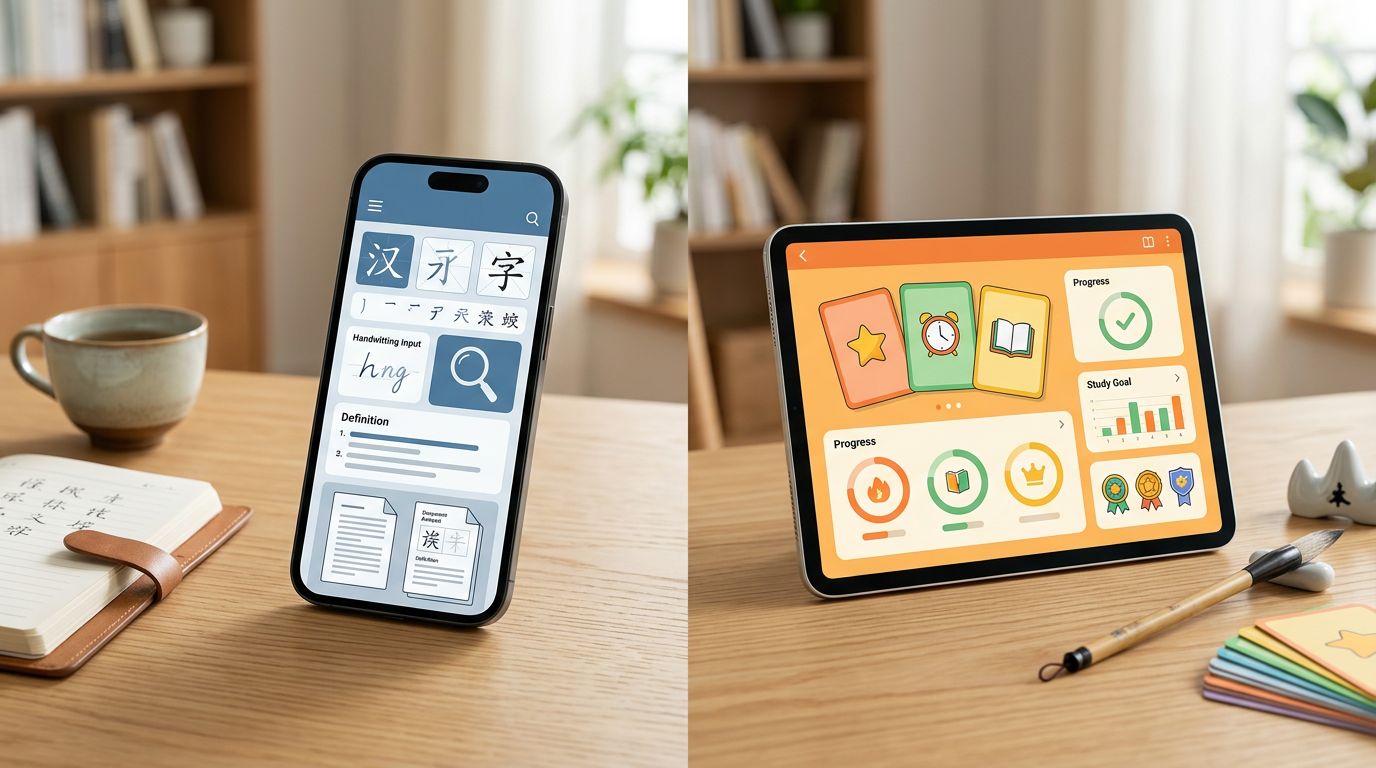
A dictionary app can either answer a quick question or become the center of your Chinese study routine. That difference matters when comparing Pleco vs TrainChinese, especially if you want more than English translations.
Pleco focuses on fast, detailed reference work. TrainChinese combines dictionary lookup with vocabulary lists, flashcards, and game-like practice. The better choice depends on your device, budget, Chinese level, and how you study each day.
Key Takeaways
- Pleco is the stronger dictionary and reading tool, with offline lookup, handwriting input, OCR, stroke order, and document support.
- TrainChinese puts more emphasis on built-in vocabulary training and guided flashcard practice.
- Pleco’s free core is useful, while its paid features use one-time purchases. TrainChinese has free dictionary access, but full training features require a paid package.
- Beginners may prefer TrainChinese’s structured practice. Intermediate and advanced learners often get more value from Pleco’s reference tools.
- Neither app is the universal winner. Your study workflow should decide the purchase.
Pleco vs TrainChinese: The Main Difference
Pleco is built around dictionary lookup. You can search with English, pinyin, Chinese characters, handwriting, or a camera. Results usually include multiple dictionary entries, definitions, example sentences, audio, and related words.
That reference-first design suits learners who read Chinese outside a textbook. You might scan a restaurant menu, look up a character in a novel, or check the difference between two similar words. Pleco stays useful as your reading becomes more difficult because its dictionary system can grow with add-ons.
TrainChinese takes a different approach. It includes dictionary features such as pinyin, audio, sample sentences, measure words, character animations, and OCR. However, vocabulary lists and training modes sit closer to the center of the experience.
Its practice system can turn dictionary entries into review material. Reported training options include multiple-choice practice and a mode that asks learners to produce answers more actively. Progress tracking also brings difficult cards back while reducing attention on words you know well.
Pleco feels like a reference shelf with study tools attached. TrainChinese feels more like a study course with a dictionary inside.
The distinction is important. If you mostly need reliable lookup, Pleco is the natural fit. If you want the app to tell you what to review next, TrainChinese may feel easier to use.
For a broader look at competing tools, see LanguaVibe’s guide to best Chinese dictionary apps.
What Pleco Does Better

Pleco’s biggest strength is the speed and depth of its lookup system. The free app includes a capable Chinese-English dictionary, pinyin support, audio, search history, and several ways to enter unfamiliar words.
Handwriting recognition helps when you can see a character but can’t read it. You don’t need to know its pronunciation first. OCR goes further by letting you point your camera at printed Chinese, although OCR is part of Pleco’s paid feature set.
The paid Basic Bundle is listed at US$29.99 on Pleco’s official pricing page. It includes OCR, flashcards, stroke order diagrams, the document reader, audio add-ons, and the Oxford Chinese dictionary. The Professional Bundle is listed at US$59.99 and adds several larger dictionary resources.
Pleco also supports offline use after you download the relevant dictionaries and resources. That makes it practical for travel, classroom use, and reading when you don’t have a stable connection.
Its document reader is useful for longer passages. Instead of copying every unfamiliar word into another app, you can read and look up terms within the same environment. Advanced learners may also value simplified and traditional character support, multiple dictionary sources, and detailed entry information.
The tradeoff is that Pleco can feel dense at first. Its flashcard system is flexible, but you often create or organize cards yourself. Learners who want automatic course-like progression may find the setup less inviting.
LanguaVibe’s Pleco Chinese dictionary app breakdown covers its lookup, offline, OCR, and study features in greater detail.
Where TrainChinese Has the Advantage
TrainChinese is more appealing when vocabulary practice matters as much as lookup. Instead of treating flashcards as an optional add-on, it connects word lists and review activities to the main learning experience.
That approach helps beginners who don’t yet have a review system. You can search for a word, save it, and practice it through the app’s training modes. The built-in structure reduces the number of decisions you need to make before studying.
TrainChinese also presents vocabulary in a more focused way. Learners who prefer short sessions may appreciate opening the app and working through a prepared list instead of configuring card types, dictionary sources, or review settings.
Its dictionary includes helpful learning details. Character animations can support early writing practice, while audio and sample sentences help connect recognition with pronunciation and context. OCR adds a useful bridge between real-world text and saved vocabulary.
The main limitation is depth. TrainChinese may be enough for a beginner’s daily study, but advanced readers often want several dictionary sources, more detailed definitions, and better control over reading tools. Pleco has the stronger long-term reference system for those needs.
Pricing also requires closer checking. Available information describes TrainChinese as free for dictionary access, with full lists and flashcard functions tied to paid packages reportedly ranging from US$8.99 to US$54.99. Package availability and lifetime-access details have changed across reports, so check the current in-app offer before paying.
A third-party TrainChinese app review provides additional context on its vocabulary lists and training modes.
Feature Comparison at a Glance
The practical differences become clearer when you compare the tools you are most likely to use.
| Feature | Pleco | TrainChinese |
|---|---|---|
| Core dictionary | Deep, expandable dictionary system | Free dictionary with learner-focused entries |
| Chinese input | Pinyin, characters, handwriting, English | Pinyin, characters, and other common lookup methods |
| Audio | Available, with paid audio add-ons | Included for many entries |
| OCR | Paid add-on or bundle feature | Available as part of the app |
| Flashcards | Flexible, user-configured system | Built-in vocabulary training |
| Stroke order | Paid feature in the Basic Bundle | Character animations support writing practice |
| Reading tools | Document reader and offline dictionaries | Better suited to shorter vocabulary work |
| Pricing model | Free core, one-time paid bundles and add-ons | Free dictionary, paid access packages for training |
| Best fit | Serious lookup and long-term reference | Structured vocabulary study |
Pleco wins on flexibility and reference depth. TrainChinese wins when you want vocabulary practice to feel more guided.
Flashcards and Study Workflows Compared

Your daily workflow may matter more than the feature list.
Pleco works well for learners who collect vocabulary while reading. You find a word in an article, check several meanings, listen to the pronunciation, and save the entry. Later, you review the cards you created. This process gives you control over what enters your deck, but it takes more effort.
That flexibility benefits intermediate and advanced learners. You can build cards around a textbook, a novel, a news article, or a personal vocabulary goal. You can also keep the dictionary open while using other study materials.
TrainChinese suits learners who want fewer setup decisions. Its lists and training modes provide a clearer path for regular review. The app may feel more motivating if you prefer completing a short session rather than designing your own system.
However, structured practice can become limiting if your needs change. A learner preparing for HSK vocabulary may want one type of list, while someone reading Chinese fiction may need another. Pleco’s manual system takes longer to organize, but it adapts more easily.
The best workflow may also combine a dictionary with a separate learning app. Neither Pleco nor TrainChinese replaces listening practice, graded reading, conversation, or writing feedback. A dictionary should support those activities rather than become your entire Mandarin routine.
Which App Is Better for Your Chinese Level?
Beginners
TrainChinese may be the easier starting point if you want vocabulary lists and guided review in one place. Its training focus can help you build a habit before you learn how to organize custom flashcards.
Pleco still works well for beginners who want to learn character lookup early. Handwriting recognition, audio, stroke order, and clear dictionary entries provide useful support. The interface may take longer to understand, but the investment pays off if you continue studying.
Intermediate Learners
This is where the choice becomes less obvious. TrainChinese can keep vocabulary review consistent, while Pleco offers better support for reading authentic material.
Choose TrainChinese if your main problem is forgetting words. Choose Pleco if your main problem is understanding words in context, comparing definitions, or reading longer passages.
Advanced Learners
Pleco is usually the stronger option for advanced study. Multiple dictionaries, traditional character support, OCR, document reading, offline access, and detailed entries matter more as your input becomes less predictable.
TrainChinese can still work as a focused vocabulary trainer. It is less likely to replace Pleco as your main reference tool.
Device, Budget, and Privacy Considerations
Both apps are designed for mobile use, with Pleco available on iOS and Android. Pleco is not a Windows or Mac desktop dictionary, so learners who prefer a computer-first setup should account for that limitation.
Budget planning also differs. Pleco’s free core is genuinely useful, and you can buy only the features you need. The US$29.99 Basic Bundle offers a sensible middle point for learners who want OCR, flashcards, stroke order, document reading, audio, and Oxford dictionary content. The US$59.99 Professional Bundle makes more sense for users who want several reference dictionaries.
TrainChinese may cost less if you only need basic dictionary access. Its paid training packages can provide good value for learners who will use the review system often. Still, confirm the current package price and renewal terms in your app store before purchasing.
Consider your phone’s operating system, storage, and preferred payment model. A one-time purchase may suit you better than package access, while a lower entry price may matter more during your first months of study.
Final Decision Guide
Choose Pleco if you:
- Read Chinese websites, books, menus, or documents regularly.
- Need handwriting lookup, OCR, stroke order, or offline dictionaries.
- Want to select individual paid tools instead of buying a full course.
- Expect your Chinese reading needs to grow over time.
- Prefer building a custom flashcard workflow.
Choose TrainChinese if you:
- Want vocabulary lists and review activities in one app.
- Prefer guided practice over manual flashcard setup.
- Are starting Mandarin and need a clear daily routine.
- Care more about word training than advanced dictionary depth.
- Want to try the free dictionary before paying for study packages.
Conclusion
The choice between Pleco vs TrainChinese comes down to the job you want the app to perform. Pleco is the better reference workbench, while TrainChinese is the more guided vocabulary practice tool.
For many serious learners, Pleco is the safer long-term purchase because its free core is strong and its paid features expand as needed. TrainChinese makes more sense when consistent flashcard practice and a simpler study path matter most. Your device, budget, level, and daily habits should decide which one stays on your phone.
Ready to Take Your Language Learning Further?
Your favorite language-learning app is a great place to start. Rocket Languages can help you go further with interactive audio lessons, pronunciation practice, real-world conversations, and structured learning.
Explore Rocket Languages →Affiliate disclosure: We may earn a commission if you purchase through this link, at no additional cost to you.