
You open your Spanish lesson, but the French word arrives first. Studying two languages at once can produce moments like this, and occasional overlap doesn’t mean your plan has failed.
With limited time, your priority is usable recall in each language, rather than eliminating every stray word. Distinct routines, spaced review, and practice without hints can help you build that recall.
Start by separating ordinary mix-ups from problems that need a change in your routine.
Why Some Language Mixing Is Normal
Languages don’t stay in completely separate mental compartments. Research on cross-linguistic co-activation in bilinguals describes how knowledge of another language can become active during language processing.
That doesn’t establish that studying two languages together harms learning. It does help explain why another language’s word might come to mind.
Some overlap or temporary confusion can be normal, especially when vocabulary is unfamiliar. However, distinguish an occasional slip from a repeated difficulty that blocks communication.
If you say a French word during Spanish practice, correct it and continue. If the same substitution keeps returning, give that contrast focused practice.
Also check whether you’re confusing languages or simply forgetting something. Failing to recall a Japanese word doesn’t automatically mean your Spanish study caused it.
Your target is reliable performance over time. Expecting perfect separation after every lesson adds pressure without telling you what to practice next.
Give Each Language a Distinct Study Context

Use Practical Cues You Can Repeat
Try pairing each language with a recognizable routine. Spanish might follow breakfast, while Japanese fits an evening walk with an audio lesson.
Separate notebooks, browser bookmarks, and flashcard decks also make it easier to open the right material. You don’t need different devices or paid subscriptions.
These cues are practical experiments, not proven barriers against mixing. Keep them if they help you settle into the session; simplify them if maintaining the setup becomes another chore.
The useful distinction is clear: you know which language you’re practicing before the first exercise appears.
Begin With That Language’s Sounds
At the start of a session, listen to a short recording in the target language. Then repeat a few familiar phrases before introducing new material.
Use a beginner dialogue or course recording whose meaning you understand. This gives you a pronunciation model and a manageable starting task.
When switching languages, close the previous materials first. A brief stretch or change of activity can make the transition deliberate.
You can test this routine without imposing a fixed waiting period between sessions. Notice whether it reduces your own recurring mix-ups.
Build a Schedule for Two Languages at Once
Give Each Language a Clear Priority
Equal study time isn’t necessary. One language may matter more because of travel, family conversations, or an approaching exam.
Choose a main language for your longer learning sessions. Give the other a smaller but regular slot for review, listening, or simple output.
If you’re intermediate in one and beginning the other, their tasks should differ. The intermediate language may need conversation and reading, while the beginner language needs basic sentence patterns.
Also accept the time tradeoff. Adding a second language leaves fewer minutes for the first unless you increase your total study time.
Match the Plan to Your Available Minutes
These are starting options, not scientifically prescribed splits.
| Available time | Main language | Second language |
|---|---|---|
| 20 minutes | 15 minutes of learning and recall | 5 minutes of review |
| 10 minutes | 8 minutes on one focused task | 2 minutes recalling familiar phrases |
| Separate study days | One focused session | A focused session on another day |
Choose the arrangement you’ll repeat on an ordinary week. You don’t have to study both languages every day.
A weekly language study plan can help you distribute listening, vocabulary, and speaking instead of filling every available minute with app lessons.
Use Spaced Practice and Active Recall
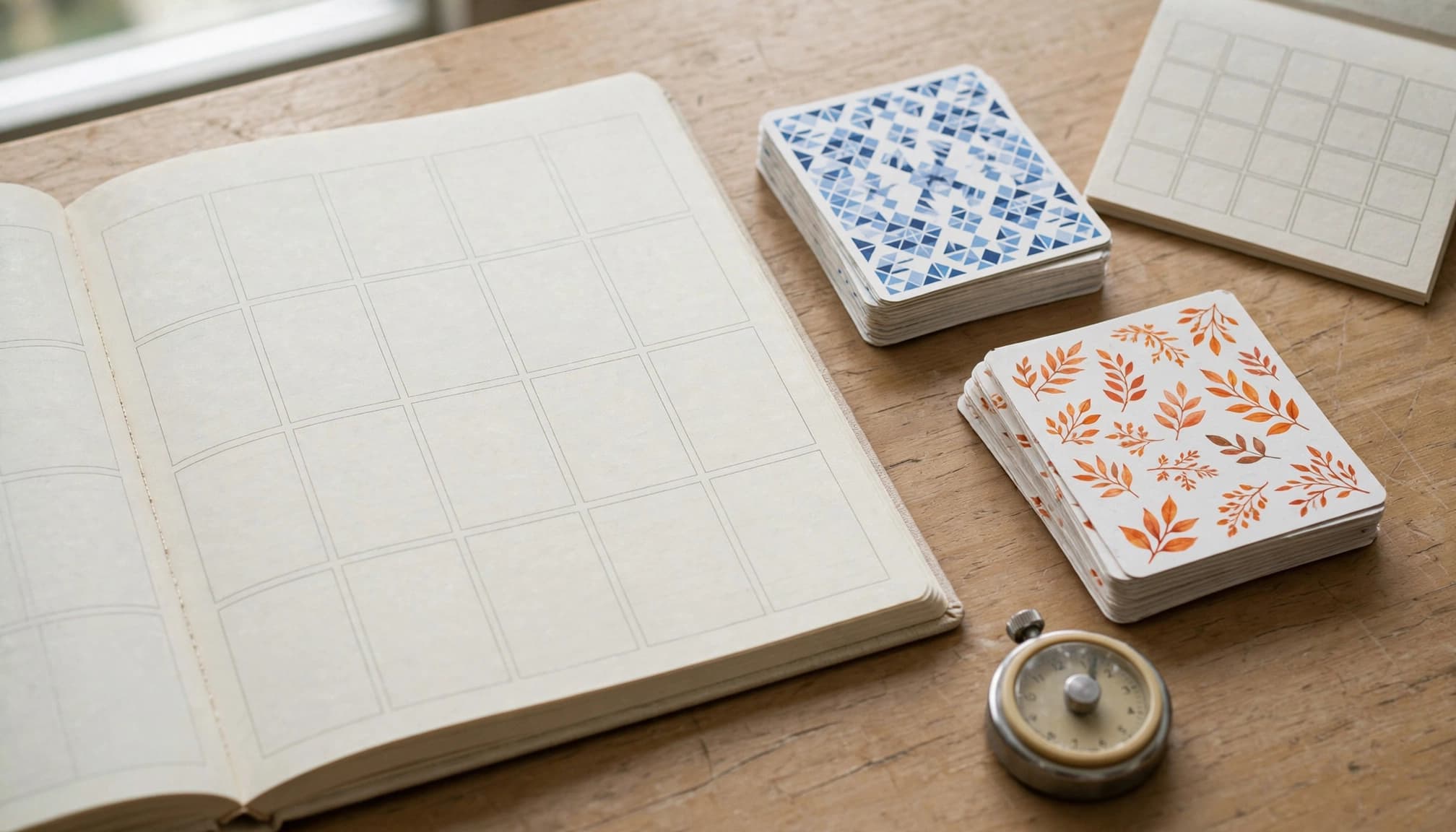
Scheduling reviews and retrieving answers are separate jobs. A review app can handle the timing, but you still need to do the remembering.
Return to Material Across Sessions
Spaced practice revisits material over multiple sessions instead of packing every repetition into one sitting. Research includes a meta-analysis of second-language spaced practice covering 48 experiments.
For manual review, try revisiting a phrase the next day, several days later, and the following week. Adjust those intervals when recall is too difficult or consistently easy.
Keep separate Anki decks for each language so the intended answer is clear. Also limit new material when older reviews consume your whole session.
A manageable spaced repetition routine should leave room for listening and conversation. Otherwise, your study plan becomes a growing queue of cards.
Answer Before You Reveal the Solution
Pause at each prompt. Say or type the answer before checking it, then compare your response with the model.
Recognition and production are different tasks. Choosing a word from four options doesn’t show that you can retrieve it during conversation.
Use short sentence cards, audio prompts, or sentences with one missing word. Each card should test something clear rather than demand several explanations at once.
After checking an answer, use the phrase in a new sentence. If you were wrong, retrieve the corrected version again after another item.
A language-specific prompt matters: an unlabeled English cue can legitimately have answers in both languages.
Handle Similar Words With Targeted Contrasts
Related languages can offer helpful similarities, but familiar-looking words sometimes have different meanings. Research on cross-language influence in word recognition examines both helpful overlap and context-dependent interference.
Use comparisons for mistakes you’ve actually made. Collecting every possible false friend adds work before you know whether those words will trouble you.
For example, Spanish largo means “long,” while French large means “wide.” Learn them inside phrases: un camino largo describes a long road; une route large describes a wide road.
First, practice each phrase separately with its pronunciation. Then briefly compare them and explain the distinction in your own words.
Avoid placing every similar word in one large mixed deck. If you’re still establishing the basics, that format may make the required language unclear.
Also watch sentence patterns. When another language’s word order keeps entering your answers, practice a short, correct model and create new sentences using the same structure.
Record the recurring mistake, its correction, and one usable example. A small error log is easier to review than pages of disconnected grammar notes.
Keep Your Tools Simple and Add Real Use
Give Every App One Job
Choose one main course or textbook for each language. Then add a review tool only if it fills a gap.
Babbel or Duolingo can provide guided lessons; Anki can hold phrases you want to retrieve later. You don’t need separate apps for every skill.
A plan for combining language apps helps you assign different jobs instead of repeating beginner vocabulary across several subscriptions.
Before adding another tool, identify the missing task. If you need to understand speech, another picture-matching vocabulary exercise won’t address that weakness.
Use Language Beyond the Review Queue
Flashcards don’t provide unpredictable replies or explain every grammar pattern. Pair them with understandable reading, listening, and regular output.
Replay a short dialogue, then answer a question about it without looking. Or record a voice note using phrases from that week’s lessons.
For speaking goals, add a tutor or exchange partner when possible. Bring recurring mix-ups and ask for an explanation of the correction.
If live practice isn’t available, rehearse aloud and check against reliable examples. This is useful preparation, although it doesn’t replace responsive conversation.
Check Progress and Reduce Overload
Once a week, test each language outside your usual lesson format. Record yourself describing yesterday for 30 seconds, or answer familiar questions without notes.
For listening, try a short recording appropriate to your level. Notice what you understand before reading the transcript.
Track a few concrete observations: phrases you retrieved, repeated substitutions, and sentences you couldn’t finish. Lesson totals and streaks don’t capture those gaps.
If recall is weak in both languages, first reduce new material. Protect a small review habit and shorten the learning sessions.
However, if one language has a deadline, temporarily direct more time toward it. The other can stay in maintenance mode with familiar audio and brief recall.
You can also pause one language if the routine repeatedly exceeds your available time. Restarting with a smaller plan is more useful than accumulating overdue lessons.
Change one part of the routine at a time. Otherwise, you won’t know whether shorter sessions, clearer prompts, or different materials helped.
Key Takeaways
- Some overlap is normal; focus correction on mistakes that keep returning.
- Give each language clear materials and realistic study slots, without demanding equal time.
- Retrieve answers before checking them, revisit material across sessions, and use it outside flashcards.
Studying two languages at once works best when each session has a clear task. A small routine you repeat gives you more useful feedback than a crowded plan you rarely finish.
Frequently Asked Questions
Should Beginners Start Both Languages Together?
You can, but consider your available time and the demands of each language. Two unfamiliar writing systems or two demanding beginner courses may require more attention than your schedule allows.
If both matter now, keep the initial workload small and prioritize useful basics. If you’re already skipping sessions or struggling to retain either course, establish a manageable routine in one before expanding. There’s no universal proficiency threshold you must reach first.
How Long Should I Wait Between Languages?
There’s no fixed gap established by the research cited here for everyone studying two languages. You can place sessions at different times or on different days if that suits your schedule.
When you need back-to-back sessions, close one set of materials and start the next with familiar target-language audio. Then judge the arrangement by your recall and recurring errors, rather than treating a particular number of minutes as mandatory.
Build Reliable Recall in Both Languages
The occasional wrong-language word doesn’t erase your progress. What matters is whether you can increasingly retrieve the language you need.
Keep your contexts clear, your reviews active, and your workload small enough to repeat. Use recurring errors to choose the next practice task.
Your next step is a manageable week of study, followed by a check of what you can understand and say without hints.
Ready to Take Your Language Learning Further?
Your favorite language-learning app is a great place to start. Rocket Languages can help you go further with interactive audio lessons, pronunciation practice, real-world conversations, and structured learning.
Explore Rocket Languages →Affiliate disclosure: We may earn a commission if you purchase through this link, at no additional cost to you.
