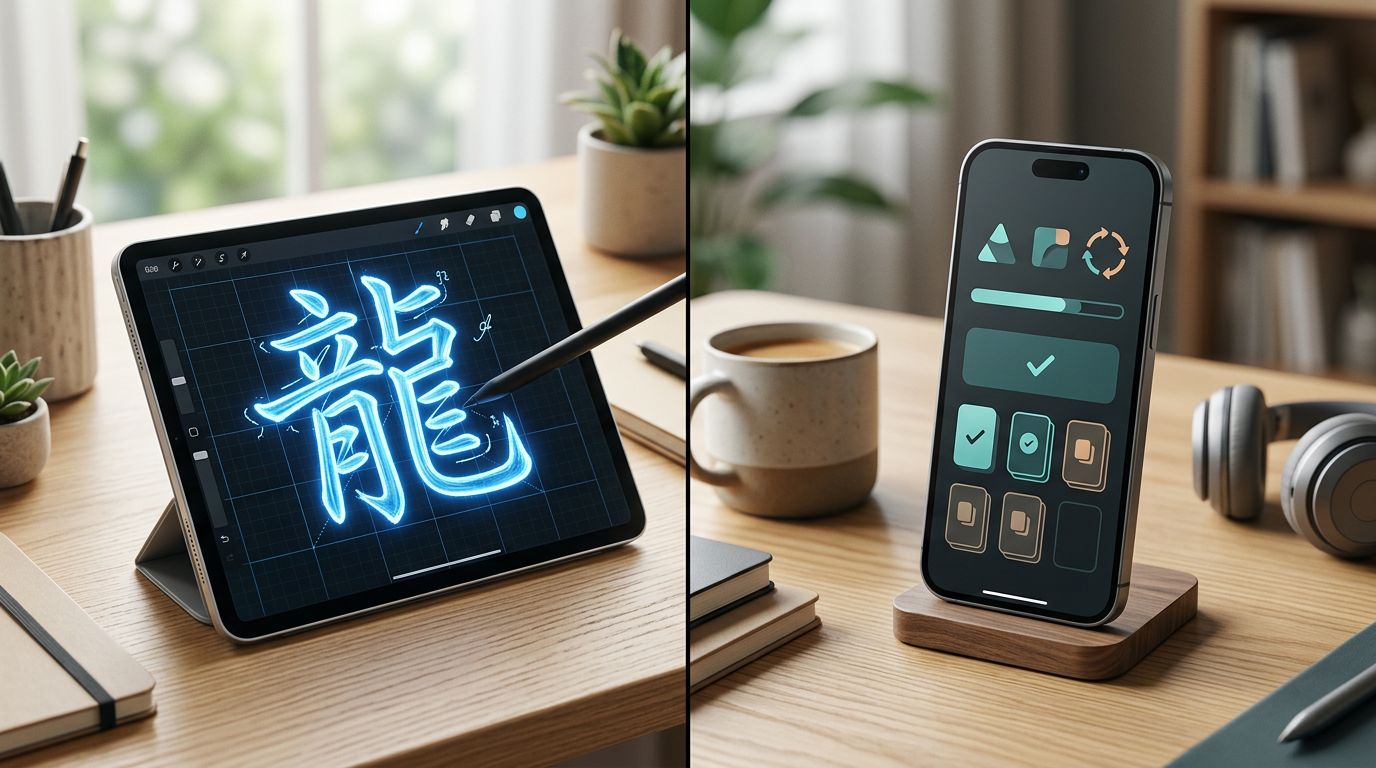
The decision depends on whether your Mandarin Chinese goal is handwriting production or low-cost review. Skritter is the stronger fit for writing Chinese characters through active recall, while a lower-cost alternative may suit learners seeking spaced repetition and simpler writing practice. Neither app replaces listening, conversation, or graded readers.
Skritter offers specialized feedback for handwriting, making it a focused choice for this part of language learning. Access also matters in 2026. Skritter has clear current pricing and support across web, iOS, and Android. Availability for the lower-cost alternative is less consistent in public sources, so verify that you can install and use it reliably.
Key Takeaways
- Skritter is the stronger choice for learners who want to produce Chinese characters from memory through handwriting recognition, stroke-order correction, and active recall.
- Tofu Learn may suit budget-conscious learners who mainly want free character review and spaced repetition, but its current availability and technical support are harder to verify.
- Skritter supports simplified and traditional characters, structured decks, and access across web, iOS, and Android, with pricing that starts at about $14.99 per month before regional variation.
- Neither app replaces listening, conversation, grammar study, or graded readers, so both work best as part of a broader Mandarin Chinese routine.
- Test Tofu Learn’s installation, sign-in, and syncing before relying on it, while Skritter is the safer option when dependable access matters.
Skritter vs Tofu Learn: Quick verdict
Skritter is the stronger choice for learners who want to produce Chinese characters from memory. Its interactive feedback supports active recall, while the free option suits learners who mainly need basic review at no cost.
| Category | Skritter | Tofu Learn |
|---|---|---|
| Price | Paid subscription with a 7-day trial | Historically positioned as fully free, but current availability is harder to verify |
| Main focus | Handwriting, stroke order, and active recall | Character flashcards and spaced repetition |
| Writing feedback | Interactive handwriting recognition and correction | Public descriptions mention writing support, but details are less documented |
| Study content | Textbook, HSK, TOCFL, vocabulary lists, and organized decks | HSK-aligned content, radicals, example sentences, and pronunciation |
| Platforms | Web, iOS, and Android | Current platform support is harder to verify |
| Best fit | Serious learners who want handwriting feedback and structured review | Budget-conscious learners focused on basic character review |
Neither tool is a complete Mandarin Chinese course. Skritter won’t replace listening practice, graded readers, conversation, or grammar study. The free option has the same limitation, and both work best as part of a wider routine for reviewing Chinese characters.
Skritter’s US pricing page has listed a monthly subscription plan at $14.99. It has also shown a 7-day free trial and longer-term subscription plan offers, including $59.99 for six months and $99.99 for one year. Prices may vary by region or app store, so review Skritter’s current pricing page before subscribing.
For a wider comparison with Pleco, Hack Chinese, and other Mandarin study tools, see LanguaVibe’s guide to best Chinese writing apps.
Writing feedback is Skritter’s main advantage
Many Chinese learners recognize Chinese characters when reading but cannot write them without a prompt. Skritter targets that production gap, which matters for handwritten exams, notes, traditional documents, and stronger character recall. Recognition is passive, while production requires active recall.
Skritter addresses the problem by asking you to draw the character yourself. Its system checks each stroke as you enter it and flags mistakes in shape, sequence, or stroke order. Meaning or pronunciation prompts may come first, but you must retrieve Chinese characters instead of tracing a completed model. This character writing adds focused writing practice alongside spaced repetition, unlike vocabulary-focused tools such as Hack Chinese.
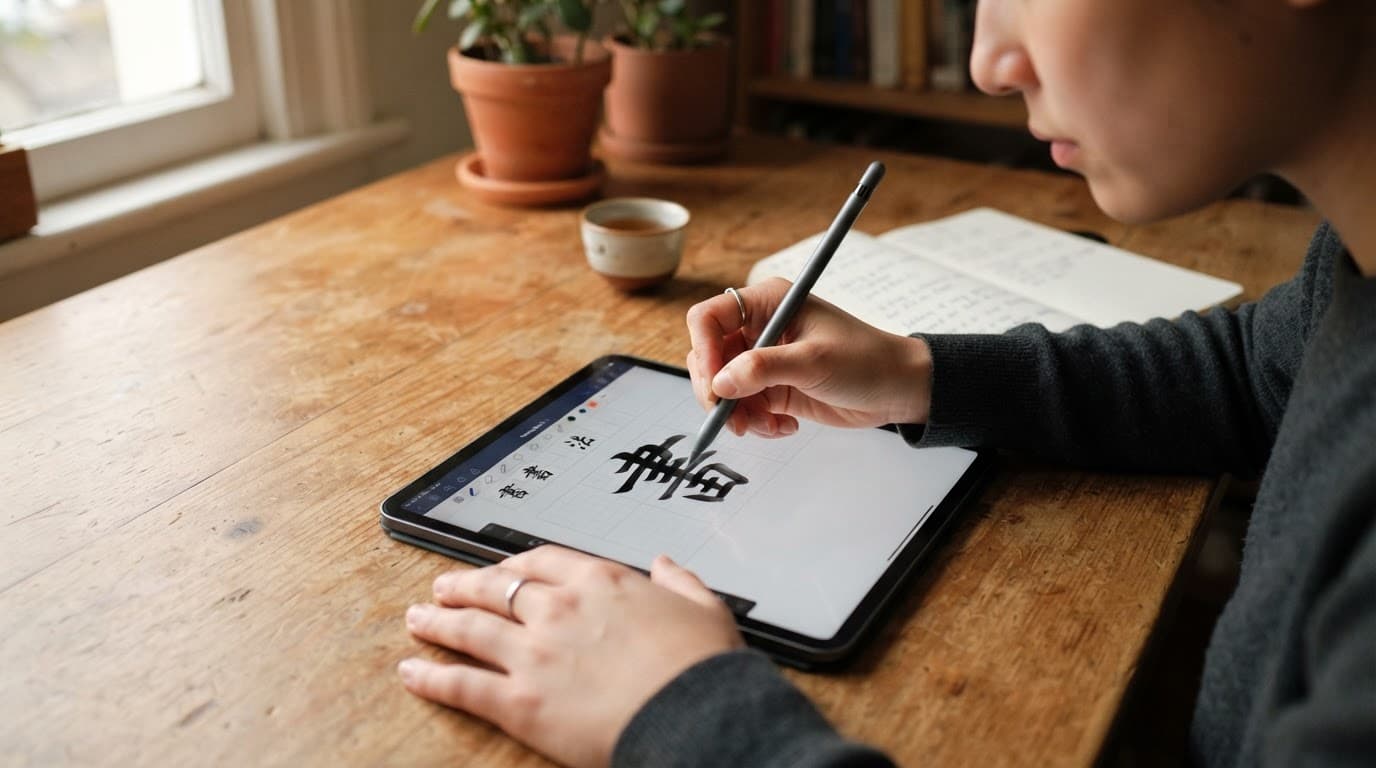
The free alternative also includes writing and stroke order functions in public descriptions. However, current information provides less detail about its handwriting recognition, correction strictness, and handling of messy input. That makes a direct technical comparison difficult.
The difference becomes clearer when you turn on Skritter’s raw squigs option. This setting allows looser handwriting input rather than demanding polished, carefully formed strokes. Use it after learning the basic sequence, because it tests active recall under normal writing conditions.
Start with regular stroke order correction when a character is new. Later, use Skritter’s raw squigs setting to check whether you can write it quickly and legibly. That progression is more useful than practicing perfect tracing every time.
The basic writing sequence is worth learning, but its importance depends on your goal. If you only need to recognize characters while reading, recognition may deserve more study time. If you want to write, a repeatable sequence helps recall complex forms and their components. Radicals, as explained by Outlier Linguistics, can make those forms easier to remember.
Skritter supports both simplified characters and traditional characters, and learners using traditional characters should select the correct deck before studying. Some forms and stroke order patterns differ between writing systems. Beginners should avoid switching variants casually in the same review queue. Choose the Chinese characters used by their course, family, workplace, or target region.
A detailed Skritter app analysis covers the app’s writing workflow and deck system in greater depth. The central point remains simple: Skritter asks you to write more often and gives more writing-specific feedback.
Spaced repetition, decks, and long-term retention
Both apps connect learning Chinese characters with spaced repetition, but Skritter and the free service organize study differently.
Spaced repetition schedules a card according to your performance. Active recall asks you to retrieve an answer before seeing it. Together, these methods can help you retain Chinese characters longer than passive copying, provided you review consistently. Component explanations from Outlier Linguistics can add a useful mnemonic.
Skritter combines handwriting with active recall. Flashcards might show meaning, sound, or a related word before asking you to write the answer. Writing that response demands more retrieval than selecting from other flashcards, especially when you follow stroke order.
The deck ecosystem matters when you’re following a specific course. Skritter’s pre-made decks can align with Integrated Chinese, HSK, TOCFL, or other vocabulary lists. Compared with Anki, that can reduce the work of building custom decks and organizing other study tools around a fixed syllabus.
The free service has a low barrier to entry. Public descriptions present it as a community-driven character SRS with radicals, example sentences, audio, pronunciation, and HSK-aligned material. Learners who want a simple review queue may find this spaced repetition model sufficient.
Still, public documentation is incomplete around custom decks, long-term imports, and organization. Sync reliability, the limits of its writing recognition, and the consistency of example sentences remain unclear. Those details matter after the first few months, when your personal vocabulary grows beyond a beginner deck.

Neither app has strong evidence proving better retention for every learner. Skritter is better suited to production because you draw the character, creating a stronger retrieval demand than recognition alone. The free service may be enough for recognition and routine review if you practice handwriting elsewhere. Pairing either routine with graded readers can connect app review to real language exposure.
The wider Chinese-learning community has long discussed the free alternative to Skritter, including in this character-learning app discussion. Community experience can reveal useful workflows, including Hack Chinese and similar vocabulary-focused alternatives, but Hack Chinese may require separate handwriting practice. That experience shouldn’t substitute for checking whether the service currently works on your device.
Cost, availability, and reliability in 2026
Skritter’s monthly subscription plan costs about $15 before regional or promotional variation. Long-term plans lower the average monthly cost, while Hack Chinese offers another established paid option worth comparing separately.
The historically free service has appealed to beginners learning Chinese characters, students, and casual learners. That makes it useful for anyone testing whether handwriting practice belongs in their routine.
The concern is availability. Current 2026 sources do not present a consistent picture. Some descriptions still treat the free alternative as active, while other coverage suggests access may be unavailable or unreliable. Check the official listing, then test installation, sign-in, and syncing before building your entire study system around it.
Skritter has a clearer platform story. It offers web access plus iOS and Android apps, so you can review on a computer and continue on a phone or tablet. That doesn’t guarantee perfect synchronization, but the product has a more established multi-device structure.
Skritter’s value depends on how often you use it. You’re paying for active handwriting features, structured review, and spaced repetition, not just passive review.
For regular learners, Skritter can justify its cost more easily than occasional use. Ten minutes of active handwriting several times a week makes the subscription more practical. If you study once every few weeks, a notebook may be a better fit.
Overall, Skritter is the safer paid choice when reliable access matters. Test the free alternative first, and don’t rely on it until installation, sign-in, and syncing work consistently.
How to build a practical Chinese writing routine
The best routine for language learning depends on how you divide lookup, review, and character writing.
Choose Skritter when you need direct handwriting practice tied to structured vocabulary lists. It fits learners preparing for dictation, studying Chinese characters for school, or repeatedly confusing similar forms. Skritter also works well when you want a dedicated writing check between reviews.
Choose the free option when you can access it reliably and want a no-cost SRS for characters. It may suit a beginner testing daily review before paying for a subscription. Keep a backup option available if the free service fails to sync or becomes unavailable.
A broader study routine can combine several tools:
- Use Pleco, a dictionary app, to look up unfamiliar Chinese characters, check pronunciation and stroke order, and read example sentences.
- Add important words to Anki, Hack Chinese, or another SRS. Use flashcards, spaced repetition, and custom decks, with each character in a sentence.
- Use Skritter for writing practice when production is a priority, treating each review as active recall. In Skritter, try raw squigs once basic forms feel familiar, and keep either simplified characters or traditional characters consistent. Hack Chinese can provide a vocabulary-focused backup or complementary SRS workflow.
- Read graded readers and listen to Mandarin Chinese so characters stay connected to real language. Writing apps teach forms, but they don’t teach complete comprehension or conversation.
- Consult Outlier Linguistics when a character refuses to stick. Outlier Linguistics also explains semantic and phonetic components, so component analysis can supplement repeated copying and strengthen memory.
Pleco and Anki work well as study tools because they cover different tasks. Pleco handles quick reference and dictionary lookup, while Anki can hold customized vocabulary reviews connected to graded readers. Neither provides the same handwriting feedback as Skritter, and Skritter remains the direct choice when production matters.
Frequently Asked Questions
Is Skritter better than Tofu Learn for Chinese writing?
Skritter is generally better for learners who need to write Chinese characters from memory. Its handwriting recognition and stroke-order feedback provide more direct support for production practice, while Tofu Learn is better suited to basic review when it is available.
Is Tofu Learn free?
Tofu Learn has historically been positioned as a free character-learning and spaced-repetition service. However, its current availability is less consistent in public sources, so check whether you can install it, sign in, and sync reliably before depending on it.
How much does Skritter cost?
Skritter’s US pricing page has listed a monthly plan at $14.99, along with a 7-day free trial and longer-term plans such as $59.99 for six months and $99.99 for one year. Prices may vary by region or app store, so review the current pricing page before subscribing.
Does Skritter teach complete Mandarin Chinese?
No, Skritter focuses on Chinese character writing, vocabulary review, and spaced repetition. You should combine it with listening, conversation, grammar study, dictionary lookup, and graded readers for broader language learning.
Final thoughts
Skritter is the more dependable choice for serious learners who need to write Chinese characters in 2026. Its paid subscription supports character writing through handwriting recognition, correction, and reliable access across devices.
The free alternative remains reasonable when it is accessible and dependable. If it is unavailable, Hack Chinese is another option to consider, while serious learners may find Skritter’s price easier to justify for spaced repetition and regular production practice.
The best app is still the one that matches your study goal. Good study tools support language learning, but they do not replace a broader routine with graded readers and other practice. For Chinese writing, Skritter is the strongest recommendation when your goal is retrieving forms before seeing the answer through active recall.
Ready to Take Your Language Learning Further?
Your favorite language-learning app is a great place to start. Rocket Languages can help you go further with interactive audio lessons, pronunciation practice, real-world conversations, and structured learning.
Explore Rocket Languages →Affiliate disclosure: We may earn a commission if you purchase through this link, at no additional cost to you.