
A strong score on a Business Chinese Test requires more than memorizing everyday Mandarin. You need workplace vocabulary, listening speed, formal expressions, and practice with exam-style tasks. The best business Chinese test prep apps help you build those skills without turning every study session into a full lesson.
The challenge is that few mobile tools cover the BCT syllabus from start to finish. Some apps focus directly on BCT A and B, while others are better for HSK foundations, vocabulary retention, reading, or general fluency. The right choice depends on your level, exam date, and weakest skill.
What to look for in a Business Chinese study app
The Business Chinese Test measures language used in professional settings. Your preparation should include terms for offices, sales, trade, finance, meetings, negotiations, travel, and formal communication.
A good app should offer more than a large word list. Look for these features:
- BCT-specific vocabulary, preferably organized by level or topic.
- Exam-style exercises that match the format you plan to take.
- Listening practice with natural speech and different speeds.
- Reading tasks based on workplace situations.
- Spaced repetition so new terms return before you forget them.
- Progress tracking that shows whether you are improving.
- Offline access, especially if you study during a commute or business trip.
You should also check whether the app supports your device. Some tools are available only through Android, iPhone, or a web browser. Prices and subscription terms can change, so confirm the current details in the official store listing before paying.
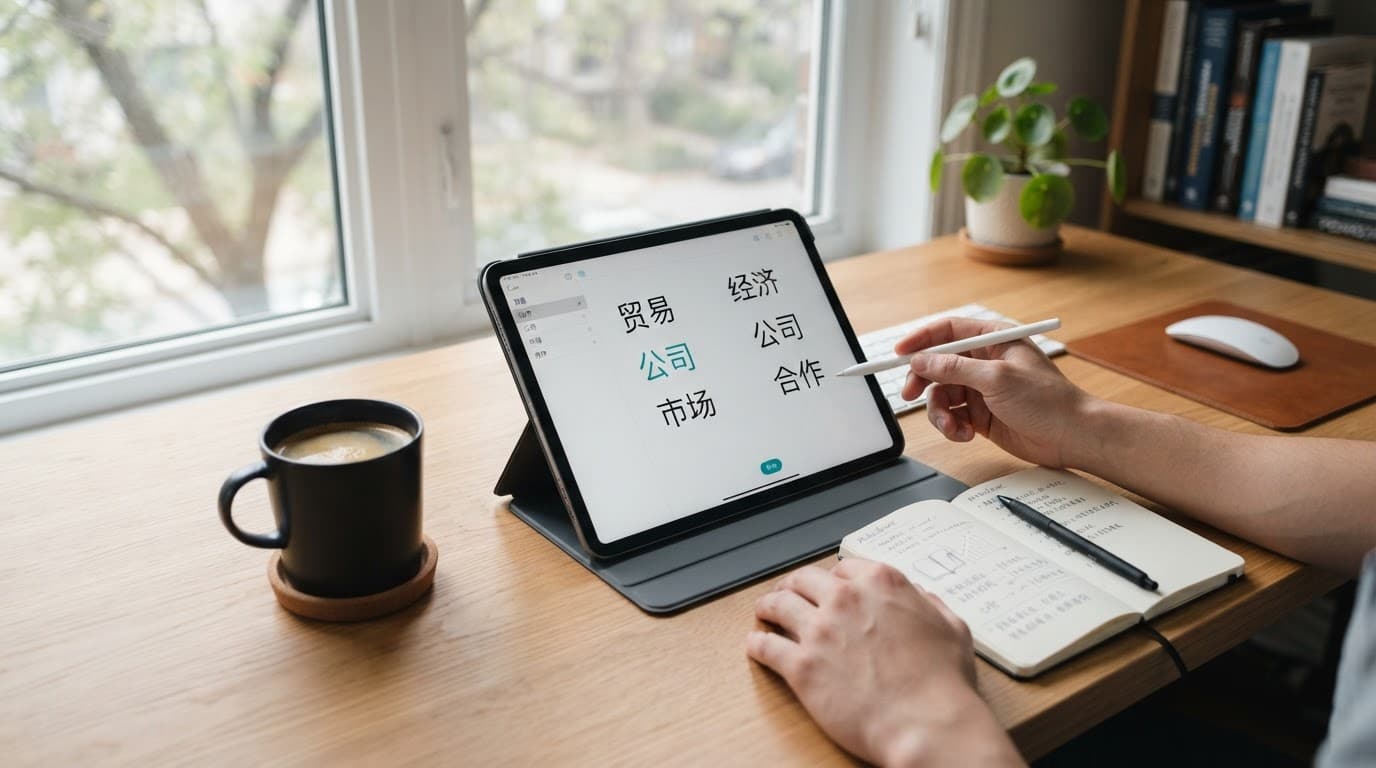
A useful study setup combines one exam-focused tool with resources for listening and real communication. For general Mandarin support, LanguaVibe’s guide to the best Chinese learning apps compares tools such as Pleco, Du Chinese, and Anki.
Best business Chinese test prep apps in 2026
No single app is perfect for every BCT candidate. The options below work best when you match each tool to a clear study task.
| App or resource | Best for | BCT usefulness | Main limitation |
|---|---|---|---|
| Chinese: HSK Exam Prep | BCT A and B practice | Direct exam-style exercises and results tracking | Android-focused listing |
| HSK BCT YCT Chinese Test Words | Vocabulary coverage | Includes 4,050 BCT words | Less focused on speaking and writing |
| Brainscape BCT flashcards | Memorizing business terms | Dedicated BCT flashcard pack | Flashcards don’t replace mock exams |
| Quizlet | Custom vocabulary review | Useful for user-created BCT sets | Quality varies by study set |
| SuperTest | HSK foundation and test drills | Helpful for core Chinese skills | Primarily HSK-focused |
| OpenExamPrep | Free browser practice | More than 200 BCT practice questions | Not a complete mobile course |
Chinese: HSK Exam Prep
This is the most direct app choice for Android users preparing for BCT. Its Google Play description includes BCT A and B practice, exam-style questions, full tests, focused section drills, and results tracking. You can find the current listing for Chinese: HSK Exam Prep on Google Play.
The app is useful when you need a clear connection between practice and the test. Instead of reviewing random business phrases, you can work through question types and check your performance after each session.
However, the app’s name reflects its wider HSK focus. It shouldn’t be your only resource if you need advanced workplace conversation, industry-specific vocabulary, or detailed writing feedback. Use it for timed practice and test familiarity, then add speaking work with a tutor or language partner.
HSK BCT YCT Chinese Test Words
This vocabulary app is a strong choice for learners who need systematic word coverage. Its listing states that it includes 4,050 BCT words, alongside vocabulary for HSK and YCT levels.
The large BCT list can help you identify gaps in areas such as contracts, scheduling, customer service, logistics, and workplace relationships. Review words in short daily sessions, then place them into your own sentences. For example, don’t stop at memorizing 交货期, or “delivery date.” Practice a sentence about confirming a delivery date with a supplier.
Vocabulary apps have a clear limit. They can help you recognize and recall terms, but they won’t show whether your pronunciation sounds natural or whether a formal email is appropriate. Pair this tool with listening and production practice.
Brainscape Business Chinese Test flashcards
Brainscape offers a dedicated Business Chinese Test (BCT) flashcard pack for web, iPhone, and Android users. It fits learners who prefer short review sessions and want a focused alternative to a broad Chinese course.
Flashcards work well for building recognition speed. That matters when listening passages contain familiar words at a faster pace than your textbook audio. Brainscape can also fit around a full-time job because you can review during spare minutes rather than reserve an hour for every session.
Still, flashcards should support your preparation, not define it. After reviewing a set, say several terms aloud in a business sentence. Then write a short response using the same vocabulary. This turns passive recognition into usable language.
Quizlet for custom BCT vocabulary
Quizlet is not a dedicated BCT course, but it can be practical when you find a reliable BCT vocabulary set or create one from your study materials. You can organize terms by your work area, such as marketing, engineering, banking, or import and export.
The platform is especially useful for learners who want to add notes, example sentences, audio, or personal translations. A job seeker preparing for a Chinese-language interview could create sets for introductions, work history, strengths, responsibilities, and salary discussions.
Check every community-created set carefully. Some contain incorrect translations, simplified and traditional character inconsistencies, or unnatural sentences. Use an established dictionary to verify questionable entries. LanguaVibe’s comparison of the best Chinese dictionary apps can help you choose a lookup tool.
SuperTest and OpenExamPrep
SuperTest is primarily an HSK preparation platform, but it can help BCT candidates strengthen general listening, reading, vocabulary, and test-taking habits. The current SuperTest Chinese proficiency app is more useful for building a foundation than for studying business topics directly.
OpenExamPrep is a browser-based option with more than 200 BCT practice questions across its BCT pages. It can fill a gap when you need extra question exposure without committing to another subscription.
These resources are best used alongside direct BCT materials. If your general Chinese is still developing, SuperTest may provide better structure. If you already know the basics, OpenExamPrep can give you additional practice under time limits.
Choose your app by goal and current level
Your best setup changes as your Chinese improves. A beginner needs a different sequence from a professional who already handles meetings in Mandarin.
Beginner or lower-intermediate learner: Start with a structured general Chinese course. You need pronunciation, sentence patterns, core grammar, and everyday vocabulary before BCT lists become efficient. SuperTest or another HSK-focused app can build this base. Add ten to fifteen business terms each week rather than trying to memorize thousands at once.
Intermediate learner preparing for BCT A: Use the direct BCT practice app for exam familiarity, then add a vocabulary tool such as Brainscape or the HSK BCT YCT word app. Spend extra time on listening because familiar words are harder to recognize when speakers connect syllables naturally.
Upper-intermediate learner preparing for BCT B: Combine timed practice with industry vocabulary. A generic flashcard deck won’t cover every situation you may meet at work. Build additional sets from Chinese emails, product pages, meeting notes, and business news related to your field.
Job seeker or working professional: Prioritize speaking and writing alongside app study. Prepare a short professional introduction, practice explaining your responsibilities, and rehearse common workplace requests. Apps can supply vocabulary, but another person must correct your tone, grammar, and pronunciation.
Learner with a short timeline: Choose one direct BCT tool and one flashcard app. Avoid switching between five platforms. Review vocabulary in the morning, complete a timed section several times each week, and reserve one longer session for speaking or writing feedback.
For a broader comparison of exam-focused tools, LanguaVibe’s guide to the best HSK prep apps is useful for deciding whether you need a general proficiency app in addition to BCT practice.

A practical 10-week BCT app study plan
A mobile app works best when each week has a defined purpose. Use a ten-week schedule if you have enough preparation time.
During weeks one through three, build your base. Review BCT vocabulary every day, but spend part of each session on grammar and general listening. Record yourself reading business sentences, then compare your pronunciation with the app audio.
In weeks four through seven, shift toward active use. Complete listening and reading exercises under time limits. Write short workplace messages, such as confirming a meeting, requesting information, or responding to a delivery problem. Practice speaking with a tutor, colleague, or language partner at least once each week.
During weeks eight through ten, simulate the exam. Complete full or half-length tests without checking a dictionary. Keep an error log with three columns: the question type, your mistake, and the correction. Review the log before opening a new practice set.
A vocabulary score can look strong while listening performance remains weak. Track skills separately instead of relying on one overall progress number.
The final week should focus on accuracy and pacing. Don’t fill it with unfamiliar resources. Review recurring errors, repeat difficult audio, and practice the formal phrases you expect to use.
What apps can’t replace
Apps are excellent for repetition and quick feedback. They are less reliable for open-ended speaking, detailed writing correction, and professional tone.
Use real workplace material to close that gap. Read a Chinese company announcement or product description, listen to business interviews, and summarize the main point aloud. If you work with Chinese-speaking colleagues, ask them to correct one short message or role-play a meeting request.
You should also consult the official BCT handbook and sample papers before choosing your practice routine. App questions may resemble the test without matching every instruction, timing rule, or scoring detail. Your final preparation should reflect the format of the exam you will actually take.
Conclusion
The strongest business Chinese test prep apps in 2026 fall into different categories. Chinese: HSK Exam Prep offers the clearest direct BCT practice, the HSK BCT YCT word app supports vocabulary coverage, and Brainscape or Quizlet can reinforce terms through repetition. SuperTest helps with general Chinese foundations, while OpenExamPrep adds free practice questions.
Choose tools according to your level and weakest skill. Then combine app drills with timed tests, workplace materials, and feedback from another speaker. A focused study system will prepare you more effectively than collecting every Chinese app in the store.